

How to Make Pad Thai
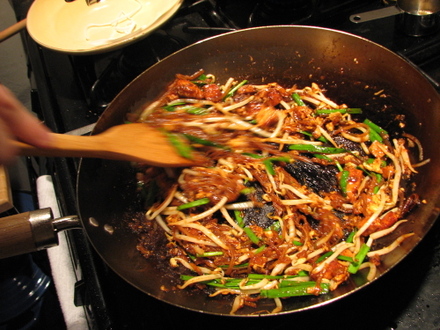
Part of the reason I bought a wok in the first place was because I read the excellent, thorough, and inspiring post at Chez Pim called "Pad Thai for Beginners." It made a mysterious dish of the takeout world suddenly, approachably attainable. Every step was lovingly explained, each ingredient inspected. Pad Thai could be mine.
With a wok bought, seasoned, and oiled , I set off to Chinatown to procure the necessary ingredients. A quick search on Chowhound.com revealed two clear winners for shops that stock Thai ingredients, and one of them had a "great" dumpling shop next door. Bangkok Center Grocery ( 104 Mosco St. , near Mulberry St.; www.thai-grocery.com ) was described as friendly and well-stocked, on a tiny street in Chinatown only one block long.
Inside, I set about looking for the staple sauce ingredients: tamarind, palm sugar, and fish sauce, feeling like the requisite culinary tourist looking to make, of course, Pad Thai. But they were extremely friendly when I asked for help, darting around the tiny three-aisle store handing me jars and bottles and plastic bags in a whirl of energy. I ended up with a giant bottle of fish sauce, a block of tamarind paste, a jar of palm sugar (extracted from a palm tree, so essentially, I suppose, coconut sugar), a bag of "rice stick" noodles with enough for at least 15 portions of Pad Thai, and a bag of salted pickled turnip. Everything came to just over eight dollars.
Next door, the famed dumpling shop was dishing them up to a revolving crowd of people. I wish I had my camera, but I'd forgotten, so let me describe: a tiny room with two women behind a counter. One was shaping fresh dough into dumplings, while the other was frying them up. For a single dollar, you get 5 big dumplings on a tiny paper plate that folds under their weight. Across from the counter are a few stools and two condiments in squirt bottles: soy sauce and chili sauce. I doused them in soy sauce and put some chili on the side, balancing the plate in my arm, which was already weighed down with heavy bags of Thai ingredients sure to last me a year.
Thankfully, a quarter block away is Columbus Park, where I unburdened myself long enough to enjoy the dumplings.
On my way back to the Grand st. subway station, I stopped by the competing produce stands on the corner of Christie st. and Grand , right over the subway stop. These places are crazy and cheap--I got my bean sprouts, an entire pound, for 50 cents (just imagine an entire pound of airy bean sprouts), and a bunch of garlic chives for about the same. Just before descending into the underground, as I was passing a fish monger, a giant, angry, flapping tilapia vaulted itself from the bed of ice and landed on the sidewalk, flailing and slapping the pavement. A focused, unsurprised man scooped it up with a net and threw it from the net, catching it in a clear plastic bag. He then fished two more out of the plastic tub of water, still alive, and put them in also. "19 dollars!" he yelled at the buyer, while tying off the top. The woman took them gingerly from his hand and held that at arms length all the way around the corner and into the subway. I love Chinatown.
Once home, making the Pad Thai was remarkably easy, if fraught and nerve-wracking. You can only make one portion at a time, and it's a high-heat, high-octane affair with oil splattering, ingredients sizzling on the thin wok metal, the ever-present fear that something will go in at the wrong time. Really, if you want to make it you should just visit Pim's blog , where everything is detailed to an incredible degree.
These are my pictures, with a little overview of the process.
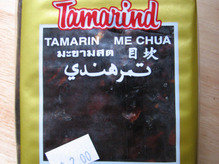
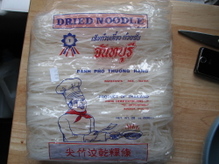
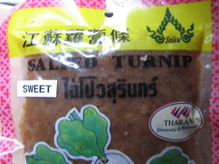
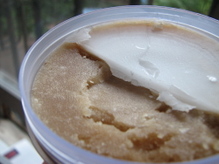
Above, my ingredients. Clockwise from upper left: Tamarind pulp, dried rice stick noodles, salted turnip, palm sugar with a wax cover.
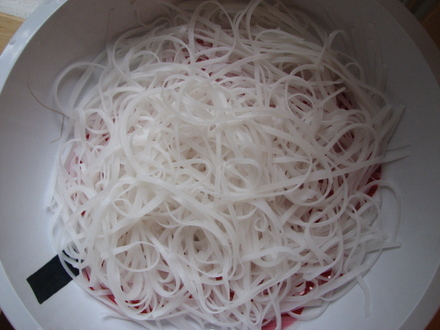
First, you take a portion of noodles and soak it in warm water until pliable but not tender enough to eat--they will still cook in the wok.
Next, I had to create tamarind paste from the block of pulp. It's very hard, sticky stuff, so it took some effort to lop off enough. You mix it with very hot water and let it sit until the water is cooled enough to touch, then you just squeeze and work it until it becomes the consistency of room temperature ketchup.
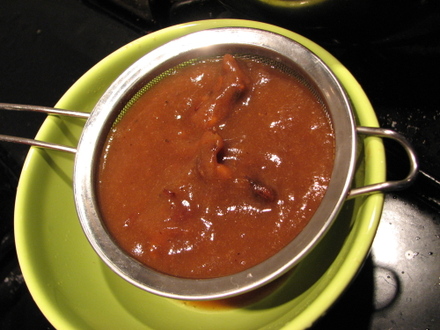
Then it gets strained to remove fibers and seeds. Into a saucepan it goes, with equal parts palm sugar and fish sauce, a very pungent thing, I might add. You heat it over low until it's all dissolved and smooth, then add Thai chili powder (I used Paprika) to taste.
Let me tell you, the result will be extremely pungent. The sauce itself doesn't seem to taste like Pad Thai. It will taste very sour and fishy, but this is okay. Focus on balancing the flavors: as Pim says, it should lead with the salty flavor, transition into a gentle sourness, then subtle sweetness, with a tickle of heat at the back of your tongue. Because Thai ingredients can vary in potency, you really have to judge it for yourself. The good news is you can make a lot of this sauce and keep it around in the fridge.
The other ingredients include tofu, chicken or shrimp, bean sprouts, garlic chives (green onions will substitute), an egg, ground peanuts, chopped garlic, and pickled turnips or dried shrimp are optional. When serving, you squeeze lime juice and sprinkle more ground peanuts.
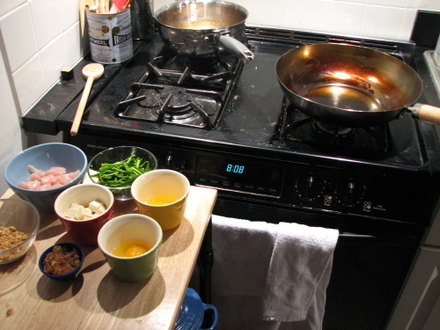
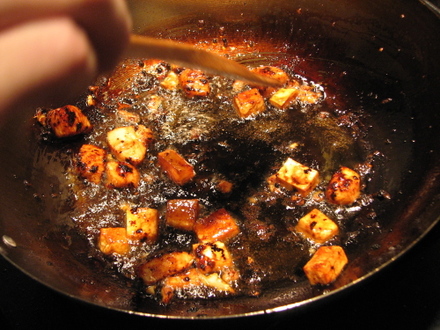
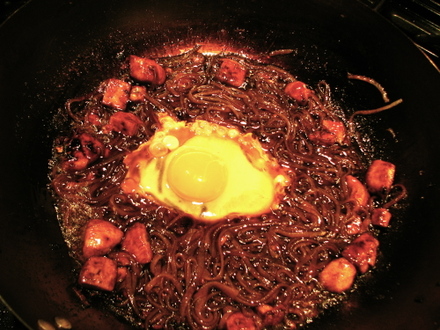
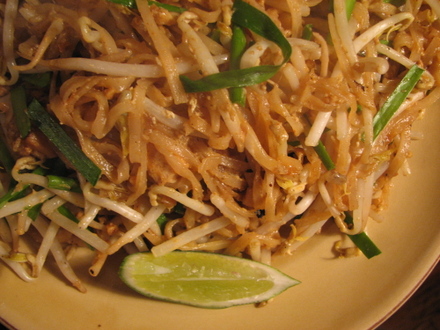
In this case, it's extremely important to have everything prepped ahead of time, because once the skillet gets hot, this is extremely intense cooking. You can only cook one portion at a time to keep the noodles from getting mushy, and you must move quickly at every stage to avoid overcooking. The French call this technique of having all ingredients chopped and prepped mise-en-place; Americans abbreviate it to "meez."Like I said, for the exact way to cook Pad Thai, just visit Pim's blog . Here are pictures of my process, which Elin took because there was absolutely no way I could pause long enough to take a picture.
Comments:
Blog Comments powered by Disqus.