
Fennel-Cured Salmon

by Nick Kindelsperger on January 30, 2008

fennelcuredsalmon 01

Sparked with inspiration by Blake’s duck proscuitto, I procured Michael Ruhlman’s Charcuterie and dug in.  Don’t let anyone fool you; it’s intimidating stuff.  Curing food is the exact opposite of the cooking I’ve become used to.  I love to take fresh ingredients and then cook them quickly, without much fuss.  This process, hopefully, highlights the good quality of ingredients I’ve been able to find.  Meanwhile, most of the recipes in this book take a perfectly fresh piece of meat, salt it, and then let it sit around for anywhere from a week to a year.  That’s a big change.  There’s nothing like cashing out for some expensive cut and then not eating it for the foreseeable future.   

And so much can go wrong.  I know Blake’s experiment went to plan, but I’m a fairly neurotic person who needs to know what’s going on at all times.  Having never really cured anything before, I had no idea what would happen to meat that was left out of the refrigerator.  All kinds of bacteria could decimate the meat and the flavor could be all off.  And then what?  You can’t really adjust the seasonings to something that has been developing flavor for half a year.  It’s just a waste.  And where would I put such a project?  When you live in an apartment everything seems temporary.  God knows if I’ll spend the next year in the same place, so how could I possibly care for a piece of meat that needs to hang for that long? 

I needed an entry.  So I pored through the book to find the absolute easiest curing recipe to get the ball rolling.  You have to start somewhere, right?  And I found it.  Fennel-Cured Salmon.  It only needs a mere two days before turning into a delicious variant of that bagel-donning delicacy, smoked salmon, except, you know, without all the smoke.   I love how it's sliced so thinly, yet packs so much flavor. 

Before I could think twice, I was at the fishmonger ordering a nice side of salmon to be cured.  I also had to buy Pernod, an absinthe substitute that makes a mean cocktail called the Sazerac. Luckily, you’ll have some leftovers.  I’m getting sidetracked.   

The process is fairly straightforward, and not at all scary.  Best of all, everything takes place in the fridge, a mighty fine place to start for a doubting-Thomas like me. 

I also picked this recipe because of the fantastic dishes it could turn into.  A side of fresh salmon wouldn’t last very long at a dinner party, but cured, I’m hoping to squeeze as many meals out of it that I can.  And, according to Ruhlman, it’ll last in the fridge for something like 3 weeks, meaning I’ll have all kinds of time to experiment. 

Fennel-Cured Salmon

  • 1/2 cup sugar
  • 1 cup brown sugar
  • 3/4 cup salt
  • 1 2-3 pound salmon fillet, skin on, bones removed
  • 1/4 cup Pernod
  • 1 fennel bulb, stalk and leaves removed, thinly sliced
  • 1/2 cup fennel seeds, toasted
  • 2 tablespoons white peppercorns, toasted and cracked

Adapted from Charcuterie by Michael Ruhlman

fennelcuredsalmon 02

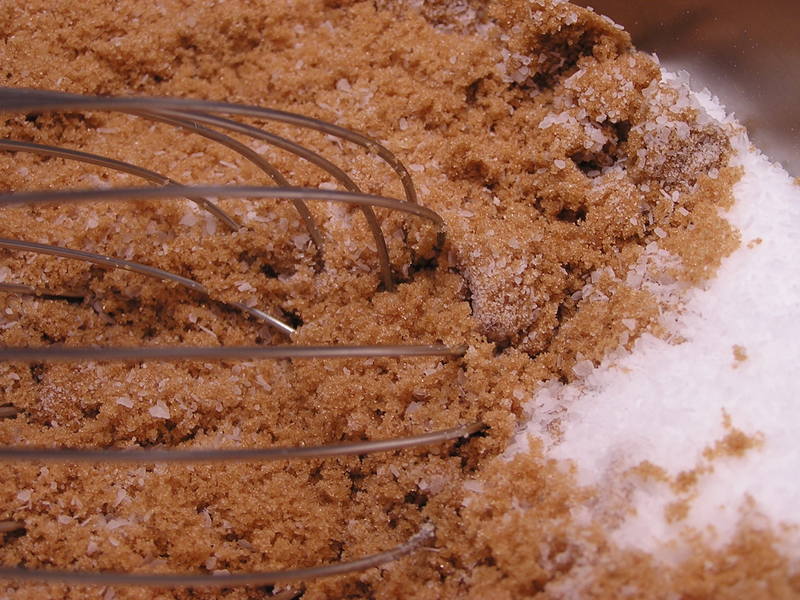
Whisk together the sugar, brown sugar, and salt. 

The salmon needs to be covered by the brine, so if you have a non-reactive dish that is just a tad bigger than the fish, then use that.  If not, just use aluminum foil like I did.  Ruhlman says you want the brine to cover as much of the fish as you can, so don’t use some massive roasting pan.    
fennelcuredsalmon 03

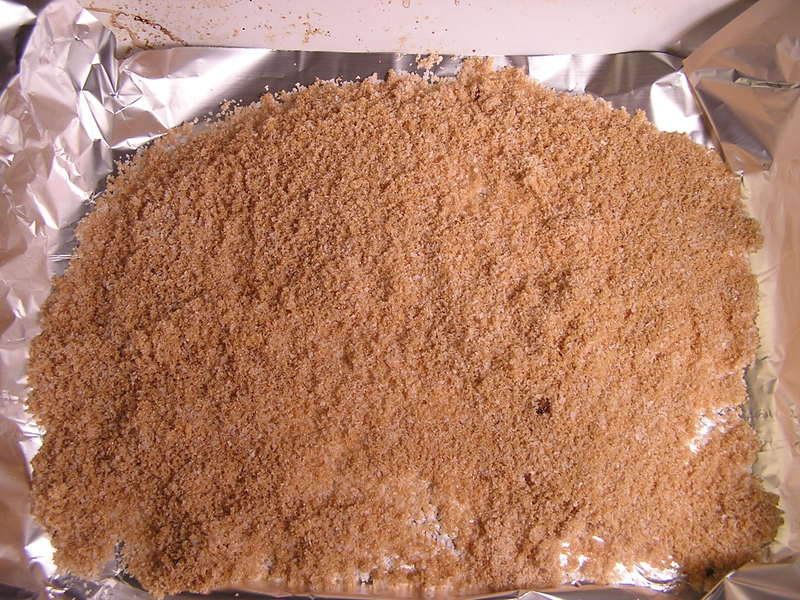
Sprinkle half of the sugar into the pan or aluminum foil. 
fennelcuredsalmon 04

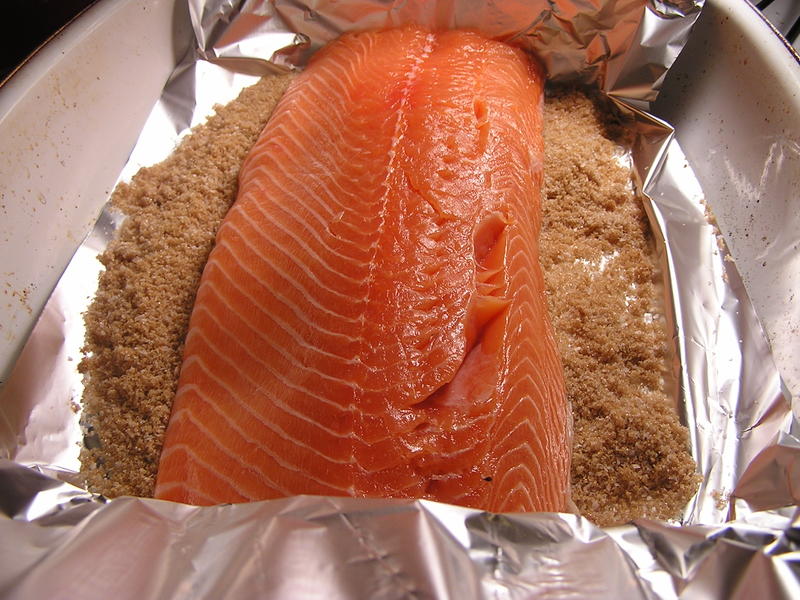
Set the fish atop and then carefully pour the Pernod on the flesh.
fennelcuredsalmon 05

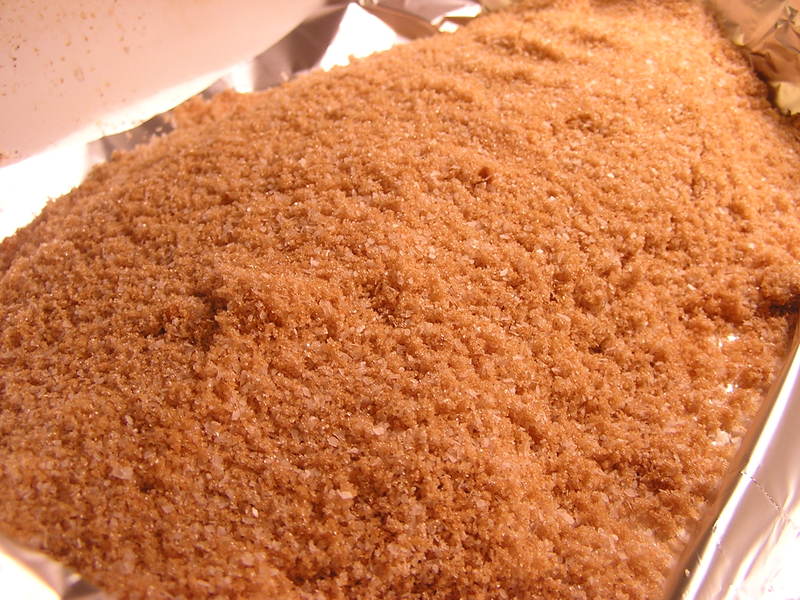
Sprinkle the other half of the sugar and salt mixture on the fish.
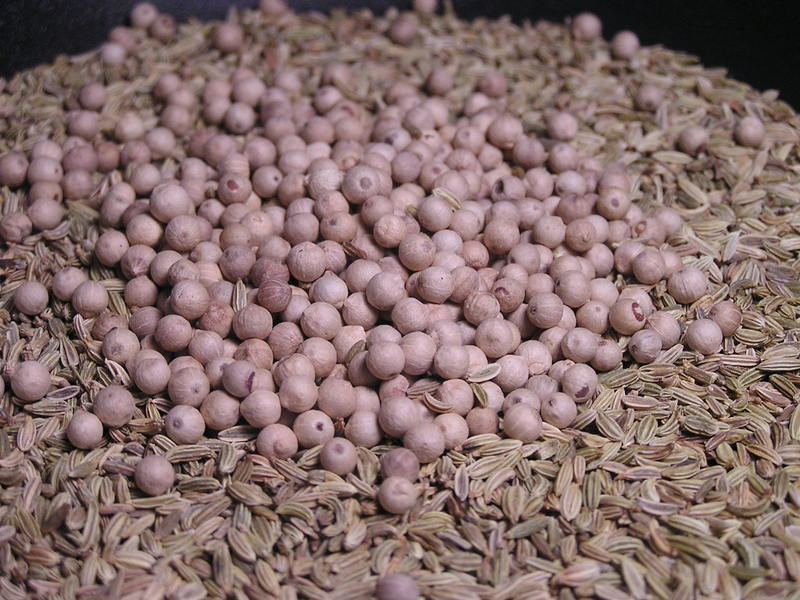
fennelcuredsalmon 06

Toast the fennel seeds and white peppercorns in a medium hot skillet until fragrant. 
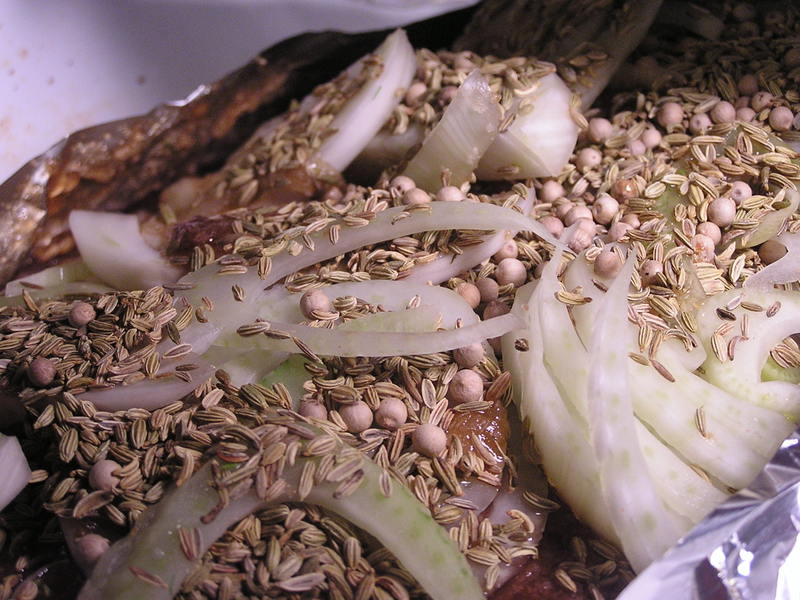
fennelcuredsalmon 07

Take the thinly sliced fennel and layer atop the fish.  Dump on the fennel seeds and white peppercorns. 
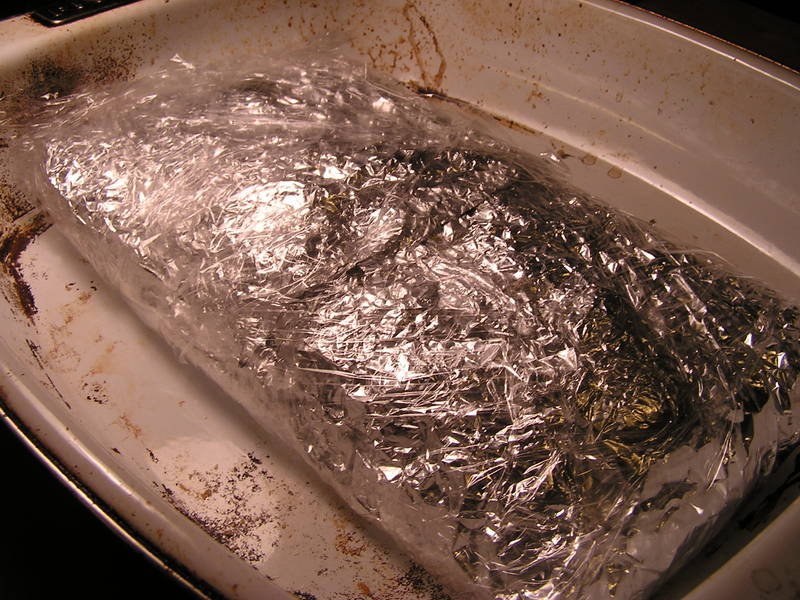
fennelcuredsalmon 08

Enclose the fish in the aluminum foil.  Wrap in a protective layer of plastic wrap and then set in dish large enough to fold everything. 
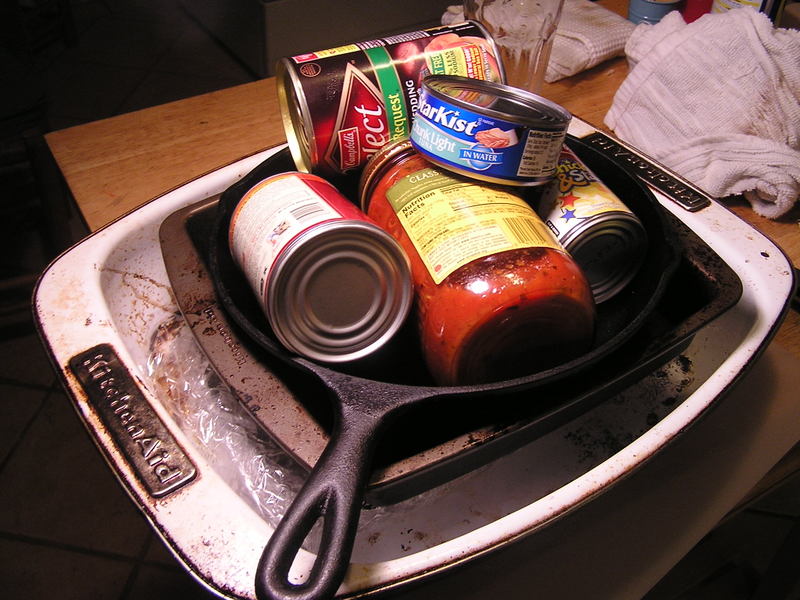
fennelcuredsalmon 09

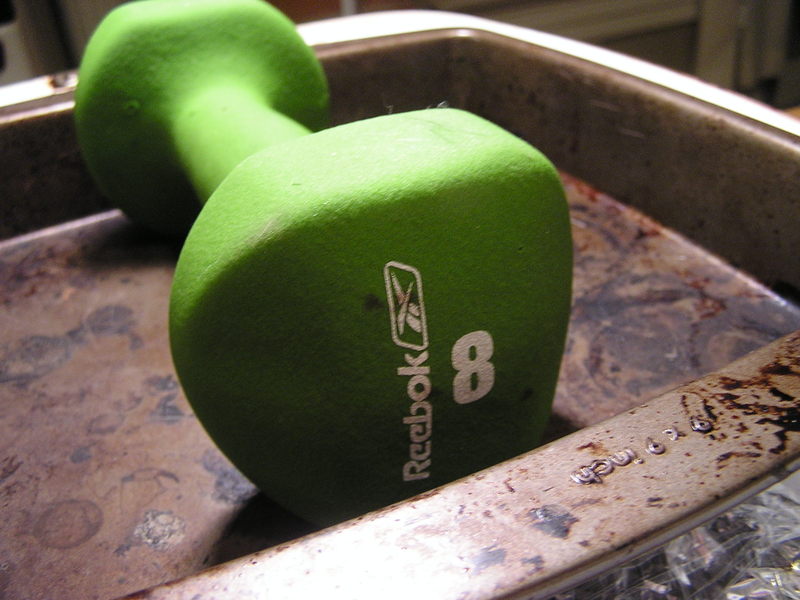
Place a pan on top of the wrapped fish, and then set 8 pounds on the pan.  Cans work well.
fennelcuredsalmon 10

But a perfectly measured 8 pound weight is probably best. 

Store in the fridge for 2 days.  I’ll let you know what happens! 

  • Share/Bookmark

{ 12 comments… read them below or add one }

Chewy Boese January 30, 2008 at 10:40 am

Hey, what kind of salmon did you buy? Is it expensive out there?

ethermaiden January 30, 2008 at 10:41 am

Mmmm… gravlox. This reminds me that I should make some gravlox again some time this year.

Nick Kindelsperger January 30, 2008 at 12:12 pm

It was farmed. I just couldn't completely take the chance on something until I know what's going to happen. The farmed wasn't cheap, though. I think it was about 30 bucks.

Nick Kindelsperger January 30, 2008 at 12:32 pm

ethermaiden: I think the main difference between this and gravlax is that the fennel substitutes the dill. Gravlax IS fantastic, though. I wonder if there are other fun names for cured salmon?

SP January 30, 2008 at 5:00 pm

I'm excited to see how this turns out. I have a few slabs of pork belly in my fridge right now on their way to becoming bacon. I wanna do salmon, or maybe char, next.

Josh January 31, 2008 at 2:04 am

Is it possible to make this without putting weights on the meat. The smoked Alaskan salmon I've had wasn't pressed, but a meaty, unpressed and delicious hunk of fish.

SP January 31, 2008 at 11:24 am

The guy over at Cooking for Engineers says the weights are unnecessary, says that the weights and turning in over are a bit of an old wives tale. I guess he's done it enough to be able to make that conclusion. Personally, I wouldnt mind forgoing the weights as it must take up a lot more room in the fridge. Unless you have a cold place other than your fridge in which case it wouldnt matter.

Joshua Moise January 31, 2008 at 12:06 pm

I might try it sans the weights. Can't wait to see how this little experiment turns out.

Blake Royer January 31, 2008 at 2:00 pm

As I understand it, gravlax is any cured salmon that is not subsequently cold smoked. Which is different from "lox," which some say means brined rather than dry-cured, others say is smoked/not smoked/etc. People on eGullet are very opinionated.

SP and Joshua: I headed over to Cooking For Engineers and read through the comments. As far as the weights, the consensus seems to be that they're not necessary for the curing process to actually work, and probably not for the taste, but some people feel that the denser flesh that results is preferable. I'd love to taste the two side by side.

ethermaiden February 11, 2008 at 6:28 pm

You got me to make a variant on your recipe today- I didn't want to open a new bottle of absinthe for the little I needed in this recipe, and also didn't want to go out and BUY a pastis when I've got the dregs of a bottle left in the cellar. So I mixed it about 50/50 Montmartre with come etrog liquor I had on hand as well. Fennel and citrus go well together, and we all know how well salmon and citrus marry. Should be tasty.

Also, for those debating the weights- I rarely weight very much. What I do instead is use my food vacuum sealer on it. I make it on a cutting board, then slide it into the bag. It works rather nicely to keep all the juices in, the air out, and the flavor infused through the fish.

I use the vacuum sealer for really everything you can think of- and it's really handy as all get out. Both for buying in bulk and saving money that way, to preparing really fun dishes that seem hoity-toity but were super easy- thanks to it's wonderful air-sucking talent. Sous vide? a snap!

Mike February 14, 2009 at 11:02 am

This sounds great but I don't feel like dropping $40 on a bottle of Pernod that I'll likely never touch again. How do you think using ouzo or even a cheap anisette would work? I suspect the anisette might be too sweet. Thanks

Palu September 7, 2009 at 9:04 pm

I’m going to try this recipe using these Vacuum-able Zip-Lock brand bags. A friend told me about these bags. You can get the starter kit which is a vacuum pump and three one-quart bags for about $5. Then you can get the one-gallon bags that have the little vacuum fitting separately.

Leave a Comment

Previous post:

Next post: