

The Gateway Stock: What to Do With Leftover Roast Chicken
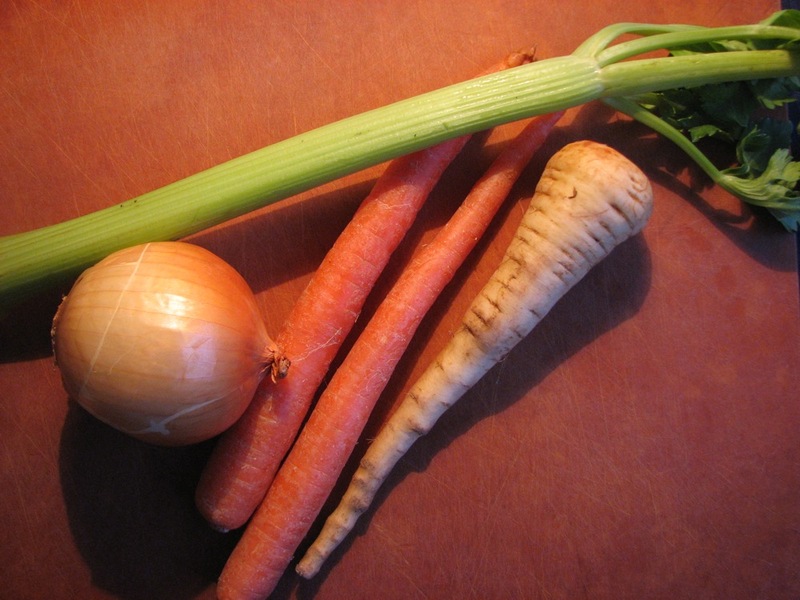
As a cook, I've been rather reluctant to prepare homemade stock. I give the usual litany of excuses: too much hassle, not enough time, not cost-effective. I keep a little jar of Better than Bouillon in my fridge door (one chicken, one beef, one vegetable) and I've always got instant stock whenever I need it, in small quantities or large. I don't have to worry about it going off, because the jar lasts, like, a year, and true to its name, it's better than having crumbly dry cubes in the pantry.
If it wasn't already apparent, we roast a lot of chickens . Not only is it highly economical, it's a strangely satisfying way to spend one's time: the process is elegantly simple yet elusive to perfect; it's a dish that can be prepared hundreds of times and the results are never quite the same. There seem to be as many recipes as their are cookbooks, recommending low heat, high heat, trussing the bird, letting it sprawl out untied, flipping it once, twice, three times, brining it beforehand, salting it beforehand, beginning with a 2 1/2 pound bird, beginning with a 6 pound bird, adding butter, adding oil, adding nothing at all to let the chicken's own skin do the moistening. Yet almost all of them result in delicious outcomes. There's something wholesome and complete about roasting an entire chicken and using all the parts. Any bird cooked whole, with all the joints and bones and parts, is going to be twice as delicious.
But I'm not here to argue that roasting a chicken is worth a lifetime of experimentation. I'm here to tell you what to do with it after you're done.
I've roasted so many chickens and thrown the carcasses away. Right into the trash. Sure, I pick the meat off carefully and put together a great chicken salad for lunch, but otherwise, I'm finished. The bird has given me its all, and I'm respectful. But I was missing a crucial last step.
Only recently did I have the revelation that the stock problem could be remedied without changing my habits at all. Now, the minute I'm done roasting a chicken and letting it rest, I'm filling a small pot with cold water. During the roasting, I will have already sliced up some onions, carrots, celery, and whatever else might be around: parsnips,maybe ginger, some sprigs of parsley. I'll have some peppercorns in a little dish with a bay leaf. After carving the chicken breasts, removing the legs and thighs, and picking the carcass of any meat, the rest goes into the water. And after we've eaten the chicken, I'll put the leftover bones in there, too--and if that seems impolite, I'd say that it's more impolite to the chicken to not take advantage of all its parts.
It's also important to add a little raw chicken meat as well. I keep a package of raw wings in the freezer for this purpose, which gives the chicken some important flavor. If your chicken came with a neck, use that. Also, trim off the wing tips before roasting the chicken so they can be added into the stock. The
roasted carcass will provide lots of body and a wonderful gelatinous quality, but may lack in the essential "chickeny" profile you're looking for without some fresh meat. Also, if you can find some chicken feet (try Asian markets), they do wonders for the stock, apparently. I've yet to try it.
Now, this is not going to be the most delicate, perfected chicken stock, and it probably wouldn't pass restaurant muster. Most chicken stock recipes I know of require using a large amount of chicken meat and equally large amounts of time. I've yet to be convinced that it's worth it, and more importantly, it seems uneconomical. What you'll end up with here will probably be somewhat muddy and unrefined. But it can make a fantastic chicken soup with a handful of rice and frozen peas, or a second dinner the following night, garnished with a bit of parsley and a poached egg. My favorite recent use was for La Stracciatella , or Roman Egg Drop Soup. It will certainly boost your next risotto into the next level. Most importantly, it will get you started on stock-making. It's worked for me.
Roast Chicken Stock
Adapted from Hugh-Fearnley Whittingstall's Meat book
- 1 roast chicken carcass, picked clean of meat
- any accompanying chicken giblets, except the liver
- 1 chicken wing or the neck
- 1 large onion
- 1 carrot
- 1 bay leaf
- 3-4 whole peppercorns
- 1 small parsnip, peeled (optional)
- half a leek (optional)
- sprig of thyme or parsley (optional)
- piece of ginger (optional - if using, replace the parsley with cilantro)
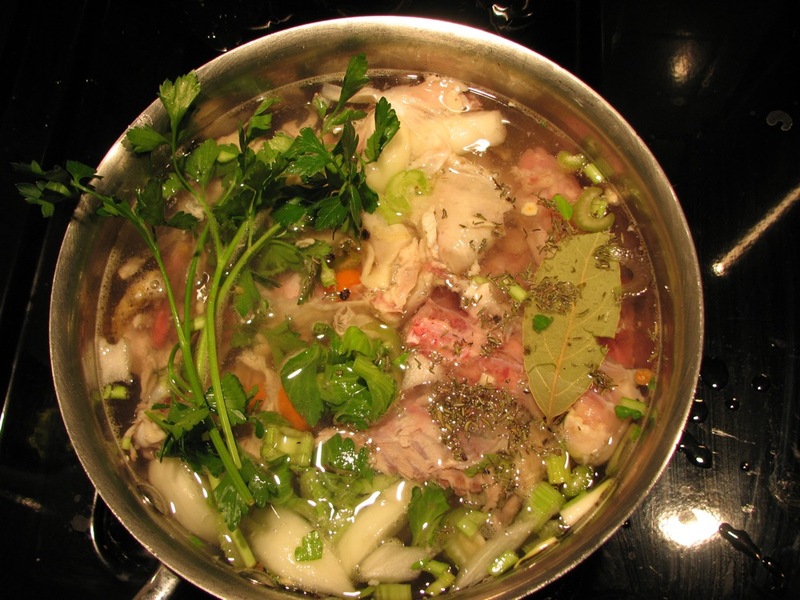
Break the chicken into smallish pieces and place in a snug, small pot with the remaining ingredients, all chopped into small chunks. It should pack tightly so that no more than 6 cups of water are needed to cover everything. It's best if the stock doesn't need to reduce once finished, so avoid using extra water.
Bring the water to a simmer over low heat so that it's bubbling very gently and only sporadically. Skim any foam that comes to the surface, but leave any fat, as it's flavorful. Add a little salt to the broth, but not much, to help bring out the flavor. Simmer for at least 2 hours, preferably 4-5, or as late as you can stay up. Strain through a strainer or colander lined with cheesecloth, allow to cool (or lower the pot into a sink of ice-cold water), then refrigerate for a day, which allows the flavors to develop. Use within a day or two, or freeze for future use.
Chicken, Chicken, Chicken Stock, Roast Chicken, Soup, Stock
Comments:
Blog Comments powered by Disqus.