
I'm not sure what else to call this thing. I know that burgers are supposed to have a decent amount of fat for flavor and such, but we just went too far. A few days out, and I'm still trying to recuperate.
The plan started out as something far nobler. Together for the first time since my wedding, and cooking for the first time together in what must be a year, Blake and I decided to create the perfect burger. Using Blake's expertise in beef combintations, my new Kitchen aid, and a technique I had just recently uncovered, where the meat would be flipped every 20-30 seconds, we thought we had the whole burger world sussed.
The technique was first proposed by Harold McGee and made famous recently by Heston Blumenthal and his Blumenburger". Instead of flipping the burger a minimum of times like every other recipe I've ever read, this technique won't leave the patty alone. The idea is that the burger will develop a better crust and the inside will still remain medium-rare. Sounded just crazy enough to work.
And that it did. The outside had an unbelievable sear, and the inside was moist and luscious. It wasn't until later, when I could feel the oil swimming through my belly, that I realized that something truly sinister had happened and that I'd have to do a lot of sit-ups to make up for this one.
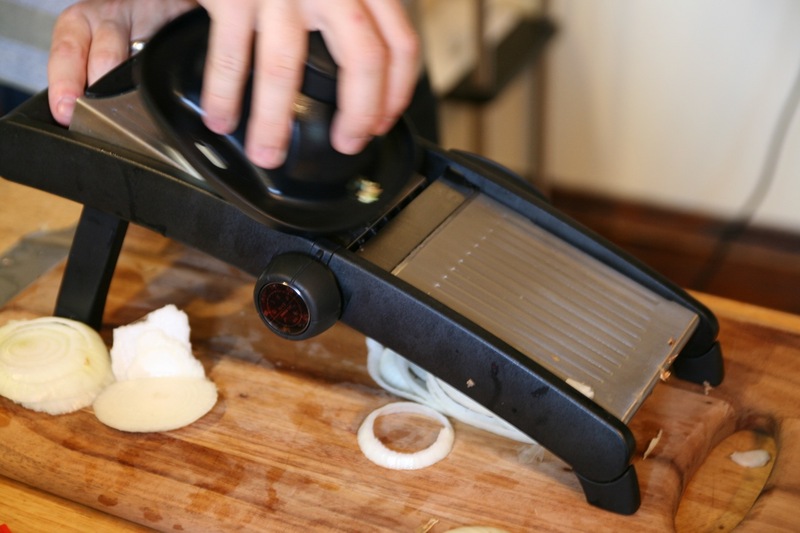
At first everything was fine. Taking a cue from Adam Kuban, we decided to make our own onion rings instead of the normal burger pairing of fries. The recipe was taken from Simply Recipes, which soaked the onions in buttermilk and coated them in flour and cornmeal.
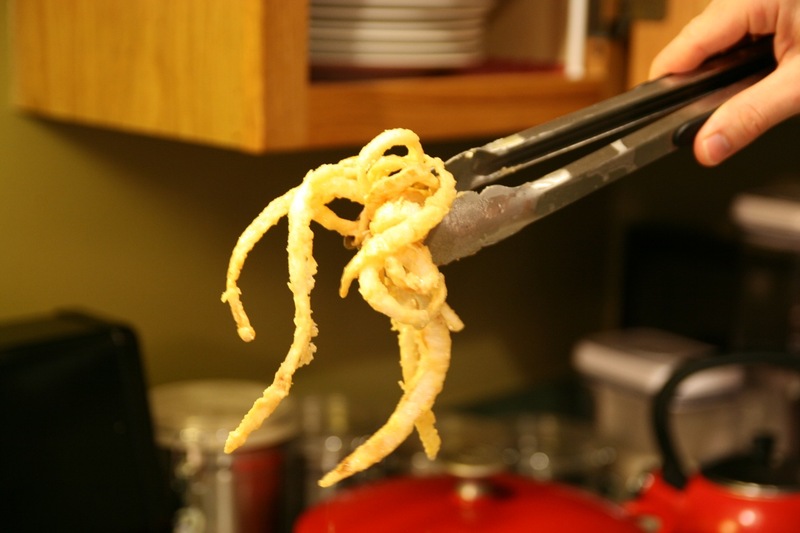
We fried them in canola oil set to 350 degrees for a few minutes, until nice and golden brown. We stashed them in preheated oven and got to the beef.
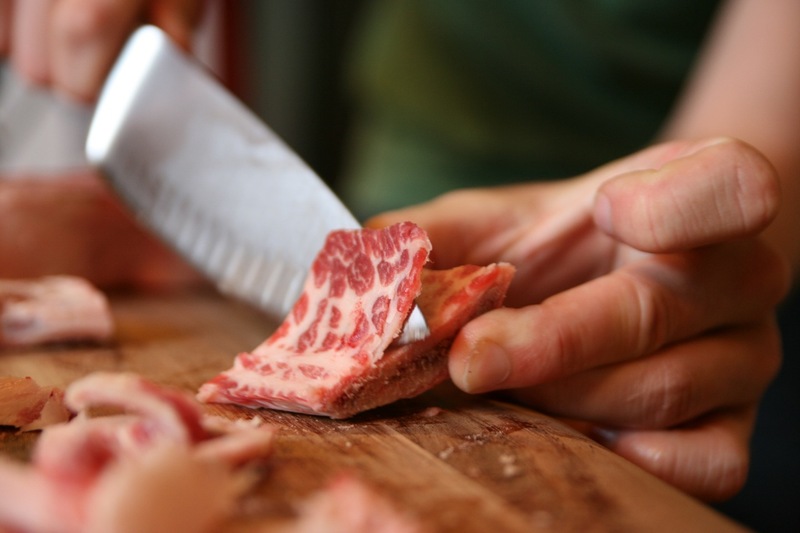
The demise of our burger started with the meat, and more specifically the combination we choose.
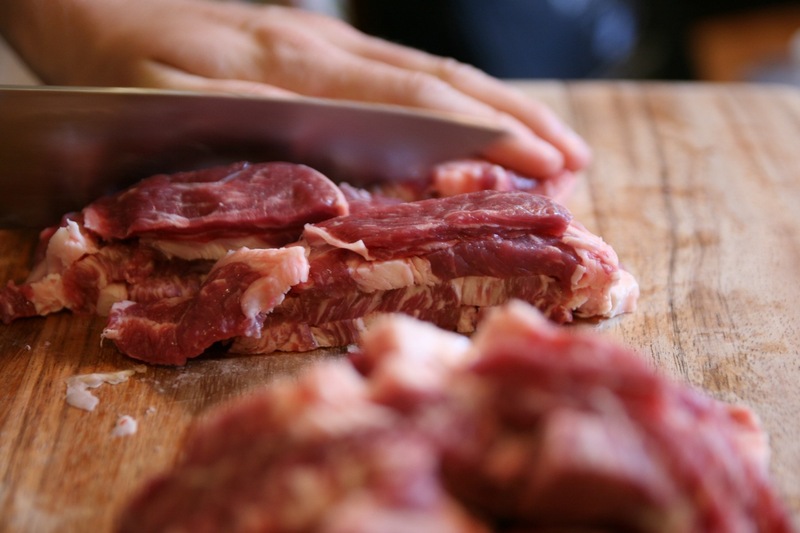
We decided to use an equal amount of short rib and chuck, a combo that we hoped would produce a patty of unparalleled beefiness.
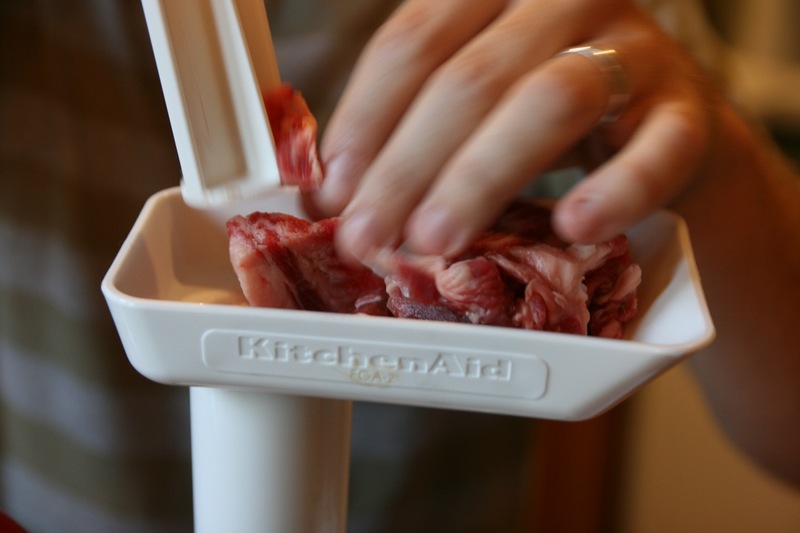
We coarsely ground the meat, alternating chunks of short rib and chuck, to create a uniform grind.
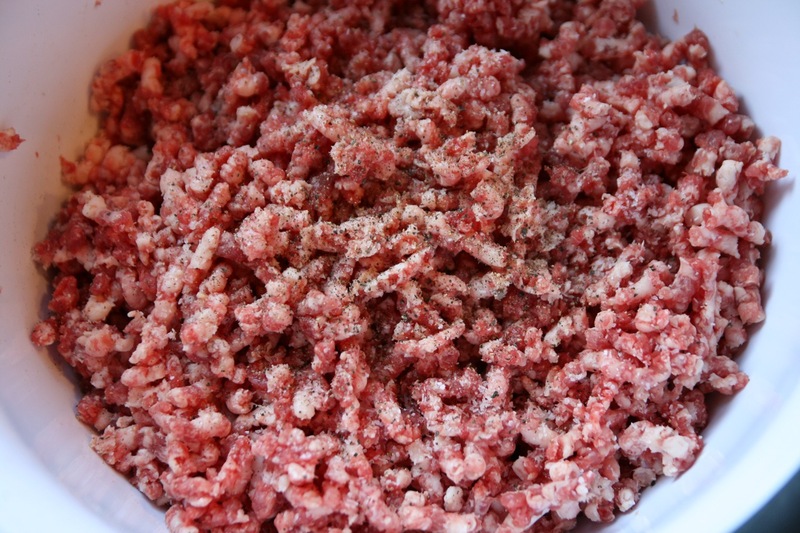
It was only then that we noticed the unbelievable amount of fat mixed with the red meat. The burger just didn't look good, it looked a little too chunky. We decided to regrind half of the meat, to see if the meat and fat just needed to be incorporated.
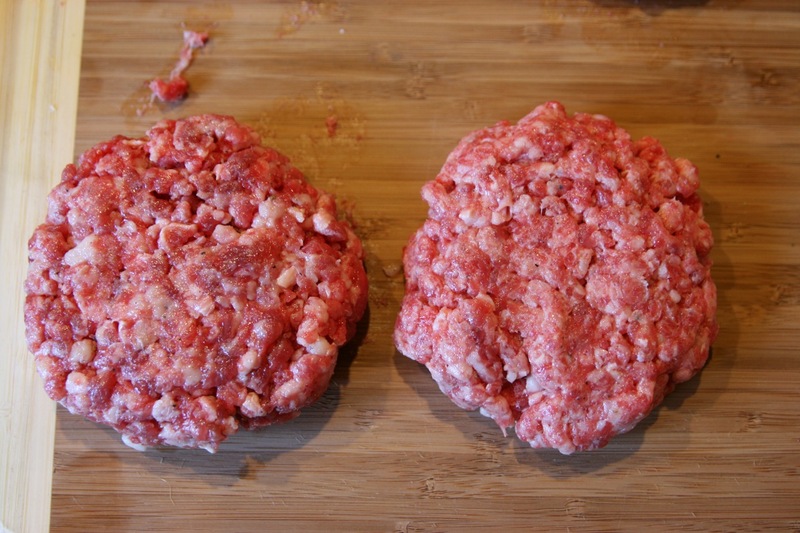
The burger on the left is the one that is only ground once, while the one on the right is the reground patty.
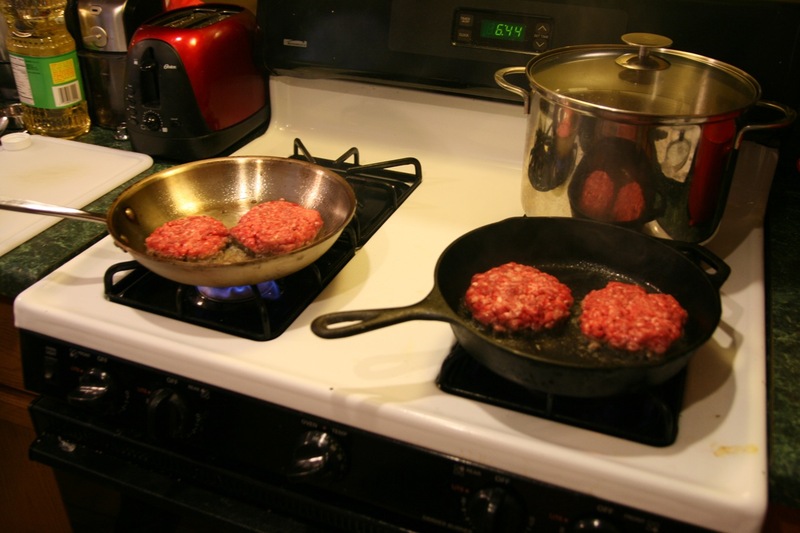
To cook them, we set two pans over high heat, and let them warm up for 10 minutes or so. Then we added a swirl of canola oil, and stood by with spatulas in hand waiting to flip with abandon. We cooked them for about 3 to 4 minutes, flipping every 30 seconds.
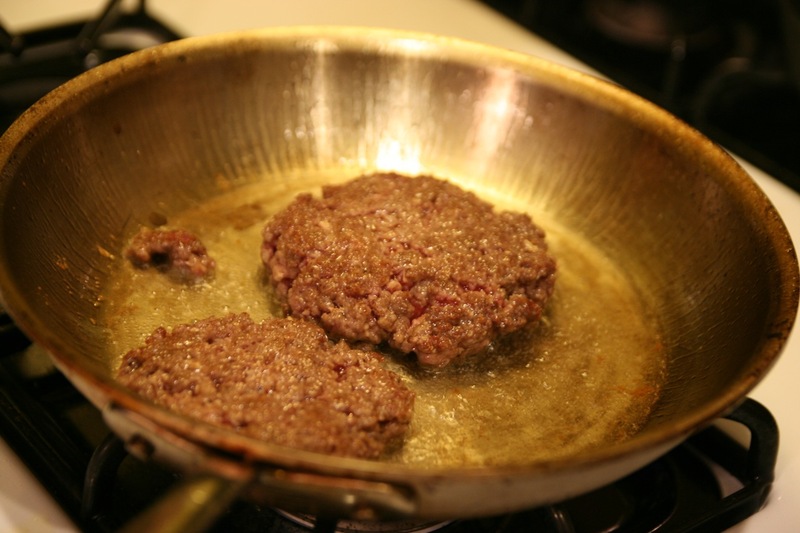
Everything was going well until we noticed the incredible amount of fat that was accumulating in the pan. It covered the bottom in nearly 1/2 inch of liquid fat.
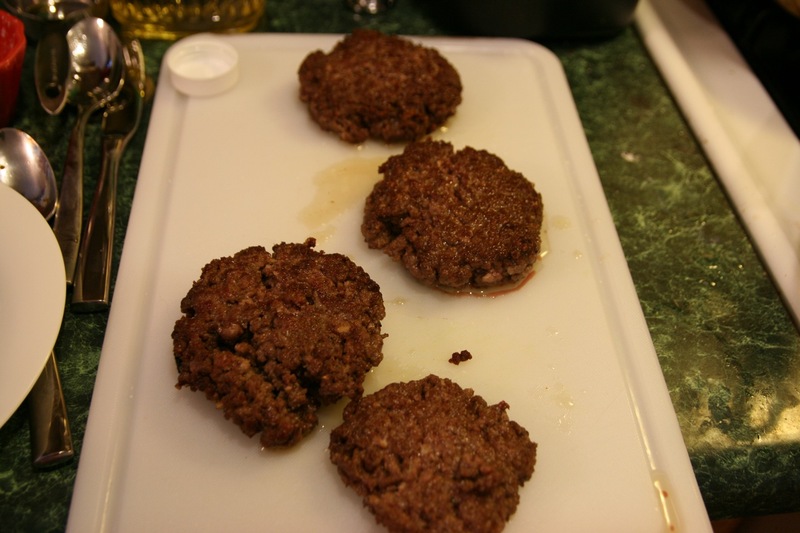
But the sear was incredible. They sure didn't look like most burgers we had cooked. We toasted some potato buns briefly in the broiler, and sat a piece of American cheese on the top to melt it slightly.
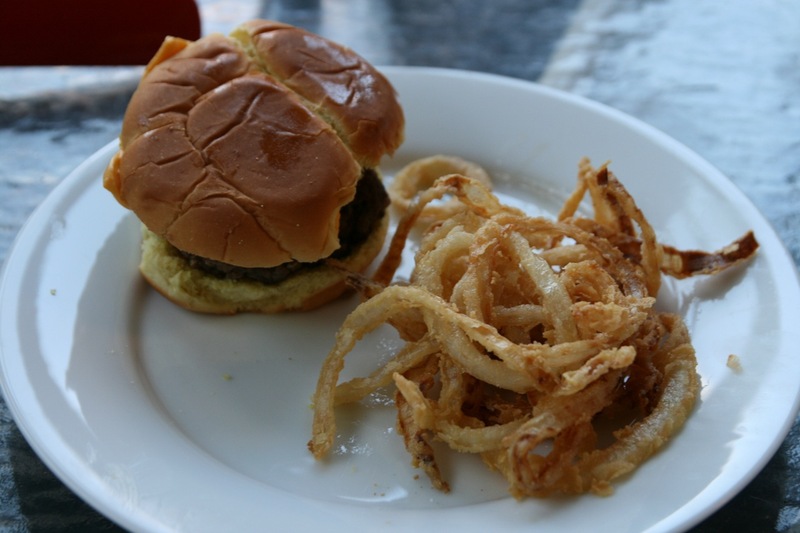
As for toppings, Blake slow cooked some onions in butter to create some crispy onions and whipped up a fresh batch of mayonnaise. I added some mustard to mine.
The onion rings were a unanimous success, with even Abby, a renowned onion ring hater, admitting they were delicious.
Both of the burgers were flavorful. But the once-ground patty was the clear winner. It just had a far more beefy taste and texture. The little bits of beef taste nearly steak-like in richness. If this showed me anything, it's that grinding my own meat is the only way to go.
But like mentioned above, the fat was overwhelming. And after wards we all felt a completely nauseous and had to take an hour long walk to feel right again. Both the chuck and the short ribs were too fatty, and I'll probably try to trim a lot more of the fat off next time I make them. I've also had a lot of luck with sirloin, which is leaner than either chuck or short rib.
It's good to know, but there is a limit to how fatty a burger should be.


{ 11 comments… read them below or add one }
a few months ago someone told me homemade ice cream was the only way to go… and after my first batch of ice cream I realized they were right. Now you guys have tempted to add the meat grinder KA attachment to my collection, haha.
I'll have to admit, this is the first time I hear of this 20-30 second rule; but the burgers do seem to have a pretty solid sear on them. Great step-by-step post!
I'll point y'all in this direction:
http://www.americastestkitchen.com/recipe.asp?recipeids=3509&iSeason=8
It's free after registration, and the recipe makes a great burger.
Dare I ask whether the wonderful char was due to the fat content in the burger, and that the char wouldn't be so good if not so fatty?
-J.
Typically when doing duck breasts in a pan, you'd drain off some of the fat occasionally… leaving enough to lubricate the pan. The process allows more fat to render, while keeping the duck skin crisp. You may want to consider doing the same for your burgers. It should result in a less greasy burger, but you'd still maintain the sear/crust.
Nice. I used a combo of short rib, chuck and sirloin fresh from the butcher's market section at our local farmers market. I cooked them on the grill rather than on the stove top and they were pretty tasty. Sirloin gives it that steak taste and I would dare say bumps it up into fancy burger territory.
Check out my first attempted that I chronicled.
http://eatdrinkman.blogspot.com/2008/08/burger-saturday.html
Wow, the burgers look fantastic. The aftermath of fat notwithstanding.
Now that meat grinder attachment is calling me. . .
I laughed out loud at the picture of the patty nearly deep-frying.
I guess sometimes there really can be too much of a good thing.
You have convinced me however to get the grinder for my Kitchen Aid. I'm never happy with the ground beef I buy. Maybe the solution is to just make my own.
Personally, I think home-ground beef is the only way to go.
We like our burgers a bit leaner, however. I generally go for about an 87/13 ratio.
Cast Iron skillet with salt thrown on the bottom.
Your McGee flipping technique is really interesting and I'll use it next time we make burgers.
Dude, you FRIED the burger — no wonder it was fatty. I wonder if you poured off some of the fat (as mentioned above) or grilled it if it would have been more manageable.
Also, for heavy and fatty meals, a bottle of beer goes a LONG way. Its no coincidence that parts of the world with heavy & greasy cuising (Germany, eastern europe) are also big beer brewers. I have no idea how it works, but somehow the alcohol/carbonation cuts through the fat and keeps you from feeling ill afterwards.
I guess I should state that I only put about a teaspoon of oil in the pan, just to raise the smoke point. The fat laden skillet above is filled almost completely fat that came off the patty…
FYI – Cook's Illustrated recently used 10 oz sirloin tip to 6 oz boneless shortrib in their hand-ground burger – which is v. v. tasty and not so fatty. They didn't do the 30 sec flips though. I'm going to have to try that soon!
This story both cracked me up and inspired! I need to try grinding my own meat. The visions of flipping like a mad person and having to walk it off afterward were what cracked me up. Just added your blog to my reader, love the writing style.