

I just wanted to make a bowl of miso soup. That's all. It was going to be the first course of a casual dinner party, something that wouldn't require too much attention so I could focus and pull off the main course in a reasonable amount of time. I figured all I needed was some miso paste, a hunk of tofu, and a seaweed or two to make it look right. I was wrong.
This perturbed me to no end. Japanese cuisine is not one I've indulged in that often, feeling far more comfortable across the Straight of Korea in, well...Korea. I find that cuisine brasher and more gloriously hedonistic. I certainly respect Japanese cuisine, but it's not one I've wanted to really figure out. Or at least not right now. Now I have no choice.
To make a proper miso soup I needed to make dashi. To make dashi I needed water, konbu, and bonito flakes. As for those last two ingredients? I had no idea. I just set off for my local Asian market figuring I'd run across them at some point. There I spent well over thirty minutes trying to decipher labels with my nonexistent grasp of any Asian language. Finally, after a good 10 minutes sprawled out on the floor looking at the bottom shelf, I got the nerve to ask someone where I might find these things. She just laughed.
Konbu is dried kelp, which means my miso was going to have dried kelp and seaweed. Who knew?
As for the bonito, it's skipjack tuna that has been smoked and dried into something called katsuobushi. This resulting wood-like block is then shaved into flakes and sold in plastic bags. Of course, the bags of them were on the top shelf.
What about the miso? In my mind miso was miso, but it turns out there are various kinds which vary in color and strength. The recipe I was using called for shiro miso and aka miso. I have much more to learn about this as well.
As left the market with a bag of wakame (seaweed), dried kelp, two kinds of miso, a bag of bonito flakes, two packages of tofu, and scallions, I wondered how long this new obsession of mine would take and whether I'd ever get that first course out before the dinner guests got hungry.
Turns out, once you have all the ingredients, the process is rather straight forward and won't take longer than 30 minutes or so. And since most of the ingredients besides the tofu are pantry items, whipping up a new batch of miso soup in the future should be a breeze.
Bonito smells like, well, dried fish, but it looks more like pencil shavings. They are the body behind the miso, and make the whole ordeal more rounded and complex. It's astonishing how much difference it makes. It's sort of like how a real fine chicken stock can make the simplest soup extraordinary. Best part is that unlike bone laden stocks this can be made in minutes, not hours. But what is the best way to make dashi?
Thanks to Saveur and this lengthy eGullet post, I think I'm beginning to understand the concept. Dashi is the base of Japanese cuisine, and crucially important, but it's not as simple as tossing a bunch of bonito and kelp together. In fact, there isn't a single kind of dashi. There are many kinds, but the two I focused on where the ichiban-dashi (or first stock) and niban-dashi (or second stock).
Both have their purposes. My purpose was miso soup, so where to go? Turns out the first dashi was better for something called suimono, which are clear soups (I told you my knowledge of Japanese cuisine was criminally low). For the second dashi, the leftover bonito flakes and kelp from making the first dashi are tossed into a pot for the base for this batch. This version is cloudier and more flavored and is the perfect base for miso. Got that?
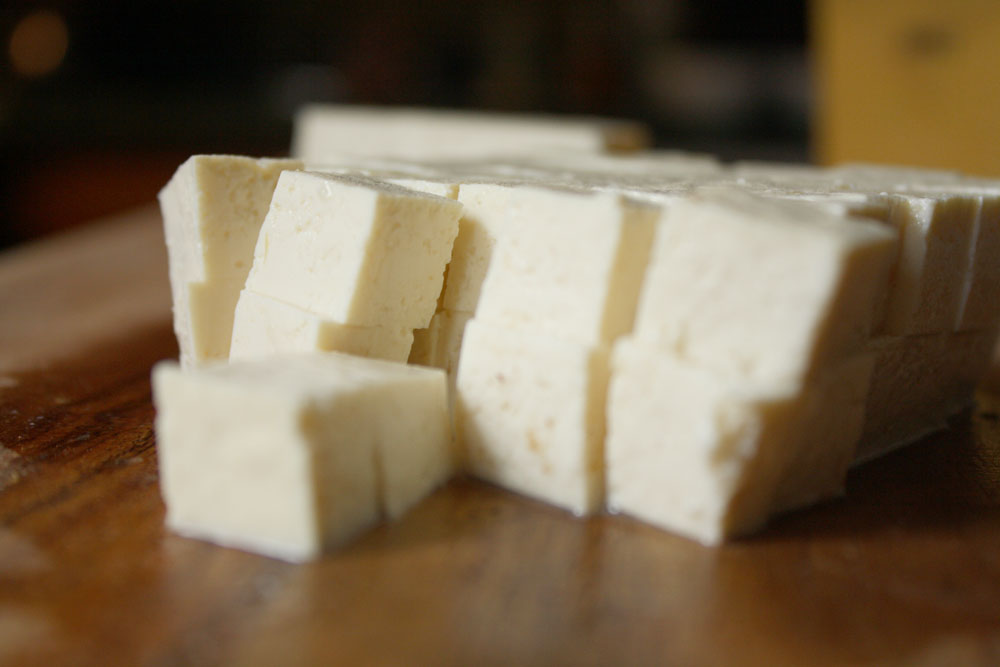
Once the niban-dashi is made, the process of miso is simple. The different kinds of miso are added, diced tofu is dropped in for a minute, and then it's scooped into a bowl and served with some of the pre-soaked seaweed and some chopped scallions. Simple stuff. But was it worth it?
I will say, without trying to get too dramatic, that this was easily the best miso soup I've ever had. It's incredibly full flavored and strangely rich. It made cheap versions of miso they pass out in restaurants seem like glorified water. This sounds like something I could, without much resistance, get really into.
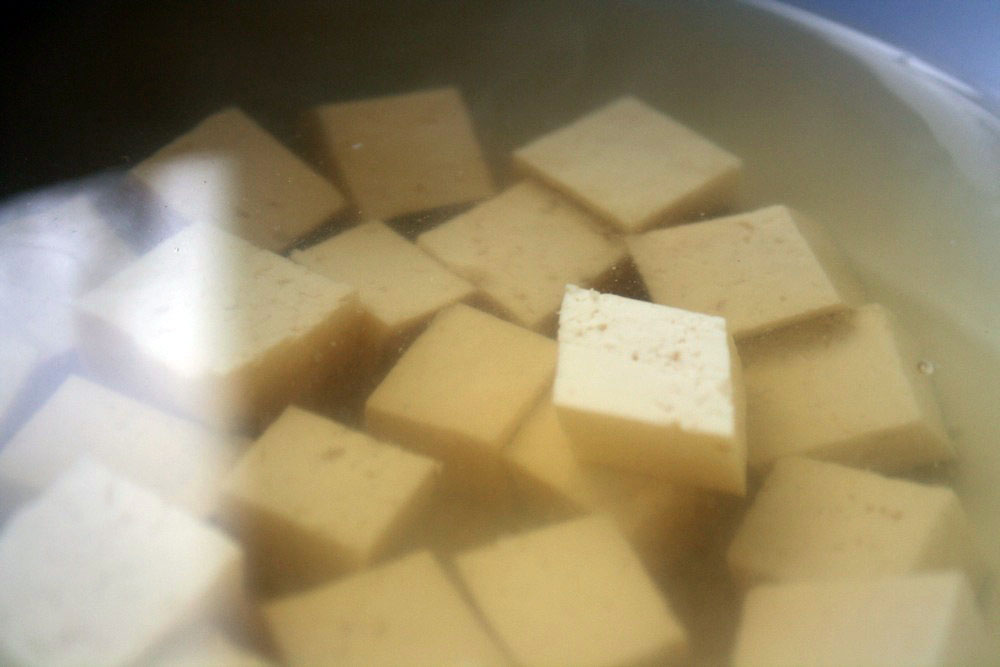
I do have a few questions. To get to miso soup, you need to make the first dashi, and then make the second one. So what is a good use for the first one? I just tossed some tofu into the bowl with the clear first stock, but it was awfully bland. Any other ideas?
Also, I'm thinking you can just bypass the first stock for the second if your mission is only miso soup. This recipe from Saveur seems to do just that. Is this right?
Like I've said over and over, this is just the beginning. I'm just fascinated that something so flavorful can be created so quickly and cheaply.
Ichiban-Dashi (First Stock)
adapted from here.
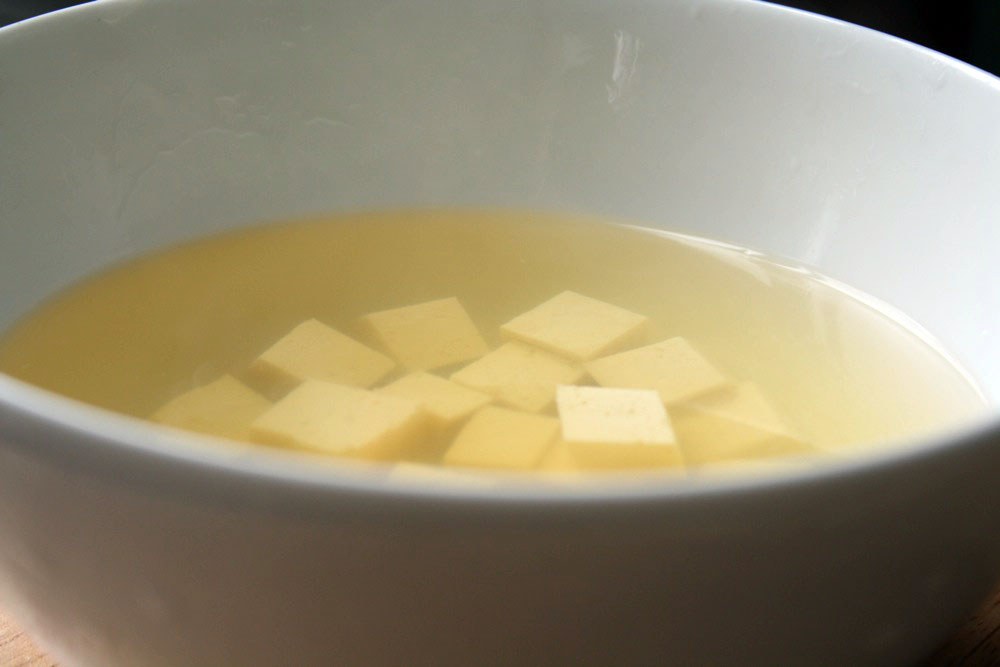
- 1/3 ounce konbu, wipped clean with a damp towel
- 5 cups cold water
- 1/2 ounce bonito flakes
Place the konbu in a pot along with 4 cups of the water. Turn the heat to medium-high and cook until it comes to a slight simmer. Then turn the heat to medium-low. Cook the konbu for 2 minutes and then remove and set aside.
Turn the heat to medium-high and wait until the water comes to a boil. Add the rest of the water, and then the bonito flakes. Be sure not to stir. Once the water hits a boil, turn off the heat. When the bonito flakes fall to the bottom of the pot, strain through a sieve or through a cheese cloth. Set the bonito flakes aside.
This is Ichiban dashi...I'm not sure what to do with it.
Niban-Dashi (Second Stock)
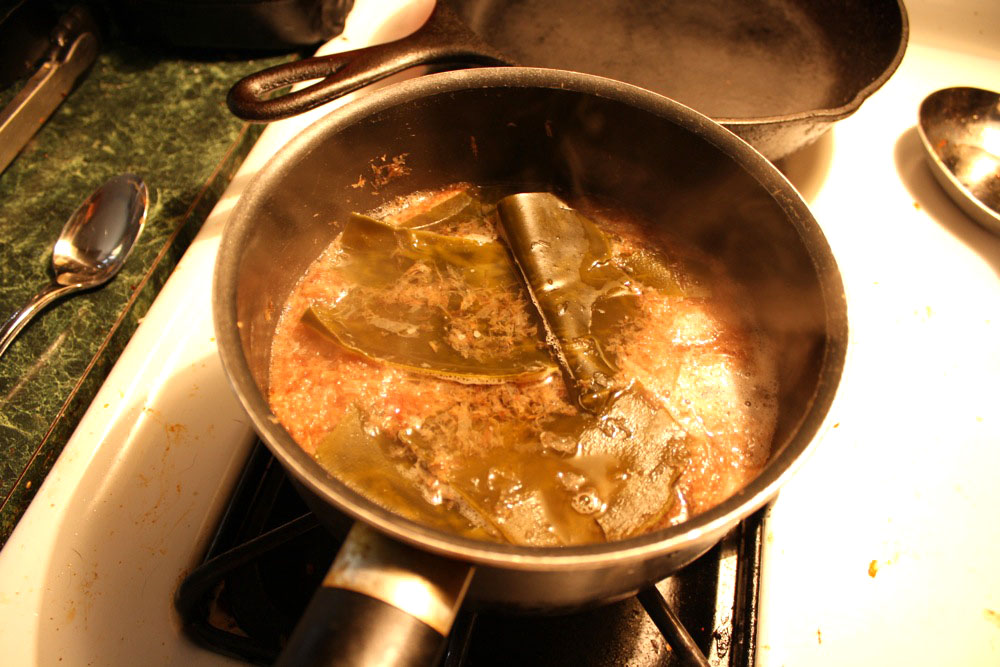
- Leftover konbu and bonito flakes
- 4 cups water
- 1/8 ounce konbu
- 1/4 ounce bonito flakes
Add the leftover konbu and bonito flakes to a pot along with the new konbu. Add the water and bring to a simmer over medium-high heat. Reduce the heat to medium low and simmer for 15 minutes. Dump in the bonito flakes. Remove the pot from heat. Wait until the bonito flakes sink to the bottom of the pot. Then strain the dashi through a cheesecloth or sieve. Throw away the konbu and bonito flakes.
Miso Soup
Serves 4
Adapted from Saveur.
- 1/2 ounce wakame (dried seaweed)
- 2 tablespoons aka miso
- 4 tablespoons shiro miso
- 7 ounces firm tofu, cut into 1/4" cubes
- 2 scallions, thinly sliced
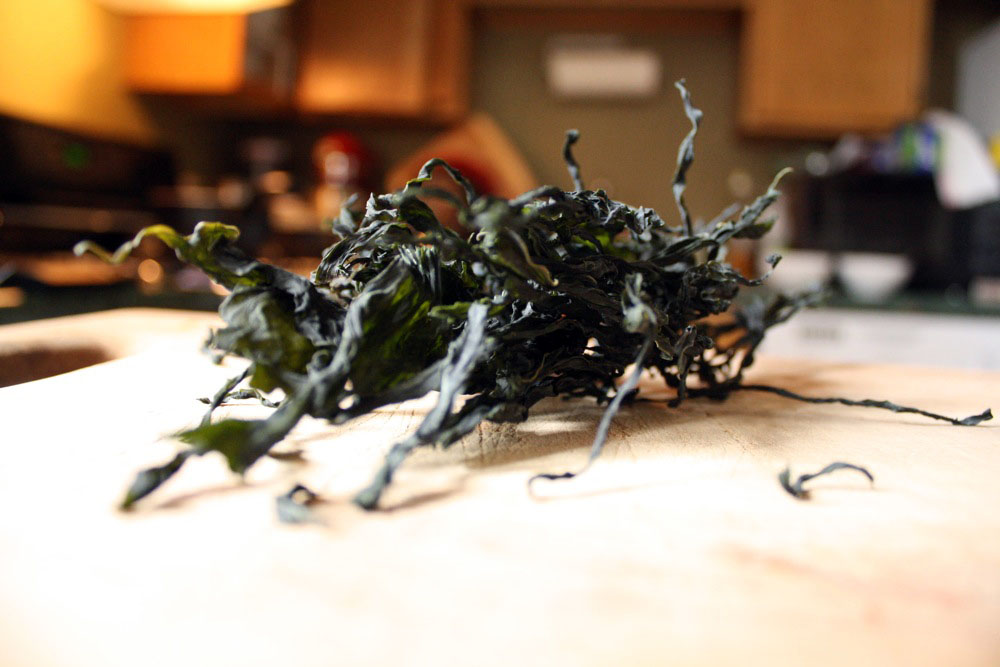
Place wakame into a bowl and cover with water. Set aside for 10 minutes or so.
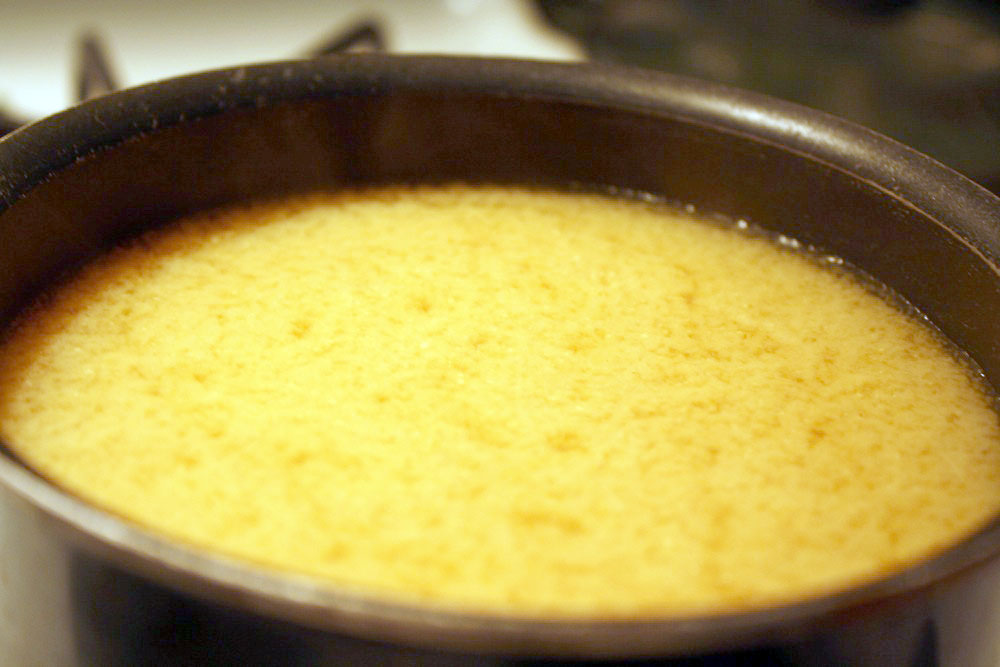
Meanwhile, pour the niban-dashi into a medium pot. Bring to a simmer over medium heat. Add both misos and whisk until incorporated. Dump in the tofu and cook for 1 minute.
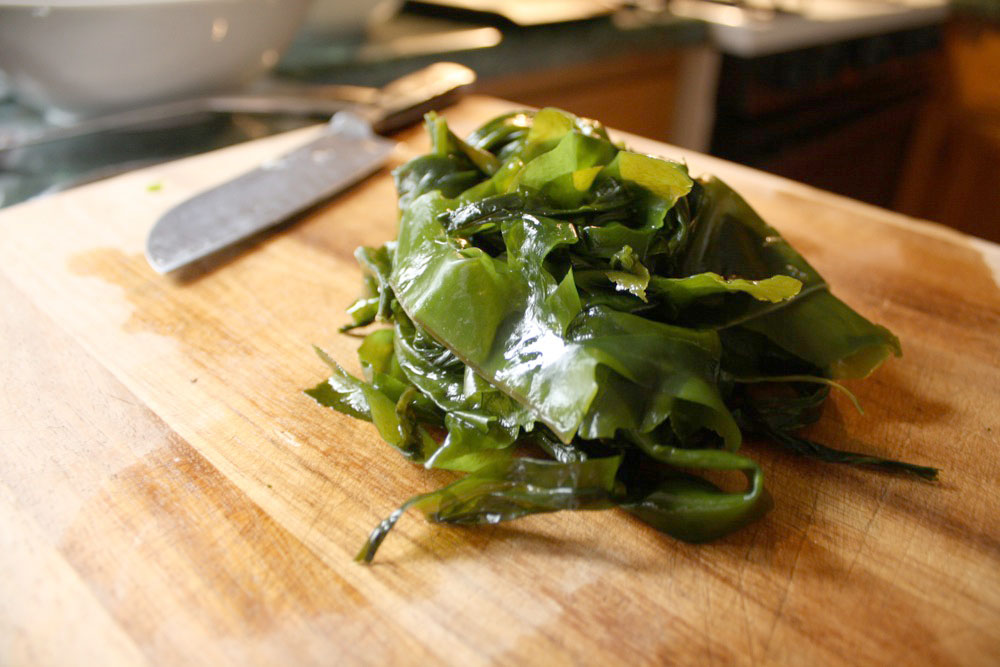
Remove the wakame and rinse to remove any salt. Chop into 1 inch pieces. Divide the wakame and scallions between 4 bowls. Ladle in the miso soup evenly amongst the bowls.


{ 2 trackbacks }
{ 21 comments… read them below or add one }
freeze the ichi-ban dashi–if you are serious about pursuing this japanese cuisine thread a bit further you will end up finding uses for it. ichi-ban shows up as a modifier for ni-ban, its also used on its own but cooked down to concentrate it a bit and treated as a base for other sauces and as a backbone liquid that has more depth than plain tap water in many japanese dishes.
don’t count out the japanese in your excitement for korean, the traditional meals are about subtlety and minute nuance from dish to dish, season to season–check out the rice cooking options and differences between the various japanese rice grains–this alone is a life time of study.
kampai!!
Good writeup. I love Japanese food…it seems sort of simple at times, but that’s often misleading.
One of my favorite appetizers (and easy to prepare) is Inarizushi.
It has been so long since I’ve made miso, I miss it. I’ll give your version a try as I’ve never used bonito flakes before!
Have you tried The Japanese Food Report. This is a great blog and I think you’ll have many of your miso questions answered.
One of my favorite comfort foods is dead simple and made with ichiban daishi.
Add udon noodles – these are fat and squishy, and generally sold most, so they only need to be warmed, not cooked like dried pasta.
Then add fresh spinach and thinly sliced raw mushrooms. The spinach should wilt a little in the warm broth.
Tada! Soup!
Lots of Japanese soups are similar to this. Other common ingredients are sliced pork, fish sausage, egg, fried tofu, or green onions. Often tempura (fried and battered shrimp or vegetables mostly) is added as well, though I do not like how the batter gets soggy in soup.
The inspiration for the infamous college staple of dried ramen is also based on an ichiban dashi broth. It uses similar toppings as above, but different noodles.
Just the image of your miso soup looks delicious. It looks so much thicker and creamer than the plain broth you get in restaurants.
Chef Tuesday: Thanks for the advice. I need to make it again.
Blacknimbus: It does seem simple. So I guess that’s why every ingredient is so important. I was astonished at how flavorful the soup turned out to be.
Van: Hope it turns out well!
Laurel: Awesome. I haven’t looked at that site before, but it looks great. I’m always trying to find new resources. Thanks!
PlantingOaks: This is great. I love udon, but have never figured out how best to serve them. This is great advice.
Mine goes like this:
For each serving, put a walnut-sized gob of miso in a cup. Heat the dashi slowly and when it’s hot, add a tiny bit to the cup. Stir (I use chopsticks) to incorporate, add more water, stir. Continue this process until your miso is thin, smooth and absolutely free of lumps. Meanwhile, add the tofu (I use silken) and wakame to the hot dashi. When the wakame has expanded, it’s ready. Add the thinned miso, pour into a bowl, top with some thinly sliced scallion and serve immediately with rice and a small dish of oshinko.
Japanese Cooking: A Simple Art, by Shizuo Tsuji will give you plenty of uses for the ichiban dashi.
Sometimes when I don’t have kombu or bonito around (always have miso around), I use fish sauce and some msg to make the “dashi”….totally cheating, but the fish sauce makes up for the bonito, and the msg adds the proper umami mouthfeel from the kombu though admittedly without the green seaweedy taste….
I noticed you got the MSG free miso. I failed to do so the first time I made miso and then ate the soup for several days and all the sudden noticed I was feeling so hot. I was like you – so bewildered by the other language, I got overwhelmed at the asian market! Now I get the MSG free…much better!
Mark F: Thanks! I’ll have to look into that book.
Michael Nagrant: I always have fish sauce around, along with 15 other Asian condiments. Not much msg around my house, but that can be changed. I’ve seen it sold at the Korean Market by the pound.
Katie: Huh, I hadn’t even realized I’d gotten MSG free. I’m still not sure what kind of Miso is best. The market has so many different brands. That’s going to take a while to figure out.
I found a great blog in the world. Thank you!
I had looked for a minority’s cuisine recipe on the Web.
Then reached here and found our miso soup one.
You did a great job.
Dashi is the core of our cuisine and it is related with our natural resource good water. Good miso and tofu are also related with minerals in the water.
(fron Tokyo)
I learned to make dashi and miso soup from the wonderful blog, Just Hungry. She has about a dozen miso soup recipes. Here’s the gist of what I gathered: Pretty much you can use dashi to punch up just about any blended soup recipe. The best I’ve tried so far is carrot/ginger blender soup. (Cook carrots, toss in blender with some finely minced ginger, dashi, blend and heat, add miso at the end, just before serving. This takes about 20 minutes start to finish and is a soup-er way to use up those baby carrot sticks that got a little woody or funky in the fridge.
Dashi and a little soy sauce makes a nice dressing for a cold soba pasta salad. There really is no end to the uses for dashi.
Jenny the nipper: Wow, I think I might have to try that recipe. It sounds delicious.
What’s msg guys? This recipe sounds great! You’ve made me really hungry reading it!! I’m going to have to have ago at it I think!
Great, helpful post! Did you ever find out if you can skip the first dashi and head straight to the second? Did you try that Saveur recipe?
Thanks!
Thank you for a great site. A propos miso, I still use “The book of miso” by William Shurtleff and Akiko Aoyagi from 1976. 400 recipies. It can be found at eBay sometimes. It has everyting you always wanted to know about types of miso and their use – and several very sober japanese cooking tips.
I feel like adding that you can find hon-dashi – real dashi – as a powder. 8gr. for 600 ml of water. Ajinomoto makes a type laden with msg. Id’ rather avoid that. When I crave a hot broth in a minute, I boil water in my electrical kettle, pour a bit of dried wakame, and a couple of gr. of dashipowder in a bowl, pour hot water on, and a small spoonful of miso in at last. Whisk. Eat. Yum! By the way. The reason miso should not cook, just get hot (until the 1st bubble) is that its full of live probacteria. They are destroyed w. boiling. So it’s live food.
MSG is monosodium glutimate. It is used as a flavor enhancer in many low end foods, and many people have an allergic reaction to it.
@Finula
MSG is a hot topic for sure. For what it’s worth, Kelp (Konbu) is a natural source for MSG and the reason the dashi tastes so wonderful and the reason you don’t need to add more.
Konbu was actually the first source of MSG — it was originally isolated by a Japanese scientist (Kikunae Ikeda) in 1907. He was interested in what made konbu/dashi taste so good. The bonito flakes have an additional compound, disodium inosinate, that interacts synergistically with MSG on your taste receptors to create an even stronger umami flavor. Turns out that the Japanese knew all along what the makers of Doritos only recently figured out
.
Just found the blog — great stuff!
Nice to see another dashi fanatic. If you really want to take your dashi to the next level, you need to use fresh katsuobushi flakes.
See
http://italianintheus.blogspot.com/2009/07/quest-for-katsuobushi.html
and
http://italianintheus.blogspot.com/2009/11/quest-for-katsuobushi-ii-dashi-is-deep.html
@ vibeke
Unfortunately that’s a misconception. Most bacteria die at just over 60º Celsius, when you hit boiling point they’ve been gone for quite some time.