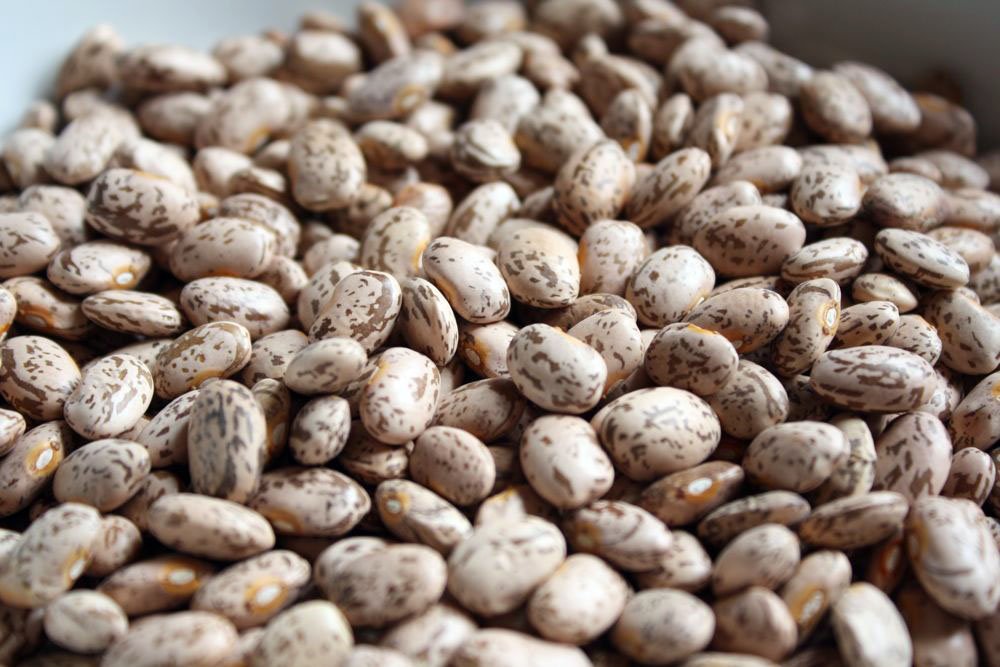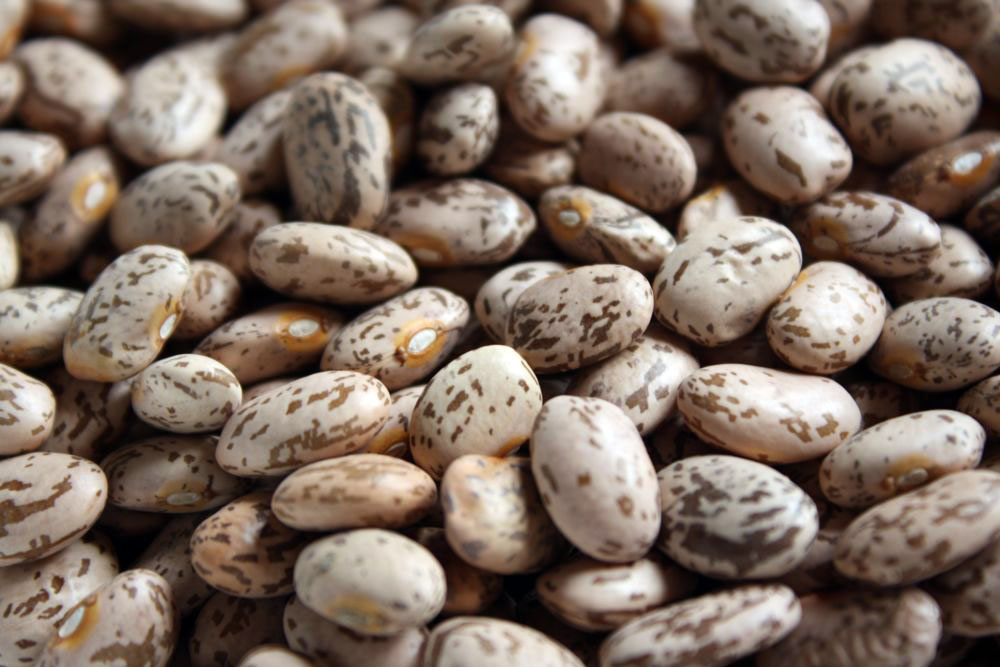

90 Minute, No-Soak Beans

by Nick Kindelsperger on June 9, 2009

no soak beans 0

It seems that in the past few years there have been a few monumental revelations of the "everything you thought you knew about cooking was wrong" variety.
- Steven A. Shaw aka "Fat Guy", Executive Director, eGullet Society

When the timer sounded, I was caught off guard.  I reached for a kitchen towel, carefully folded it around the hot handles of my dutch oven, and transfered the hulking pot to the top of the stove.  I threw the towel over my shoulder, and contemplated how this batch of dried beans could possibly be done.  They had only been cooking for a total of 90 minutes, and yet the Executive Director of the eGullet Society claimed that they would be ready.  I trust this guy.  He gave the world the Butter Steak.  I reached for the lid, forgetting the towel, and scalded my right hand on the hot top.  I cursed very loudly.  After refocusing my thoughts, I reached for the towel, wrapped it completely around my wounded hand, and finally opened the lid. 

The beans were cooked.  Every single one was tender and ready to go.  It had taken 15 minutes on top of the oven to bring to a boil, and then 75 minutes inside a 250 degree oven.  I had not soaked the beans before hand.  I didn't even bother to rinse them or sort through to see if any rocks had been hidden inside.  How could this be?  This question drove me mad, because I have been cooking beans nearly every week for the past year, and now I realize I've been doing it all wrong.  

My bean-making mantra has always been "give them time."  I usually just cover the beans with some water, set the burner on low, and try to forget about them.  Hours pass.  Lunch and dinner often roll by.  They took way too long, but if I cranked the heat the beans would simply turn to mush, or seize up and become as hard as little pebbles.  Soaking the beans overnight seemed to solve some of the problems, but then I had to plan this thing out a day in advance, instead of just deciding to chuck some beans in to a pot.  It's a nice thought, but one I never seem to make.  Occasionally I'd do a quick soak, where I'd bring the pot to a boil, and then turn if off to soak for an hour or so.  But that never really seemed to make much of a difference.  

I suffered through this ordeal because dried beans, no matter how difficult to make, were infinitely better than canned beans.  Though the canned variety can be incredibly convenient and usually taste just fine, they don't have the impressive depth of flavor and a meaty aroma that slowly simmered beans can attain.  It just doesn't happen.  Dried beans make tastier soups and better platforms for refried beans.
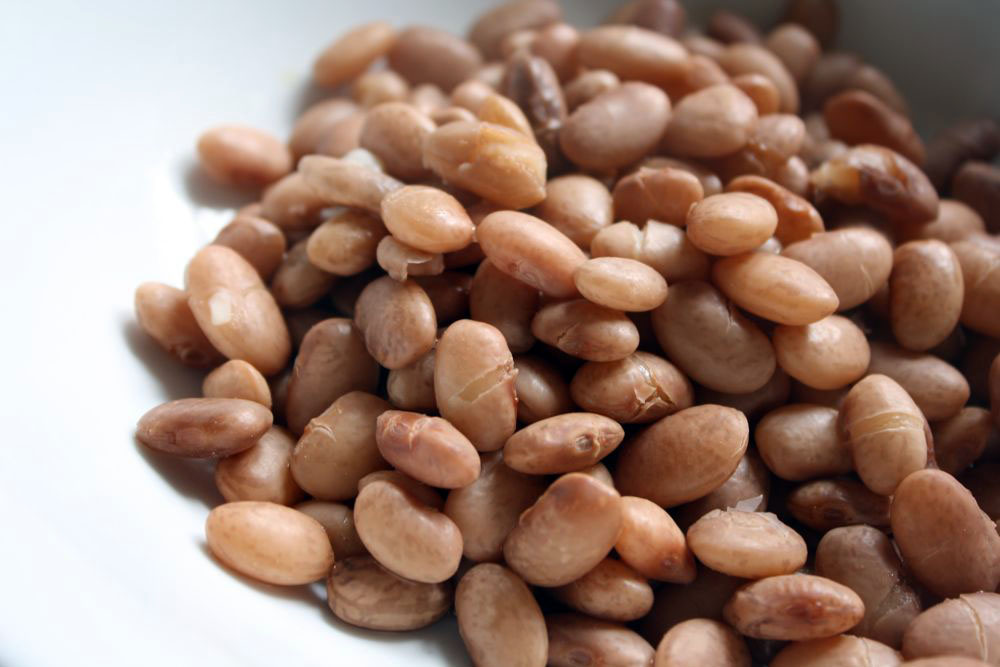
no soak beans 9

Which all made this revelation related in eGullet even more surprising.  Not only was it faster than normal, it actually produced better beans.  How often does that happen in life?

I've only done this once, so I have plenty more experimenting to do.  These beans were cooked without any flavorings at all beyond a pinch of salt.  I wonder what some aromatics and a piece of pork or two would do this batch.  Could they get even better?  And how would black beans fare with this method?

That's probably too many questions.  In the meantime, I made a huge batch of refried beans.  I still have some leftovers.  Here are a few other uses for dried beans. 

90 Minute, No Soak Beans

no soak beans 1
  • 1 pound beans (I used pinto here, but you could use red or black) 
  • 1/2 tablespoon salt

Preheat the oven to 250. 
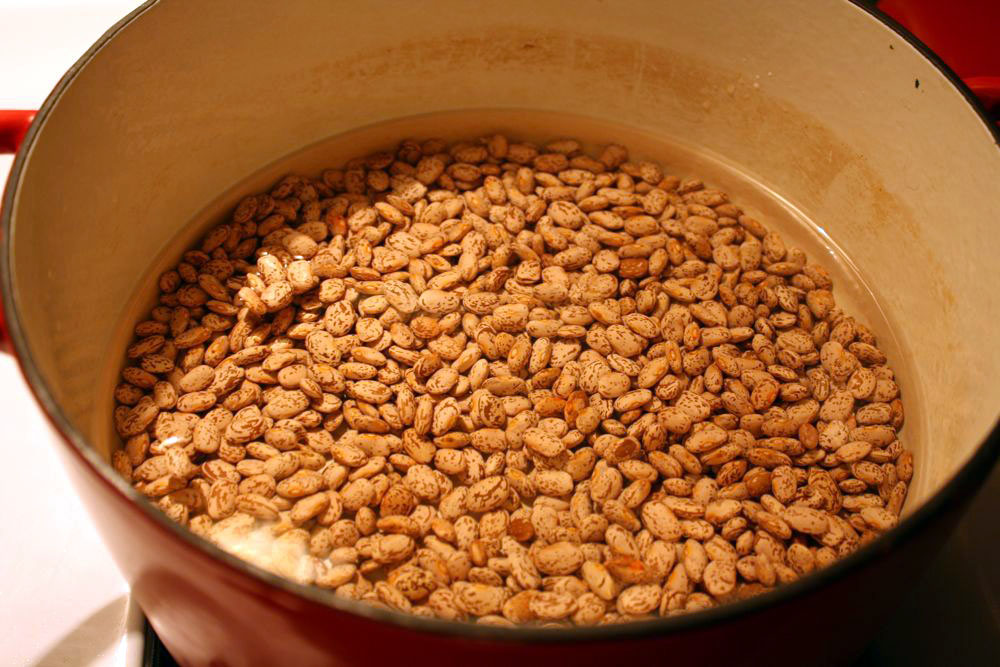
no soak beans 3

Dump the beans into a large dutch oven or pot with tight fitting lid.  Pick out any broken pieces. Add the salt.  Top with enough water to cover the beans by an inch and a half.  Bring pot to a boil. 

Then cover the pot, and set in the oven.  Cook for 75 minutes. 
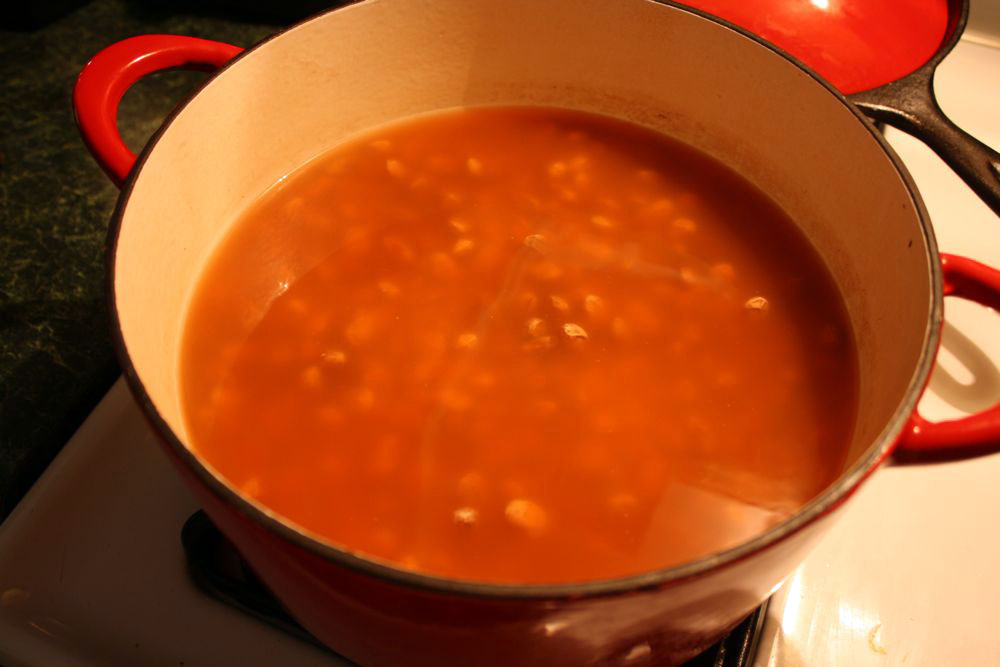
no soak beans 6

About 45 minutes in, check on the beans.  If they look too dry add some boiling water to the pot.  Mine did not need any. 
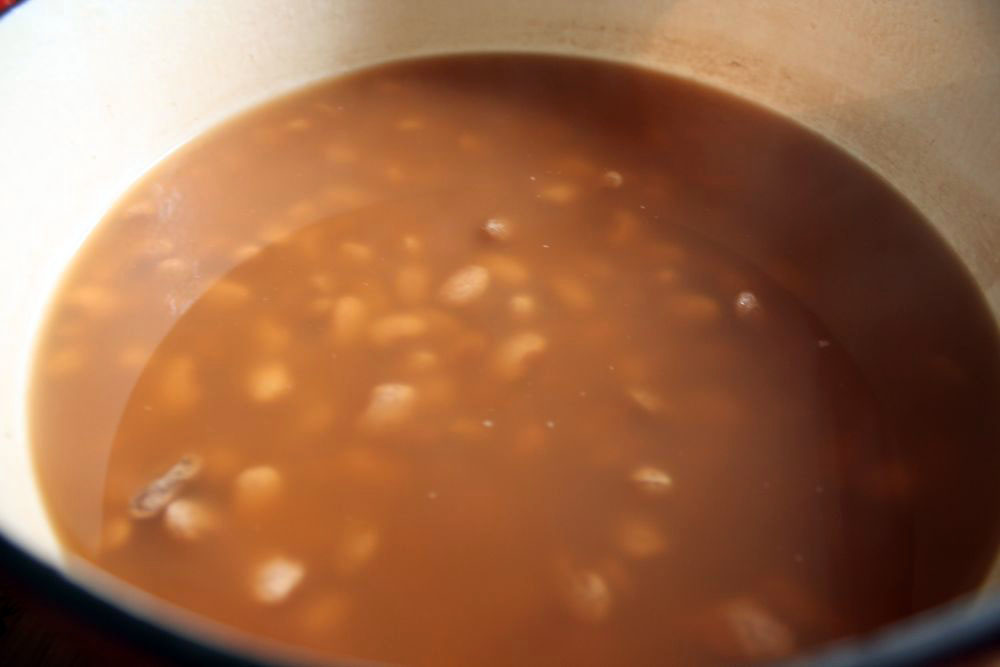
no soak beans 7

After 75 minutes they should be done. 

  • Share/Bookmark

{ 8 trackbacks }

Eclectorama » Blog Archive » 30. Cook Your Own Beans
June 12, 2009 at 8:36 am
Highlights from Barcelona on the Cheap
June 16, 2009 at 11:01 am
A hill of beans — Last Night's Dinner
June 18, 2009 at 12:42 pm
A Weekend of Beans and Brats
June 24, 2009 at 2:51 pm
It All Started With a Pot of Beans | Nibblers
October 22, 2009 at 10:08 am
Pithy and Cleaver » Beyond Pork and Beans: Lamb and Duck Cassoulet
October 26, 2009 at 7:29 pm
The Paupered Chef Gift Guide
December 16, 2009 at 6:13 pm
90 minute beans « A Season to Taste
January 28, 2010 at 5:10 am

{ 45 comments… read them below or add one }

Andrew June 9, 2009 at 9:35 am

this is very cool. I agree that dried beans are much better (and cheaper) than canned beans. I alway use my pressure cooker for beans because it usually only takes about a half hour, no soaking. The one drawback is that you can’t really check to see if they are done. I usually overshoot (slightly mushy beans) because beans al dente just don’t cut it.

Myrnie June 9, 2009 at 9:41 am

Huh! Who’da thought? I always use my slow cooker- put the dried beans in with some water, and cook on low for 6-8 hours. This way is sure faster!

debbie June 9, 2009 at 12:45 pm

Whoa. This is pretty mind-boggling. Clearly I need to spend more time on eGullet–haven’t been there in ages! I, too, use my slow-cooker, but 90 minutes is awfully appealing.

katiek @kitchensidecar June 9, 2009 at 4:18 pm

Aw, man. I had a heated debate with my friend Arcenia about the topic of soaking beans.

So swore that her mexican mom did NOT soak beans overnight before cooking in the gold ole olla.

I told her she was crazy. Uh oh— I guess she wins.

Nick Kindelsperger June 9, 2009 at 5:27 pm

Andrew: A pressure cooker would also help. In the eGullet article mentioned above, people said that the pressure cooker was quick, but it didn’t work as well as this method. You should test!

Myrnie: Exactly. I can’t believe I went this long without knowing this method.

debbie: It’s easy to get lost in eGullet. There are some absolute gems in there.

katieK: Sorry! But the winner is a shorter cooking time.

Erin @ One Particular Kitchen June 9, 2009 at 7:31 pm

This is really mind-blowing. Really. I adore black beans, but only when they’re cooked from dry beans at home. I’ve always done it in a slow cooker, so it’s a lengthy process — soaking overnight, cooking all day, cooling forever, doling into freezer bags. It’s a Project. Capital P. This could be life-changing….

Jeeyon June 10, 2009 at 12:54 am

AMAZING!

Right now my oven is out of commission (we recently moved into a new apartment after three years of vacancy, so some of it needs a lot of cleaning and care) and I’ve been adapting braising and stew recipes that require oven time for the stovetop by cooking in a very heavy cast-iron dutch oven over very low flame. Do you think that would work here?

Katie June 10, 2009 at 5:39 pm

Wow, that’s great to know! I’ve cooked rice in the oven before, but never beans. Hmmm… I bet you could do a couple of pots of beans at once (I like to cook up several different kinds and then freeze them in can-sized portions).

Melissa June 10, 2009 at 5:50 pm

I am definitely giving this a shot. Usually when I don’t plan a day ahead I do a crock pot method, but it still takes 4-5 hours. I would love to have a no soak 90-minute method. How awesome.

By the by, I came here through the post on SE. Glad they linked you on this one.

Gus June 10, 2009 at 6:09 pm

I’ve been getting similar results by soaking beans overnight, bringing them to a boil on the stove, reducing the heat as low a possible, and letting them cook for 1-2 hours.

I suspect that, beyond a certain point, increased temperatures have no impact on softening the beans.

katiek @kitchensidecar June 10, 2009 at 6:37 pm

Do you think garbanzos can work too?

Sharond June 10, 2009 at 6:50 pm

One additional step I recommend: bring beans to a boil; pour off water, then proceed as in the article. That first boil removes the starch that causes gas. Great for geriatrics who formerly had to swear off beans.

maybelles mom June 10, 2009 at 8:11 pm

My mother always swears by the pressure cooker, but in India they don’t really use ovens. But, pressure cookers freak me out. I think I will try this.

Phoo-D June 11, 2009 at 8:59 am

Wow. This may very well be a game changer for me. Can’t wait to try it out.

Nick Kindelsperger June 11, 2009 at 9:32 am

Erin: Let me know how it goes. Black beans are definitely my next step.

Jeeyon: In theory it should work. If you cover it tightly, and check the temperature of the liquid occasionally to see if it’s hovering around 250. It will definitely require more attention, but I think it can be done.

Katie: That’s a good idea. I still haven’t baked rice yet, but it could be a whole baking meal!

Melissa: Yeah, 4 to 5 hours was normal for me, too, before I found this recipe. Glad you found it!

Gus: Yeah, I mean if you have the foresight to soak this isn’t a huge departure. But i’ve had so many times when increased heat ruined a pot of beans.

katiek: That is a good question. I tried for the first time to cook garbanzons a couple weeks ago and it was a failure. For right now, I’m just going with black, red, and pinto. I think garbanzos cook differently, but I don’t have much to back this up.

Sharond: Ha!

Maybelles: They freak me out, too.

Phoo-D: Good luck!

Amanda @ Mrs.W's Kitchen June 11, 2009 at 10:03 am

That’s it. I’m trying this. Today. We’ve got a chilly day, so it’s just right for putting on the oven.

Chas June 11, 2009 at 10:15 am

Am I losing something in translation. The title is 90 minute beans yet the instructions say ” bring the beans to a boil, put the lid on and place them in the oven for 75 minutes. Where are the other 25 minutes? Do you boil them for 25 minutes on the stove top?

Nick Kindelsperger June 11, 2009 at 10:18 am

Amanda: Good luck!

Chas: Yeah, it will take roughly 15 minutes to bring the mixture to a boil on top of the stove and then 75 in the oven. If it takes you less than 15 minutes to bring the mixture to a boil, then it will take less than 90 minutes.

Jumper June 11, 2009 at 11:09 am

I guess I will try this. My last pot, red beans, I cooked for hours. The outsides were unpleasantly crispy, the insides just right. They never approached the stage of burning on the bottom of the pan. I still don’t understand this. It seems to happen to my pintos, too, though less severely.

Gus June 11, 2009 at 2:12 pm

Jumper, I’ve had that happen, too. Blamed it on old dry beans.If it happens consistently with beans from a particular source or brand, shop elsewhere or buy another brand.

Nick Kindelsperger June 11, 2009 at 2:17 pm

Jumper: I don’t completely understand this method either. I think the tight fitting lid helps, as does the constant temperature. But I’m not much of a food scientist.

Gus: That’s a great point. Some beans might take longer if they have been sitting around for a long time. I’ve had some beans that just wouldn’t work no matter how long I cooked them. I think they just were a bad batch.

batch June 11, 2009 at 5:18 pm

Hi
Yeah this sounds good !
An alternative method to this is to cook un soaked dry beans in a pressure cooker for 15 minutes. Take them off the fire, open and add a pinch of salt, and or piece of meat, carrot, herb etc then finish cooking it with a regular cover not the pressure cooker cover slowly. It takes about the same time or less and taste excellent too as you can check every 10 minutes …
From my experience, adding salt to un soaked beans seems to make them even much harder to cook. You may also do the finishing in the pressure cooker too, but in this case, use only salt at this time as the high temperature will denature the spices and herbs and give them a bad flavor
Batch

heart n soul June 11, 2009 at 5:27 pm

are the beans cooked with this method as digestible as pre-soaked slow-cooked beans?

Gus June 11, 2009 at 5:35 pm

The salt-in-beans debate rages on. I’ve read that salt binds with the skins of beans, impeding the ability of water to get inside the bean and soften it. I cook beans until they’re ready, then add the salt, and let them cook or 5-10 minutes more.

I’ve decided that beans cook at a temperature just below boiling as fast as they do at a rolling boil. So, I quickly get the pot boiling and then cut the heat to the minimum.

If you add flavorings to your beans while they cook — onion, garlic, bay leaf, etc. — it’s supposed to increase flavor if you allow the beans to cool in the cooking liquid More absorption, apparently.

All the notions about how to cook beans seem to be mostly anecdotal. To get a definitive test of all the methods, someone needs to use beans sourced from a single crop and of the same age. Other variables exist, too, like the hardness of the water and even the altitude of the test kitchen.

Nick Kindelsperger June 11, 2009 at 5:45 pm

batch: I’ve always heard that you don’t add salt at the beginning. There are a lot of rule this method discards. I still don’t understand why it worked for me.

heart n soul: Hm…I’m not quite sure what you mean. They certainly tasted better than the beans I make normally using long cooking processes. They were very tender.

Gus: I’ve heard the same thing. The reason that the folks on eGullet had was that adding the salt early helped flavor the beans.

I do think I’ve been cooking my beans too slowly before. This was definitely just below boiling. It was a healthy simmer, you might say.

castiron June 11, 2009 at 7:43 pm

Is there a reason for not putting the lid on until after bringing the pot to a boil? I can’t think of why you might do it that way.
Will have to try this technique at altitude. I’m at 5400′ and have never had a problem cooking beans. But one time at 8800′ I could not get some black beans to cook through (had used my usual quick soak method that always works, but of course takes time) – I think I boiled those things for 4 or 5 hours before giving up.

Jumper June 12, 2009 at 11:44 am

I have a wild hunch. First tell me what kind of pot or pan you usually use. I use either my stainless steel or my aluminum pot. I have hardly ever used my ceramic crockpot. Looks like you used an enamel coated pot? If I go to “tight lid” that means I’m going with my Corningware. Different substance.

Is it possible that the METAL is doing something bad to the beans? In any case, I will use non metal on the same awful red beans, and compare.

sedatedsabra June 15, 2009 at 2:33 am

In Israel where I live, canned beans is not really an option, so if you want beans you pretty much have to cook them yourself. I used to cook in a restaurant and we used a popular method here in Israel of soaking the beans overnight with about a half teaspoon of baking soda then cooking on the stove. Beans were usually done in about 45 min to an hour. This works for all kinds of beans including garbanzo beans. If you rinse the beans before cooking again and add another half a teaspoon of baking soda to the water when cooking them it makes the cooking time even shorter. Just be sure to rinse them in the end to avoid any baking soda aftertaste.

kristina June 15, 2009 at 11:39 am

Nick, I’m waiting for you to report on cannellini beans. :)

Nick Kindelsperger June 15, 2009 at 2:47 pm

castiron: No, not really. I’d just forget about the pot and then the beans would boil for too long. Out of sight, out of mind.

Jumper: Indeed, it was an enameled dutch oven. I have no idea whether a metal pot work or not. I think the dutch oven did do a good job of distributing the heat. And it has a very tight lid. On eGullet I heard some people putting foiling inbetween the lid and the pot to make it tighter.

sedatedsabra: I have heard of that technique, but it still requires soaking. Whatever works, you know…

kristina: No report on cannellini beans, but….

I can report that I tried this method with some red beans and they turned out wonderfully. Very tender. I tossed some pork bones and fat in there, and the beans soaked it all up. They really are delicious.

Jeeyon June 17, 2009 at 12:44 am

Just thought I’d let you know it worked beautifully on the stovetop in my not-Le-Creuset dutch oven! I now have four cups of perfectly toothsome beans to cook with the day after tomorrow, and two cups of surprisingly tasty pot liquor. Thank you!

Vickie June 19, 2009 at 3:40 pm

My Grandmother swore by the dried bean. She would par boil the beans 3 times , pouring off the liquid each time . Next she would simmer beans & liquid for 1.5 hours. Can’t wait to try your new method.Thanks , Vickie

Jumper June 21, 2009 at 11:38 am

I took the formerly tough red beans and basically duplicated your success. I used the baking soda trick for the first time, about a half tsp, and did the whole pot in the crockpot. I also soaked first, but I had done that before with poor results. I wish I were a better chemist; but I know “iron acidifies the soil” from gardening, so I assumed metal and acid were both my enemies in this case. The beans were perfect, and the ham hock I had been saving up for something special was well used. Perfect tender beans.

heart n soul June 21, 2009 at 12:13 pm

b.soda destroys the nutrients and makes you bloated, not a good idea, just convenience for mass-cooking

Melissa June 21, 2009 at 2:10 pm

Nick – Again, thank you so much for this! I did try it. I used Rancho Gordo black beans, and believe me, if they hadn’t turned out well, I would have been pretty upset. They’re Rancho Gordos after all. ;) But they were perfect. I couldn’t believe it. I’ll be using the method again this week on some pintos. What a godsend!

czken June 21, 2009 at 3:20 pm

After forty years of cooking beans the “conventional” way, I tried your method using pinto beans. Since there are only two of us, I cut your ingredients in half and used a smaller, heavy-based stainless steel saucepan to cook in. I doubt I’ll ever go back to my original means. These turned out perfectly! Yes I checked the water level at about 35 minutes and it actually seemed like there was more liquid in the pan… go figure. In the end I drained and rinsed the beans and used them to make refried beans; enough to feed both of us as a side dish at two different meals. Old dog just learned a new trick!

Jeremy July 5, 2009 at 10:53 pm

I tried this today with garbanzos. They were pretty good, but just a bit “al dente” – not objectionably so. Consider this a thumbs up for garbanzos in 90 minutes!

Waky from Kaulifornia August 4, 2009 at 7:11 pm

I’ve been doing the dried beans for years. Seems a little daunting at first, but soak/no soak/speed soak – it’s all a piece of cake, and super cheap (and tastes way better). Heck, doing ham bone with navy beans tonight. I even home smoked the ham, but there’s got to be an easier way to get the bone.

One tip I did get from an old Mexican lady on the refried, but applies to all; dont salt until the very end. For some reason, if you add salt too early, it makes the beans tough. Try it, it works, I don’t know why.

Nick Kindelsperger August 5, 2009 at 3:42 pm

Jeeyon: You are welcome. But thank eGullet, too. They are the true heroes!

Vickie: This should hopefully save time.

Jumper: Glad you had luck.

Melissa: I’m glad I didn’t ruin your Rancho Gordos beans. They are heavenly.

czken: Refried beans are definitely the way to go.

Jeremy: That’s good news. I’ve tried garbanzos the traditional way, and they were incredible hard. I’ll have to try them soon.

Waky from Kaulifornia: Thanks for the tip. I can never make up my mind about salting the beans before or after.

maryam October 13, 2009 at 9:02 pm

I also tried this method with garbanzos successfully. It needed about five minutes more (for a total oven time of 80 minutes). They taste great! Thanks for the tips.

Devlyn October 13, 2009 at 11:05 pm

I must say I’m amazed. I’ve kept this quick method in the back of my brain to use as I tend to make HUGE batches of beans, and usually it’s a good 2-day job. I was able to cook up 3.5lbs of black beans in 75 minutes, following the directions exactly. It’s crazy! The beans are delicious, too! I added some dehydrated garlic and onions to the water halfway through cooking, and added appropriate salt at the end, and they’re probably the best black beans I’ve ever had, hands down. I’ll definitely have to try this for azuki and pink beans next! Thanks so much for passing this on!

Sugandha October 29, 2009 at 9:54 am

maybelle mom is right. In India, we use pressure cooker for almost everything. I don’t stay in India any longer but can’t do without my pressure cooker. Cooking any kind of beans in them is super easy. I just soak them overnight and then in the morning, put them into the cooker along with some salt and allow for 3-4 whistles and then let it on sim for about 20 minutes. I think it has never taken me more than 45 minutes and the beans turn out fabulous.

a tasteful garden January 3, 2010 at 1:14 pm

i cannot wait to try this out. i tried to rush a cold soak of dry beans last weekend (i usually do the overnight soak) and even though they cooked for over five hours, i had some very crunchy chili.

Nic January 4, 2010 at 6:45 pm

I know I’m a little late in seeing this and giving it a try but I want to share how amazingly successful this has been for me. The beans turn out perfectly; soft and smooth without being at all mushy. Black-eyed peas and pintos are what I’ve tried so far. Thanks for the great tip. No more cans of beans for me!

Next time I’m going to experiment with adding more flavorings as they cook. Onions, garlic, a smoked ham-hock and a little cumin … I bet they’ll turn out even better.

Thermal Cook February 2, 2010 at 4:23 pm

A few of the comments referenced using baking soda in the water to initially soak beans in. As referenced above there is some conflicting information on the pros and cons of doing so. I was equally confused and so did a little research. What I found is that soaking beans in an alkaline water solution such is produced when baking soda is added, is beneficial for the removal of phytates and tannins in beans and other seeds. Why is this important? Phytates and tannins are nutritional inhibitors in that they block the bodies ability to absorb nutrients and minerals. All seeds contain them so if they aren’t removed, then the beans and grains eaten pass through without much benefit to the body.
Soaking is an age old method to remove these anti-nutritional properties and using alkali water is a method that increases the amount of phytate and tannin removal from the bean. Some vitamins are lost in the process as you do need to discard the water used for soaking, but with the phytates gone the nutrition of the bean is readily assimilated providing greater health benefits overall.

Leave a Comment

Previous post:

Next post: