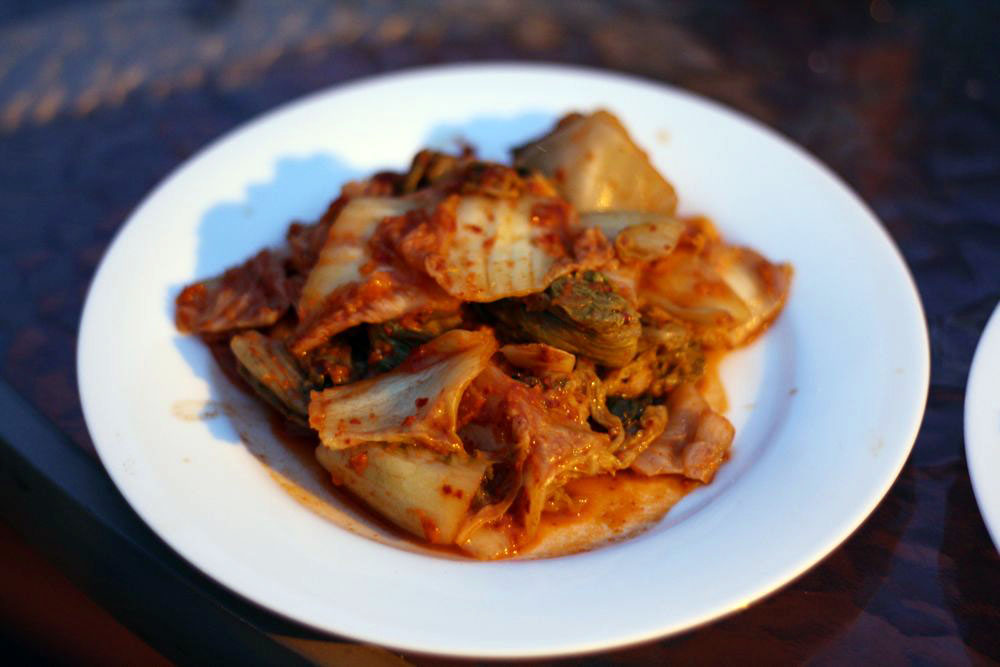

Vinegary, spicy, crunchy, and addictive. These are just some of the words we use to describe Korean dish kimchi. We could go on, but the idea is this: Kimchi fascinates us. We put it into stews, mix it with noodles and sesame oil, chop it up with fried rice, and side it up with Korean barbecue. We've been known to eat it straight out of the jar when we need a fix.
There are all kinds of kimchi out there -- Nick recently explored making Oi-Sobagi from cucumbers -- but none is more popular than traditional cabbage kimchi, the kind that's synonymous with the whole Korean genre of pickled vegetables. Cabbage kimchi has become a constant in our fridge, which meant that sooner or later we'd get around to making it ourselves.
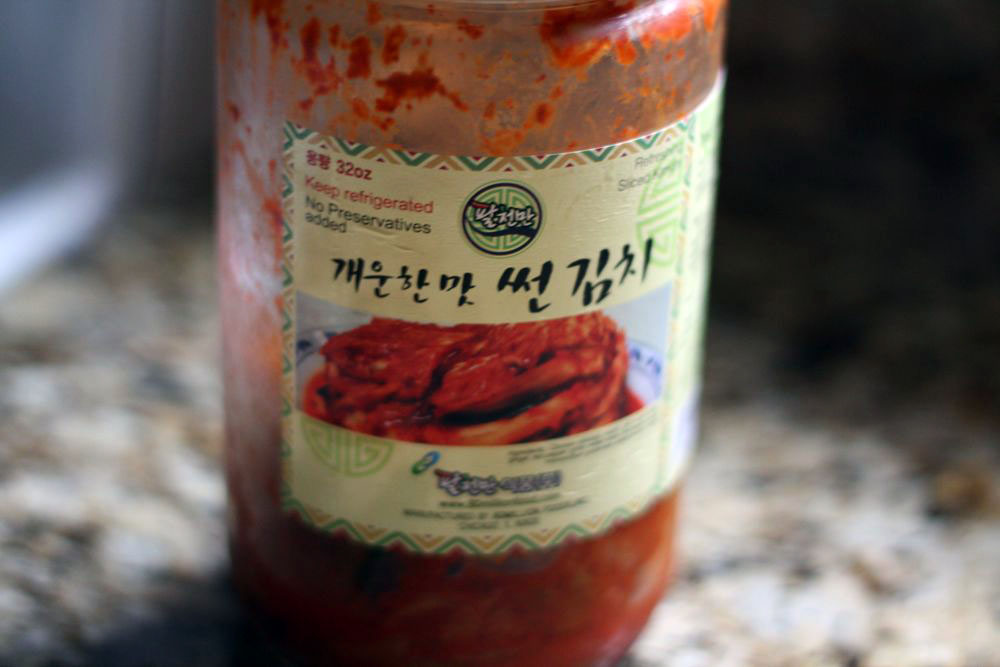
We've fought the urge for a while now. It's so easy to buy the stuff if you live near a Korean grocery store, and it's often pretty inexpensive at that. Chicago is home to two H-marts and our personal favorite, the Joongboo Market. But there's always that chance that a homemade version could be even better than the versions available in a store. The chance that this thing we've been obsessing over could actually get better is enough to drive us nuts.
It should be a simple project, but we are, for lack of a better term, terrified of screwing up. This dish is possibly the most admired food of an entire country. Websites are dedicated to its health benefits and uses. This couldn't be a quick job, one where we'd bust out a few jars and a head of cabbage and see where it got us.
There are certainly recipes out there. But what we really hope is that you guys can help us out. Have you tried to make it at home? Do you know a good place to begin? Do you have some secret family recipe for Kimchi that your grandmother used to make? Tips learned from your stint as a busboy in a Korean joint? We're all ears.
See, the two of us are going to have a little Kimchi-making contest, which will be followed by a taste-off to determine the winner. And we're hoping to document the whole process here, as usual.
Loser buys Korean barbecue for the winner and his wife.
So please, leave your Kimchi secrets below.


{ 2 trackbacks }
{ 17 comments… read them below or add one }
ahh one of my favorite topics!
Ferment in a cool place, for at least 3 days (many recipes say a few hours to one day on the counter top), my advice is do what actual Koreans do: make it, and put it somewhere cool and dry for a while to develop the flavors (for bonus points bury it in the ground!). Good luck!
Cheers,
Brian
Thanks Brian,
You should really help judge the final considering your knowledge!
I would definitely take a look at Sandor Katz’s book Wild Fermentation. I have not used his kimchi recipe (or any kimchi recipe for that matter) but his kosher dill pickle and sauerkraut recipes are excellent and when I attended one of his workshops last summer he had samples of his kimchi and it was great.
Also, he offers the trivia tidbit that there are national holidays in Korea to give Koreans time off to make kimchi.
Trial and error is probably the best bet unfortunately. I’d recommend making lots of smaller jars and trying them at different stages during the fermentation process. Everybody’s got their own preferences for what makes good kimchi. Some go for the really fresh and salty barely fermented kimchi that still tastes like cabbage while others like myself prefer it to strengthen up and end up almost carbonated.
As for fermenting agents, you need some sort of fish essence. The standard one would be brine shrimp but I’ve seen raw oysters used as well.
It’s an amazing pizza topping with the distinction of being really, really good on cold leftover slices.
Ingredients are key – you need to get very good quality ingredients especially pepper powder (go-chu ga-ru). Then also, I would suggest using a mix of fish sauce and shrimp sauce. Again, if possible, get good quality ones that will not be just salty but will add lots of flavour to the whole dish.
I use David Lebovitz’s recipe for kimchi:
http://www.davidlebovitz.com/archives/2008/03/kimchi_revisite.html
It’s dead simple and mighty tasty. The korean chile powder and chile paste are different and worth tracking down.
Hey Nick – I’m in, just let us know when/where!
fyi – if you have the interwebs you should check out Maangchi’s video podcasts and/or website. She does alot of kimchi on there but in her own way. I’ve found her podcasts to be just as valuable as my copy of The Korean Kitchen (http://tinyurl.com/ybgy2fz)
Here’s the link for Maangchi’s stuff:
http://www.maangchi.com/
Got a whole recipe page dedicated to it… http://eatdrinkmankimchi.blogspot.com/
My friend Cathy over at Growing Curious has had great success using a Harsch crock….
http://growingcurious.typepad.com/growing_curious/2009/06/kimchi-birthday.html
All I have is a story:
A Chinese place I frequented had homemade kimchi. I asked and they said Grandma made it; she wasn’t Korean but she loved kimchi so she made it for the restaurant. By the way, the two go together well. I used to get a bowl of hot and sour soup and a bowl of kimchi. And egg rolls. A fine trio together.
Years went by and one day I went in and THE KIMCHI TASTED DIFFERENT. I asked “who made the kimchi?” and all hell broke loose! The guilty party came out of the kitchen, horribly embarrassed! She had taken over kimchi duties, and my questioning it was a mark of shame. If I had known all that I would have kept my mouth shut.
How to make ketchup, now Kimchi!
For small, or shall I say “select,” group of us, these topics are pure heaven (often to the dismay of our spouses). Your topics and the way you present them, make this “must” visit site in my very busy day. I am always waiting to see what comes up next. Thank you for your obvious dedication and hard work.
Zimmern or Bourdain visited Korea and showed how they make Kimchi. There were raw oysters in it. It looked awesome.
There was also a show were they made soy sauce. If you are going to jar ferment, why not try this as well – although the purity of your one topic at a time approach may suffer.
Indeed, I do have success making kimchi in a Harsch crock. In fact, I’m teaching someone to make it tomorrow and will take some photos (will try to remember) and post them on my blog. She’s bringing seaweed to put in it, and I’m looking forward to how good that will make it. So far, all of my batches have been vegan, and tomorrow’s will be, too. I’m just not ready to fuss with sugar or fish of any kind. Maybe later this year.
Also, although I’m interested in traditional Korean kimchi, I’ve been making mine from vegetables that grow well in my area. For instance, I’ve been using (green, mostly) peppers that grow here and not using the red peppers and powdered chilis used in traditional Korean kimchi. I also try to add some unexpected vegetables in each batch — sugar snap peas in spring, green beans in summer. These turn out crispy and wonderful. If the daikon leaves are in good shape, put them in the kimchi, too. I also use mustard greens and kale sometimes.
I don’t have a recipe, but I have a process. I find tremendous pleasure in using what’s fresh, local, and alive in my garden (or in someone’s garden nearby) to make the kimchi.
Great recipe as always. I keep wondering, are one of you guys married to a Korean babe? I bought an expensive rice cooker because of this site!
I make it often to sell at our farmer’s market stand and there is nothing difficult about it at all!. There is only one hard and fast rule: specificaly buy Korean chilli powder for the job, nothing else will do.
Basically I chop up wombok and rub a generous quantity of salt into it. Probably about 5 tablespoons for 5 cabbages. leave this sit for at least 4 hours. I have left it overnight. Rinse. Squeeze. Put in bowl. To this I then add chopped green onions, ginger, garlic and a huge amount of chilli powder. Mix around then pack into a glass jar. Cover. Leave it on the bench for about 24 hours, or until you are happy with the taste. Then refrigerate. It just keeps getting better from there. Over time more juice leaches out, and this is fine. As it gets older it is better cooked – or so I”m told, ours doesn’t get too old before it is snapped up.
The proof is in the eating, and if you could see the look on my Korean customer’s faces when they taste this, then you would know it’s darn tasty.
Thanks everyone. We are both working hard on our batches. Hopefully everything goes well.