
I cannot be fooled. If a bartender accidentally swaps vodka for some gin in my drink, I can tell. I'm not trying to be difficult, but I will send it back. Why?
Because I hate vodka. Hate hate hate hate it. I hate the way it smells, and how it makes me feel. While I can talk your ear off about every other spirit you throw at me (Gin, Rum, Tequila, and especially Bourbon), I don't really have anything nice to say about that clear tasteless spirit. So when I was left with an unwanted bottle of vodka after hosting a party, I decided to see how I could transform it into something else. Hopefully I wouldn't have to pour it down the drain.
I related this dilemma to Michael Nagrant, Chicago food writer extraordinaire, he immediately told me to make gin. I laughed. I mean, can you even make homemade gin? I'd never heard of doing this outside of Prohibition, and most of those examples involved bath tabs and horrible, horrible liquor that was affectionately compared to rubbing alcohol.
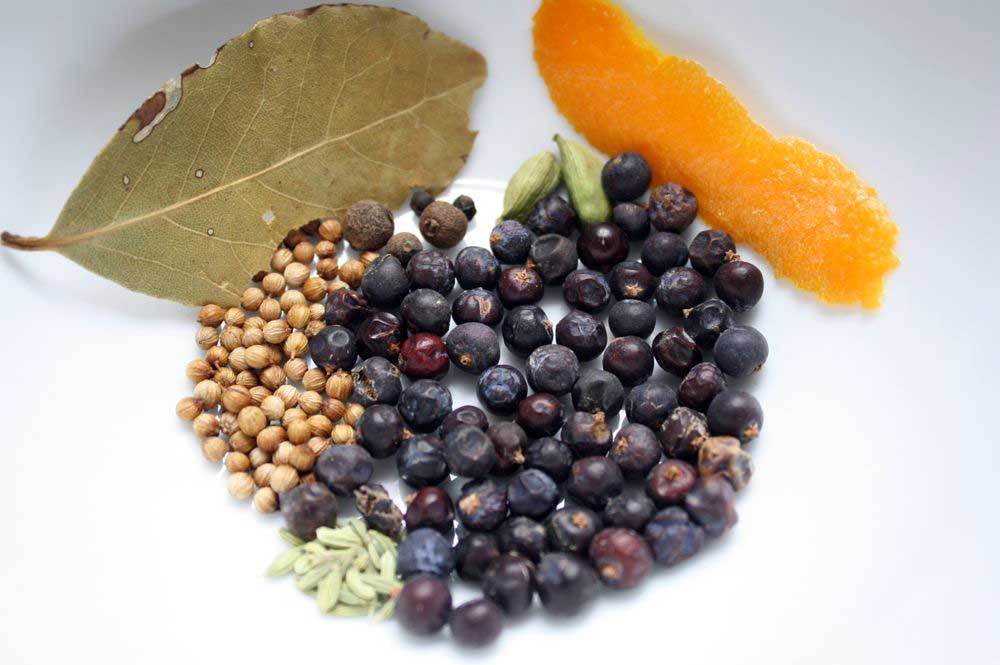
But what he was calling for was an infused spirit, one that used the familiar flavorings of gin (mostly juniper, but also coriander, fennel, cardamom, black pepper, and allspice among others). Essentially I'd be creating what I think is called a compound gin. It would be cloudy instead of clear, but it would hopefully taste the same. Nagrant explained that gin is essentially just a flavored vodka, a statement I'd definitely heard before but never really thought I could put into practical use. Still, I was skeptical.
There is no doubt that most top quality gins are not compound gins. They are infused and then distilled. No matter what I did, I'd never be able to set that up at home. I may make my own hard cider in my spare time, but distilling is utterly complicated and thankfully illegal at home. Anyway, most of the really average gins are compound gins to begin with. So this is essentially a technique to turn a cheap bottle of vodka into a pretty respectable gin.
I'd never reach the level of Plymouth, Junipero, or Hendricks. But I might just beat that bottle of gin you bought off the bottom of the shelf for 8 bucks.
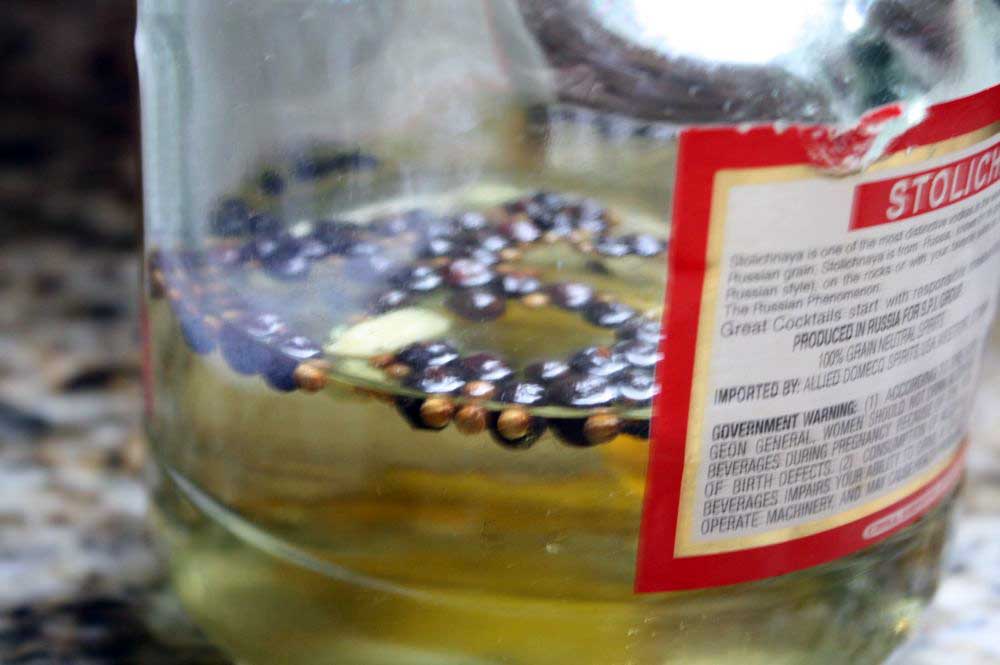
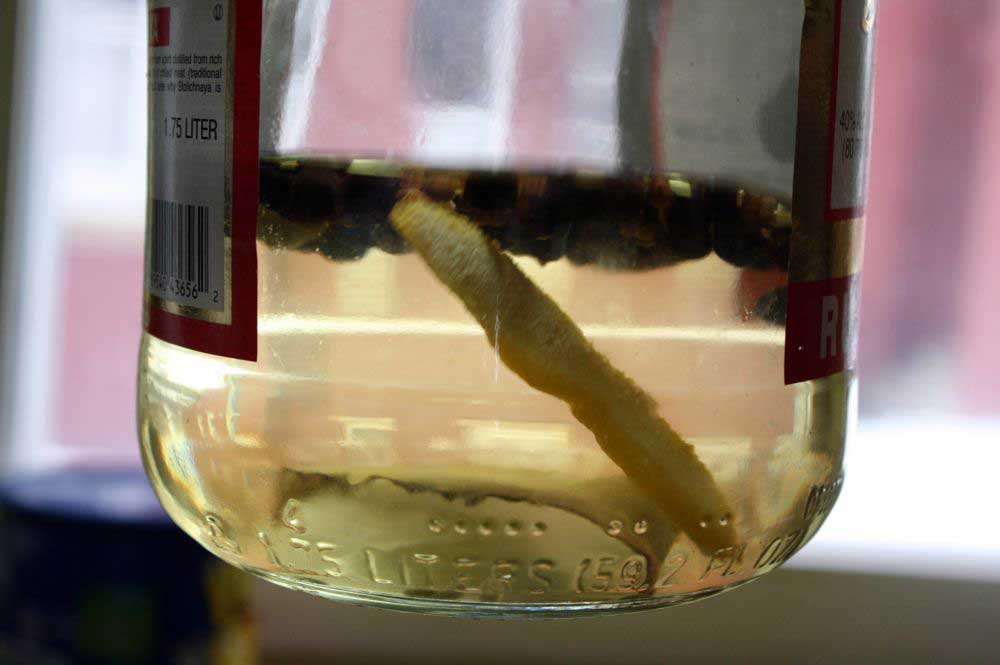
The infusion step is easy. Just stuff your bottle with the recommended botanicals, and let it sit for a day or two. Juniper must be involved, or it simply isn 't a gin. But the rest of the flavorings can come down to personal taste. For help I used this recipe from Gourmet, this forum from eGullet, and some info that Michael Nagrant passed on to me. You can let it sit for longer if you'd like, or less if just want it to be really clean. I found overnight to be a decent amount of time, though next time I might try a longer soak.
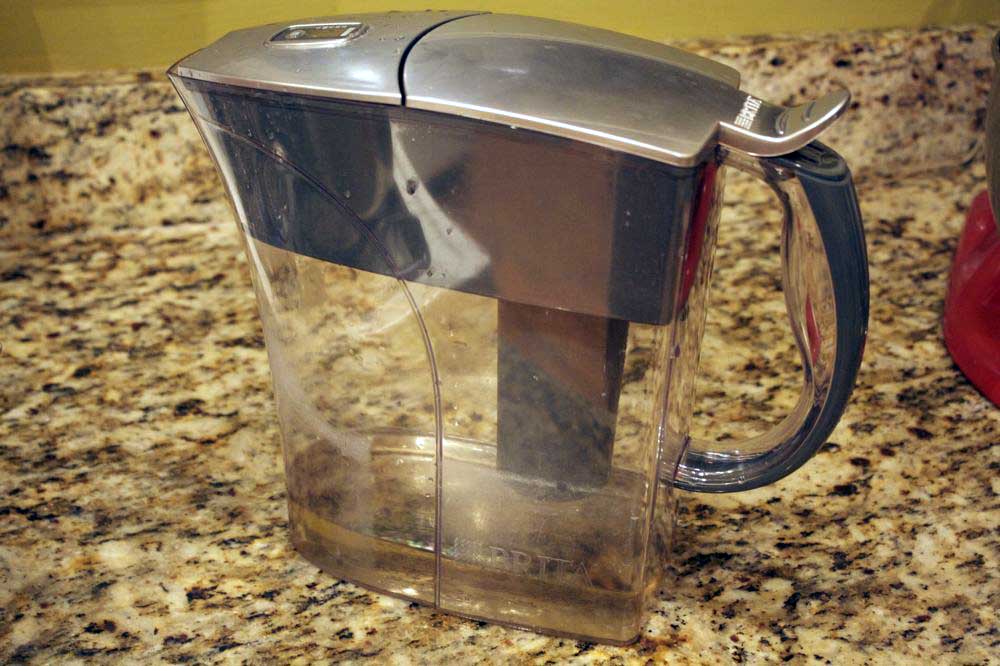
For my first try, I infused some vodka with a basic blend of botanicals for about 12 hours and it came out tasting and smelling a lot like bad gin. You know the kind. It's whatever the house gin is at your local dive that they use for cheap gin and tonics. It sort of does the job, and tastes faintly of gin, but there is also those notes of discord and anger that pipe through. It was kind of impressed that I got this far, but I wanted to have something I could actually be proud of serving. That's where the Brita filter comes in.
This is an old college frat trick that some people are dubious about. It doesn't make horrible vodka taste like the most expensive vodka. Nor is it particularly cheap. A Brita filter costs at least $6, and I'm positive that spending that extra 6 bucks on the actual liquor would do far more good than the filter. But filtering does do something. The liquor comes out cleaner and less harsh, which I count as positive attributes.
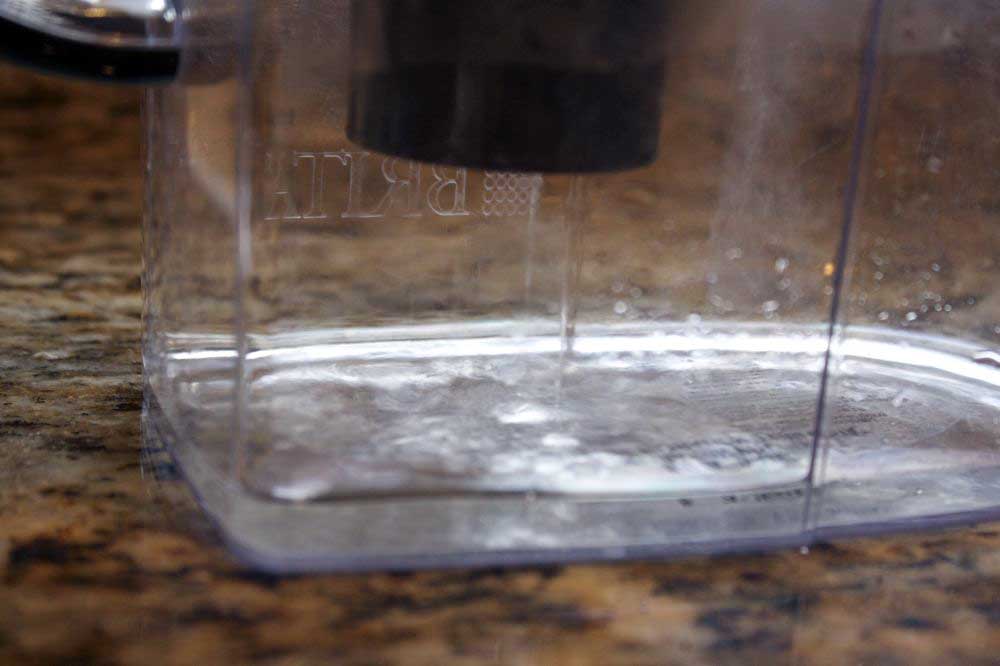
I ran my bad compound gin through the Brita filter, and it helped tremendously with the aggressive harsh note, but it also stripped away some of the gin backbone. By the second run through the filter, it had mellowed considerably but had lost nearly all of its gin characteristics.
For this reason, I'd suggest filtering the vodka first and then infusing it. This way you can hold on to that juniper taste and never let go. Plus, if the infusion is too strong, because maybe you left it hanging out for a few days instead of one, you can theoretically filter it until it is milder.
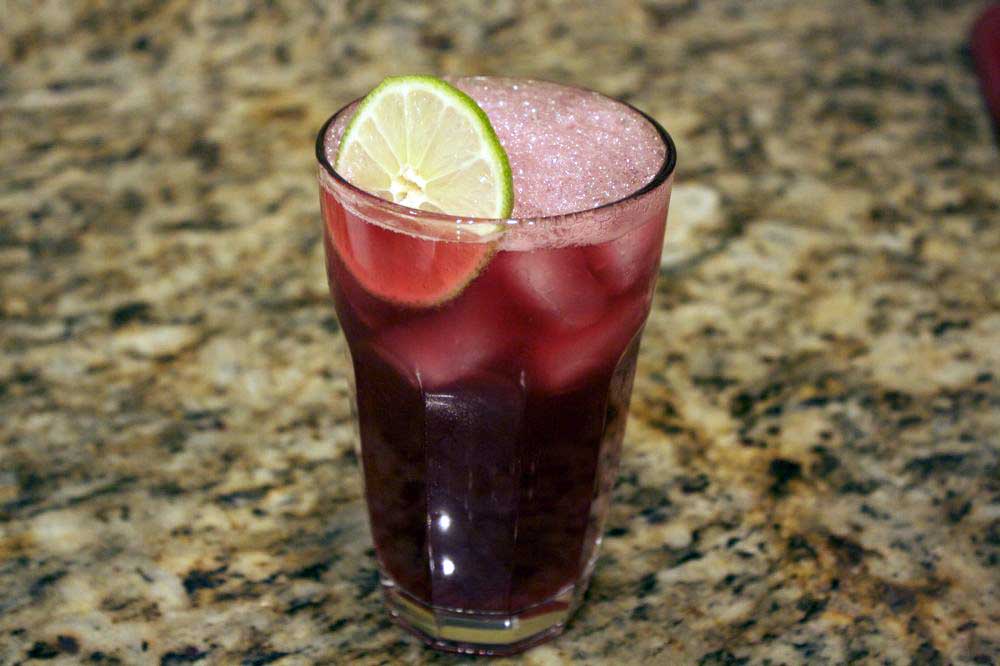
The odd thing about gin is that most people don't drink it straight, unless you're having one of those Winston Churchill martinis. It's a mixing liquor, and so I tried it out in three different drinks: a Martini, a Tom Collins, and a gin and cranberry with lime. Though none tasted quite as good as similar ones with Junipero, there was no doubt that what I was drinking was gin. They were honestly better than some of the drinks I've had at local bars, too.
This is still a work in progress. But I suppose the highest compliment to say is that I'm already conspiring to purchase another bottle of vodka to try again, which I never thought I'd ever do.
Homemade Compound Gin
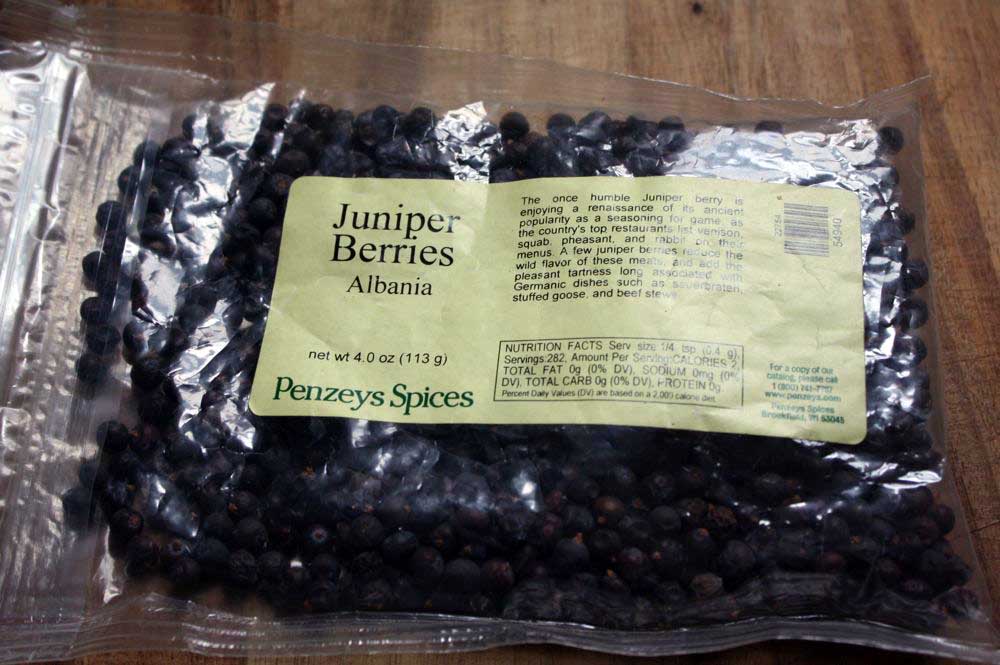
- 750 ml Vodka
- 2 tablespoons juniper berries
- 1 teaspoon coriander seed
- 4 allspice berries
- 1/4 teaspoon fennel seed
- 3 green cardamom pods
- 3 black peppercorns
- 1 bay leaf
- 1 long orange peel
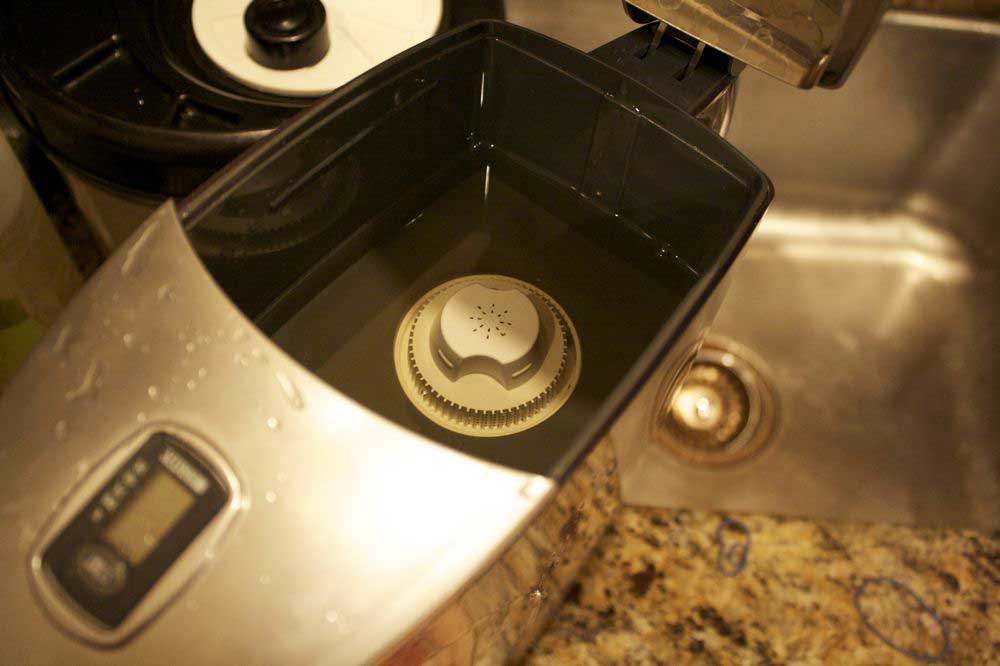
Filter the vodka through a Brita filter at least twice. It should mellow in flavor and aroma.
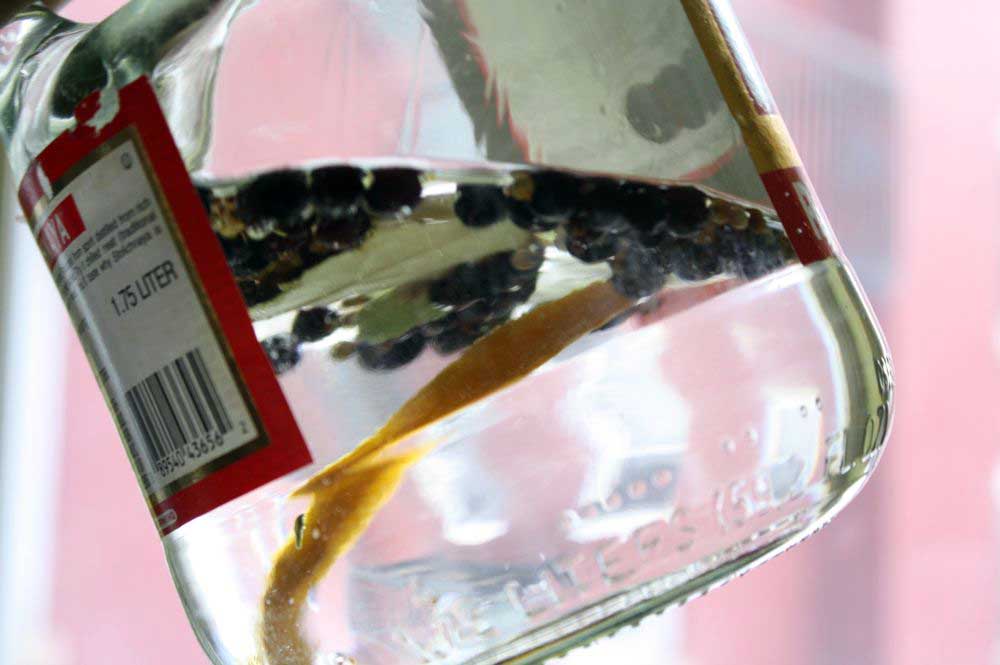
Pour it back into the bottle (a funnel helps make this a much easier job) and then add the rest of the ingredients. Let it hang out for at least 8 to 12 hours.
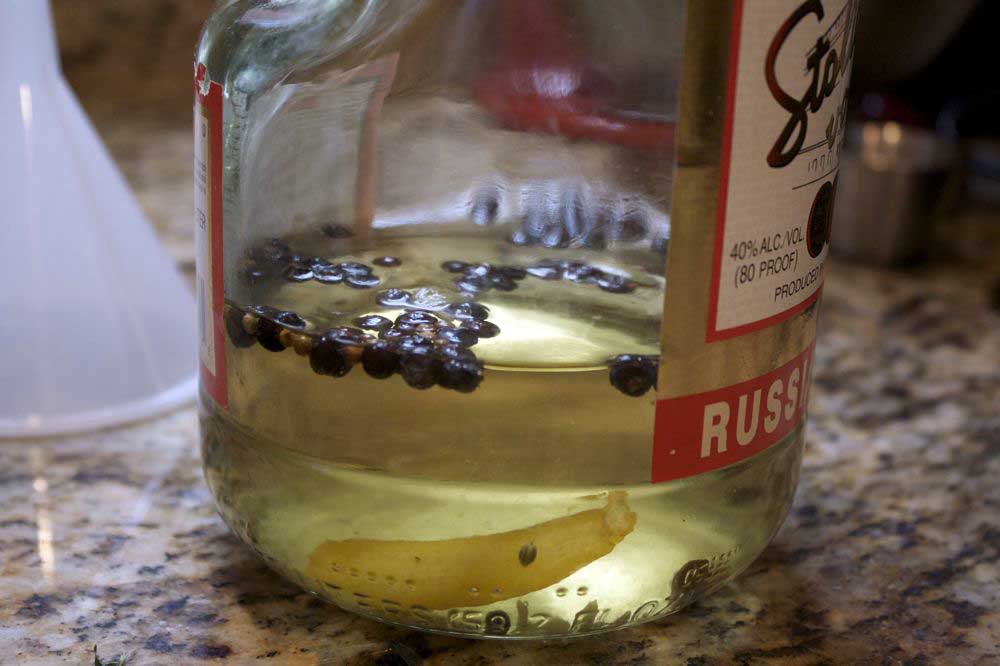
By this time it will have changed color. That's ok. Taste it. If it needs more time, give it another 8 hours.
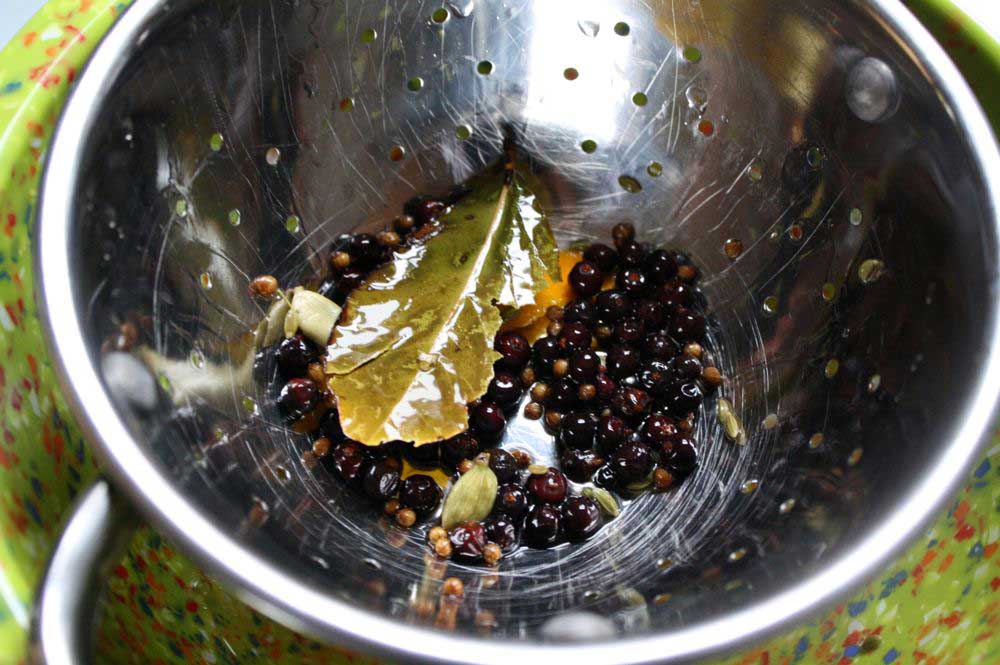
Pour the liquor through a fine sieve, colander, or cheesecloth. Discard all the herbs and spices. Return the liquor to the bottle. It's now a compound gin.


{ 1 trackback }
{ 17 comments… read them below or add one }
This is excellent. Could not possibly agree on the vodka loathing. For me it’s the drink for for people who don’t really like booze and only drink things in bright colors and fruity flavors. But gin… How I love gin.
er, that should be agree MORE.
How many times do you think you can use a Brita filter for vodka before having to replace it?
sabrina: I completely understand what you mean.
Dan: That is an interesting question. Of course, you can only use that filter for vodka. Using for water would be out of the question. At least I don’t think so. I’m not going to be the guinea pig for that one. I suppose it would last awhile.
Anyone know how many times you could use the Brita filter for vodka?
Nice post. I’m a big fan of Smirnoff – it’s cheap yes, but more neutral than a lot of others. And yep, I filtered the vodka first before infusion, not after. After I just run it through strainer and cheescloth to get the botanicals and what not out. Fennel seems to be a killer for me. I’ve gotten it down where I just add a couple pieces of fennel, as a 1/4 was overpowering everything and even an 1/8 it was still unmistakable. I’m also a sucker for lemon and lime zest combo. I zest a lot for surface area and flavor….
Glad to see you came up with something for that stray bottle of Stoli! I’m a big fan of gin myself and was excited to learn about how different gins with different origins can vary quite noticeably in flavor. If you were to experiment some more you could look into some of the different botanicals that you might find in a German gin compared to an English gin for instance. I had no idea there were so many different kinds.
I’m going to have to steal that Brita trick. Do you think it will filter out the strawberry flavor from the two free bottles of Stoli Strawberry that I have so that I can then make a compound gin? I think I know the answer–the Brita is not magical.
This is awesome. What if you started off with a decent, or less bad, bottle of vodka?
I recently saw a Good Eats episode on Food Network where Alton Brown used the Brita to make better Bloody Mary’s.
My wife likes Tanqueray Ten for martinis, and it advertises it’s mix of botanicals as well.
Your experiment intrigues me, I will have to try some variations. Thanks for the idea and information. Erik
Actually Gin is not infused then distilled. the botanicals are placed in a basket in the head of a still. the vapor passes through on its way to being cooled. it strips flavors differently than an infusion.
If you ever take a tour of scotch distilleries you will notice that many of them use old gin head stills. they just don’t put anything in the basket. story goes the distilleries picked them up at a time when gin passed from fashion in england. I can’t imagine when that was.
I agree that distilling at home is illegal and not something you should be blogging about, but it’s not really that complicated.
What I did with leftover vodka was infuse it with coffee. It was pretty strong when taken straight, yet was quite good when mixed. I used this as a guide: http://www.ineedcoffee.com/06/coffeevodka/
This post reminds me of this Times article about vacuum distilled spirits (specifically gin) and how it is a shame that small-scale distillation is illegal in the US. Here is the link: http://www.nytimes.com/2009/12/02/dining/02curious.html?_r=1&scp=16&sq=Gin&st=cse
I’m curious whether a higher-priced filter, higher-priced vodka, and fresh from the ground ingredients would make a difference.
Care to make a wager?
Ultimat Vodka: http://www.thewhiskyexchange.com/P-5188.aspx
DWR Charcoal Water Pitcher: http://www.dwr.com/product/water-pitcher-clear.do
It must be the Mythbuster in me, but I really do want to try a double-blind vodka tasting with Brita.
I detest the snobbery that surrounds whats suposed to be a neutral grain spirit, plus this would make fun experiment and the start to a good night.
_Am
Michael Nagrant: I used orange because that’s all I had around for some reason. But I can imagine lime and lemon adding a lot. Fennel seeds were frustratingly hard to remove. They are so small. Anyway, it’s been used well for many cocktails. Thanks.
artjackson: Strawberry vodka is a whole other beast! The brita may help….but probably not enough.
sp: I mean, the Stoli is a fairly respectible bottle of vodka. Once you start paying more for the vodka, then you get into the tricky territory of just buying a solid bottle of gin.
Erik: Good luck. My gin made a very simple martini. I’ll probably make a heavy juniper batch soon that would work better with martinis. I like that slap in the face.
greydog: That is a more accurate way to describe the process. Thanks for the that. My description got a little sidetracked. What’s tough with distilling is recognizing the “heads” and “tails” of each batch. Not something I want to deal with.
Marius: Wow, thanks for the links. this is great stuff.
Andrew: definitely let me know how it turns out. I found a significant difference, but that could be because I was in the middle and knew which glass each one was.
@Nick – I understand the financial calculation part. And I also understand that the genesis of this project was the free bottle of vodka that you needed to find a good use for. But there is also something to be said for the pride and joy of making something at home, which I know you understand full well.
I love the idea of make one’s own gin. Now that you know how to do it, you could tinker with it until you came up with a totally unique flavor that couldn’t be found in a store. And maybe starting off with a nicer bottle of vodka would be part of that process. I generally hate vodka too, but I’ve found one that is really (in relative terms) good: zubrowka. It has a fantastic flavor, from an infusion of bison grass.
Anyway, this was a really cool post, and I hope you’ll post a follow up if you ever try your hand at it again.
Gin really comes down to personal taste. Some gins mix better with certain mixers and some are better for martinis. I really don’t understand why you’d take an expensive Vodka, flavor it to taste like Gin, and think you’ve ended up with something special. Also, the term “bath tub gin” is indeed from the prohibition era. However, it has nothing to do with the actual making of the gin, just the bottling. The distilled spirit was placed in long neck bottles which could not be topped off, or diluted, from a normal sink tap; the bottle wouldn’t fit under the tap. So the tap in the bath tub was used because the bottle could fit under it easily.
Cheers!
I just bought a Brita for $10 because I had heard of this, and I wasn’t going to use my Berkey to filter liquor. I have been looking around and keep seeing people say that it would be cheaper just to use the money for a better liquor. To that, I must ask, how much do you drink? It can’t be much! $13 One 1.75L bottom shelf + $10 Filter = 750mL bottle of Stoli! And Filters aren’t 1 use things, Brita says 40 gallons (water). If you filter rotgut, it is just as good as most midshelf, just saying, though I guess some people have money they don’t mind throwing away!
Great post. I’m starting my batch of compound gin today.
@Nick – When you put your juniper berries in the vodka, did you crush them or break the skins at all?
Also, has anyone ever tried a gin & tonic with a cucumber slice in it? Great variation from the standard lime. Works with most gins, but best with Hendricks.