

Homemade Square Pizza
Focaccia becomes the base of this pizza.
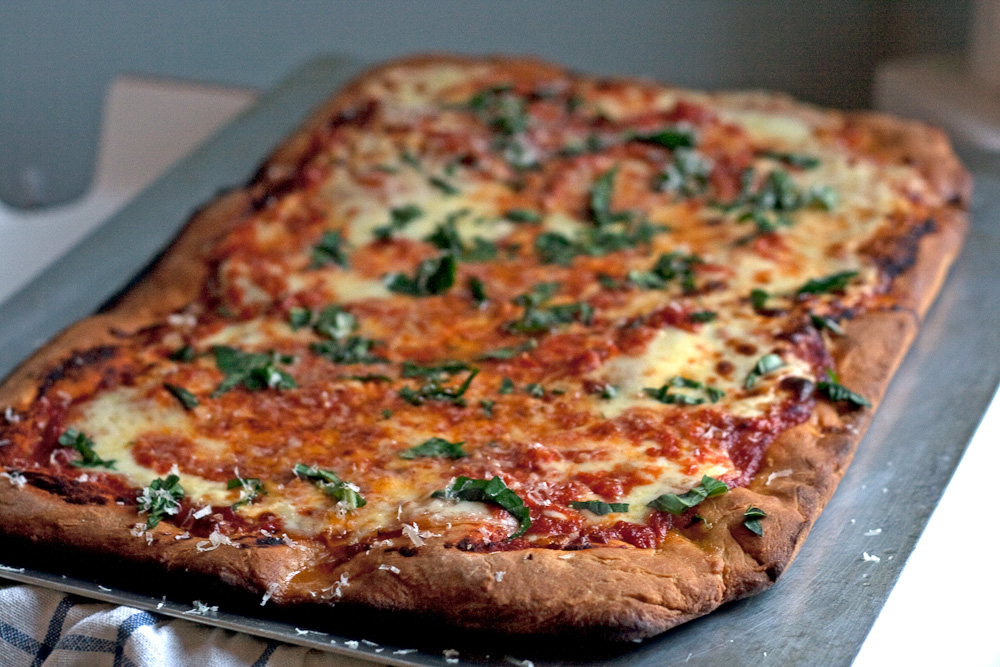
Good pizza means good bread. For me, there's just no other way around it. Good bread is the soul of good pizza.
But baking has never been a subject I'm comfortable with. Give me a skillet, some pasta, and a well-stocked pantry and I can improvise countless meals. But if I'm supposed to bake something, I freeze. I immediately picture failure, a leaden cracker or a gummy mess. I hate the confusion of baking, the way it never quite turns out how it's supposed to in the recipe. I hate the way flour gets all over the place. And more than anything else, I hate the conflicting information, recipes never agreeing with each other, and how no matter how long I knead my bread I never get that damn "windowpane" effect that everyone talks about .
But I love pizza. I can buy good bread around the corner, but not good pizza that's warm out of my oven. I love it enough to brave the storm. I've tried to make good pizza in a cast iron skillet, and I've had fun. But I have to admit it's never quite been good enough.
So a couple of weeks ago I theorized about using a simple recipe for focaccia bread as the dough . This focaccia is the only bread that's ever lived up to my expectations. I make it all the time. It doesn't require much investment of time, turns out pretty well, and most importantly, is ready to bake after a couple hours. No waiting around while the dough rests overnight and all that. I figured, why not use this recipe, and I would have delicious pizza the same day I craved it? It seemed to simple. I thought about Sicilian-style pizzas, which resemble foccacia unlike thin brick oven Neopolitian-style pies. Then I set out to see if it would work.
Well, I got my butt kicked. Pizza taught me a lesson. And that is that there are no shortcuts if you want to create something truly special.
But in the process, something unexpected happened. I actually learned a lot about how to make bread. I learned some truly amazing things. And I feel like I have something of a handle on the process now. After diving into a world of unfamiliar terminology, some brain-aching calculations, and a lot of conflicting information, I feel I've emerged with some wisdom.
It wasn't as easy as I thought. But I am happy to report that I've found a method for making pizza that really works. It involves some math, but I've already done the calculating for you. With a scale and a little time, quality pizza is not far away.
Attempt #1 - Same-day Focaccia
My guide in creating a Sicilian-style pizza came from a couple of sources, but by far the most helpful was a posting on Slice for making Sicilian-Style Square Pies , which someone alerted me to in the comments on my first post. The guy who wrote it knows a hell of a lot about pizza dough.
In it, the dough is painted with sauce before rising in a large sheet pan, and is then par-baked for long enough to give the bread some spring, set the dough structure, and begin to brown the edges. Then it is removed, topped with sauce and cheese and a dose of olive oil, and finished for another 10-15 minutes.
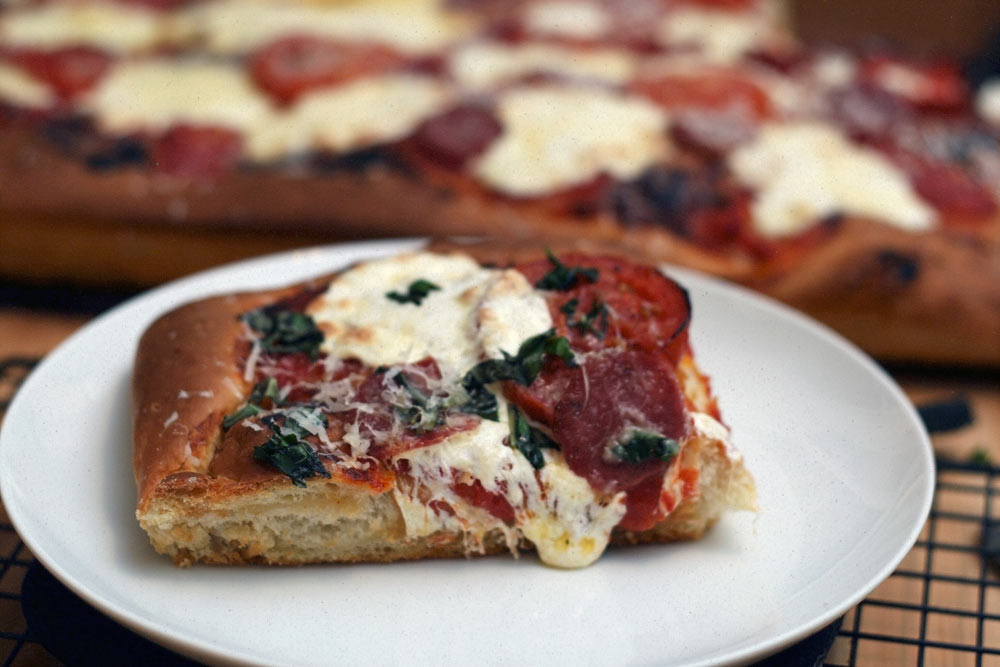
So I began by making my usual focaccia bread, which is made in just a few hours, and following the above instructions. It was pretty tasty. I brought it to a big potluck party, and it was actually a pretty big hit. But I had to admit, I wasn't happy with it. Why? The most important thing was that the bread itself didn't have much depth of flavor. I never really noticed this before, since the focaccia recipe I use takes the bread and absolutely douses it in olive oil, then tops it with olives, parsley, and other herbs. The result is delicious, but in the end it is to compensate for the fact that the foccacia itself doesn't have that chewy, complex quality that good bread should have. Other focaccia recipes require the dough to be made the day before and refrigerated to build flavor.
I had to admit that a bread dough made with instant-yeast that is baked only a few hours after mixing won't turn out a wonderful dough. Like so many sources had noted, good flavor requires time. I had to turn to other methods.
Attempt #2 - Pre-ferments and Poolish
I'll try to keep this all as straightforward and un-technical as possible, because most sources I read on bread-making were very confusing. They use a lot of words I don't understand and assume some basic knowledge I didn't have.
Here's the idea: to achieve good bread, you need to unlock all the flavor inside the flour. The only way to properly do this is the give it time. There are a number of ways this can be done: you can make a complete dough recipe and let it sit in the fridge for a day or two, a process called "retarding" that allows the flavors to emerge by slowing down the yeast to a crawl. Or, you can make something called a "pre-ferment," which is essentially a concoction of flour and water (and usually a tiny bit of yeast) that is allowed to sit and do its thing. When you're ready to make the dough, you mix the pre-ferment with fresh flour and water, plus more yeast and salt, to make a complete dough. As you let it rise, all that flavor you created in the pre-ferment makes its way into the whole thing.
There are a few different "pre-ferments" out there, some wetter, some drier, all made in different ways. But in the end, it actually doesn't matter which one you use. I chose to make something called a "poolish" which is the wettest of the lot. Half water and half flour are mixed with a pinch of yeast, which seemed like a nice simple idea to me. It's allowed to bubble for a few hours before an overnight refrigeration. The ample amount of liquid allows the yeast to move more easily throughout and I think allows it to build more flavor.
The reason is doesn't matter how wet or dry your "pre-ferment" is lies in something called Baker's Percentages. And that's where the math comes in. The Bakers Percentage is a ranking of all the ingredients in relation to flour. Flour is always the most plentiful ingredient, so it's listed at 100%. Then, the other ingredients follow it: water at, say, 65%; salt at 3%; yeast at 0.3%.
This plays out like so: if you have 100 ounces of flour, then you would need 65 ounces of water, 3 ounces of salt, and 1/3 ounce of yeast to create the perfect dough. If you have less flour, just recalculate using the Baker's Percentage. It doesn't actually matter how much dough you make if you know the ratios. Baker's Percentages unlock the power of bread, and free you from following recipes. The most thorough, easily-understood explanation I found is on the King Arthur Flour website .
I found it incredibly calming, once I figured this percentage thing out. As long as you have an accurate baker's percentage to aim for, the details can be fudged here and there without the house of cards falling down.
And what's great about a poolish pre-ferment is that it only takes a couple minutes to slop it together. There's no intense mixing or kneading -- just half water, half flour, pinch of yeast, you're done. This means the time investment is almost nothing to have the makings of a superior pizza dough waiting for you the next day.
Focaccia-Style Pizza
Makes 2 18x12 pizzas
For the poolish
12 ounces unbleached bread flour
12 ounces water at room temperature
.03 ounces (1/4 teaspoon) instant yeast
To finish the dough
22 ounces unbleached bread flour
10 ounces water
.185 ounces instant yeast
1 ounce salt
Toppings of your choice
For a single pizza (half of the dough this recipe produces) I used 1/2 pound fresh mozzarella, another 1/4 pound block mozarella, basil leaves, Parmesan cheese grated over the top, and 1 1/2 cups of a simple tomato sauce of whole peeled tomatoes that I cooked down with basil leaves, crushed, and seasoned to taste.
A Note on Weighing
The first rule of good baking is that weight, not volume, is the proper way to measure. 1 cup of flour, depending on the fineness of the milling and how densely it is packed, can vary substantially in weight. So if a bread recipe asks for 2 cups of flour, the amount a person will use from kitchen-to-kitchen is not the same. Measuring by weight takes out all those variables. It's also the only way Bakers percentage will really work.
Make the Poolish
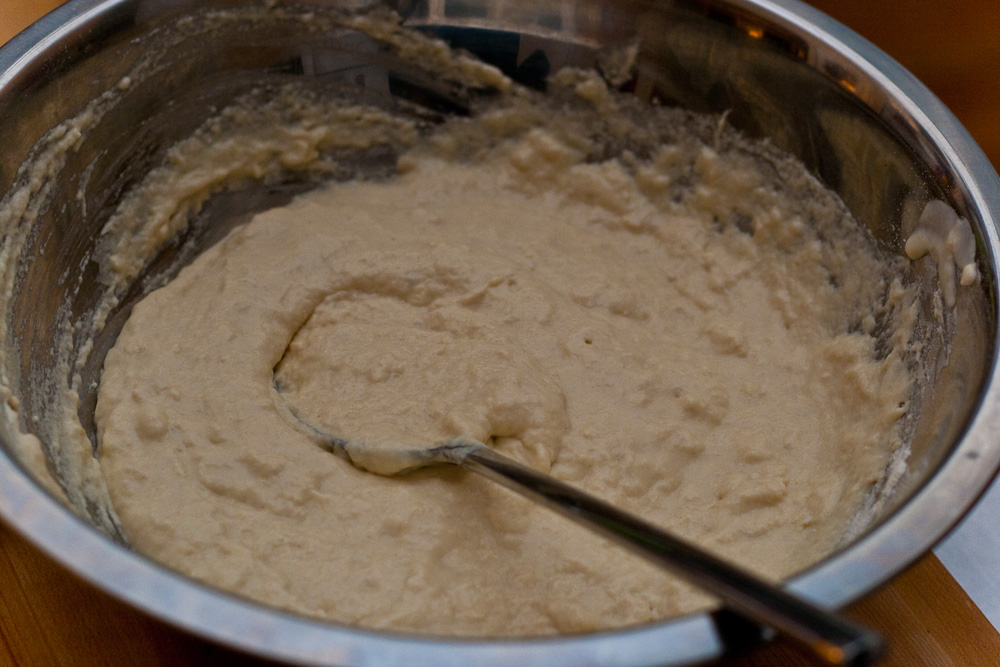
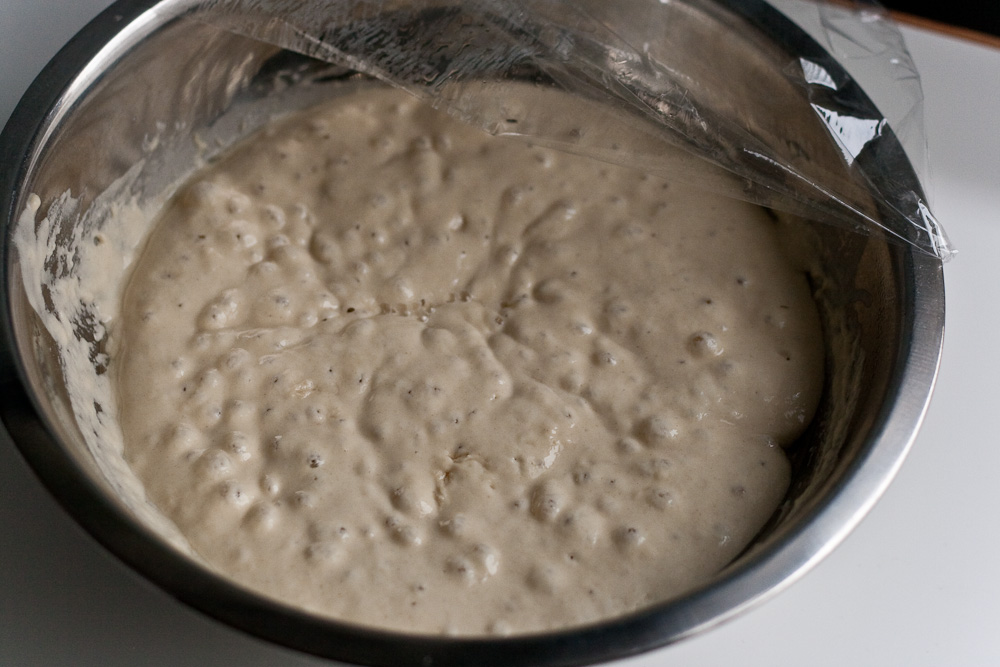
Combine the ingredients in a bowl until the flour is completely hydrated. It will be pretty sloppy and wet. Cover with plastic wrap and allow to sit at room temperature for 3-4 hours. During this time the yeast will wake up.
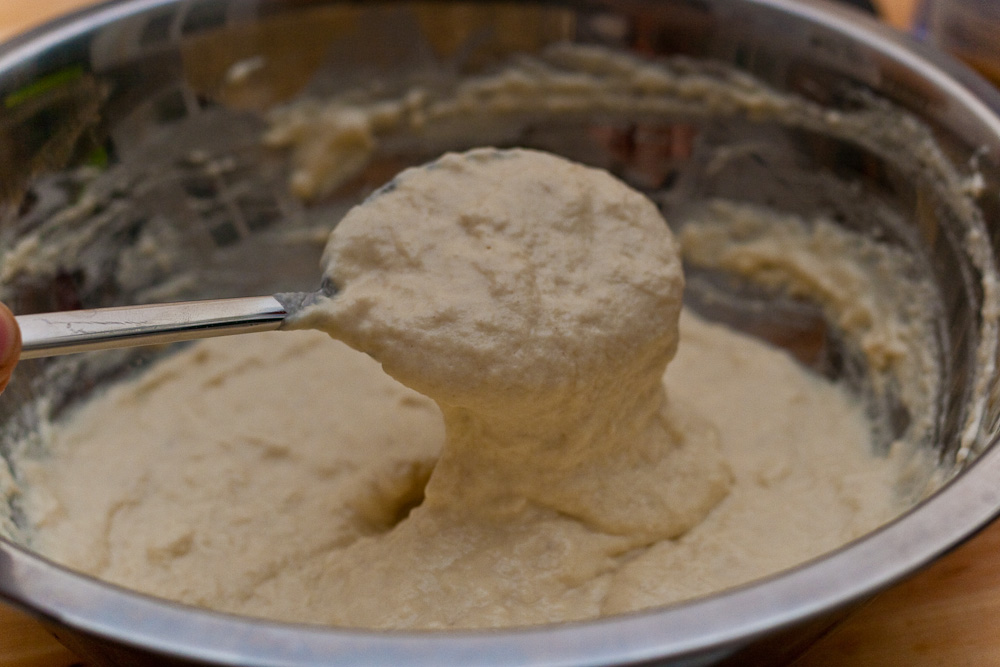
If you're using instant yeast, you can just mix it in anytime. But if the yeast is Active Dry, you might mix it into the water first to make sure it gets moistened and activated.
Hydration is another term I came across. It is defined as the percentage of liquid in a dough, again based on the flour weight. So a 1-1 flour-to-water ration would mean something has "100% hydration," a term you'll often see when reading about pre-fermenting concoctions like poolish or sourdough starters.
When the mixture is a little bubbly and foamy, move it to the refrigerator and allow to sit overnight.
Make the Dough
Remove the poolish from the fridge and let come to room temperature for about an hour.
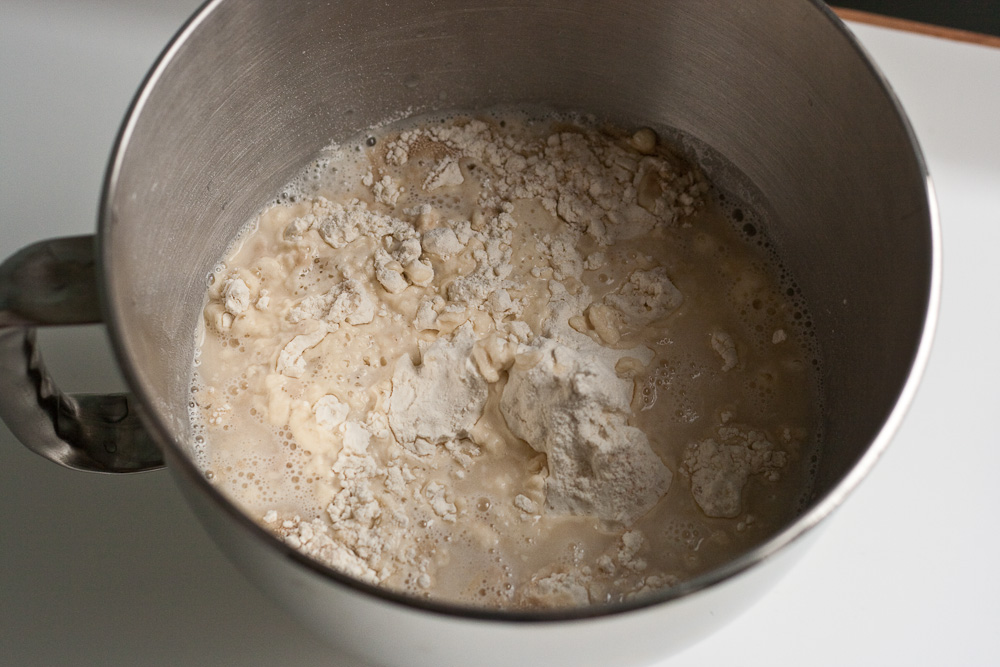
In a larger bowl or the bowl of an electric mixer, combine the yeast, water, flour, and salt for finishing the dough.
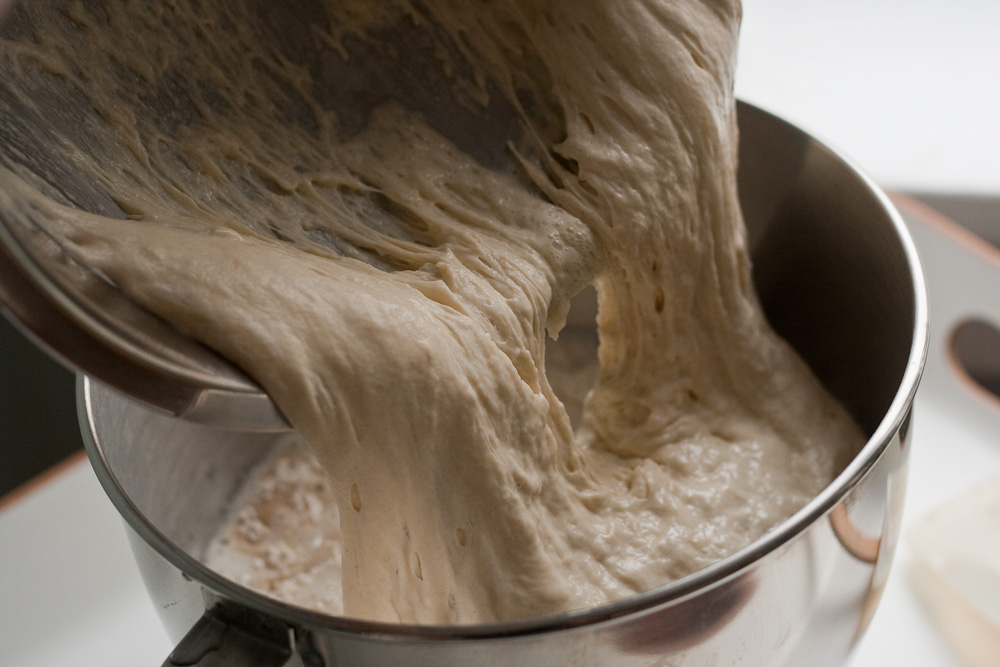
Pour and scrape the poolish into the mixture and combine well. Allow the dough to rest for 15 minutes.
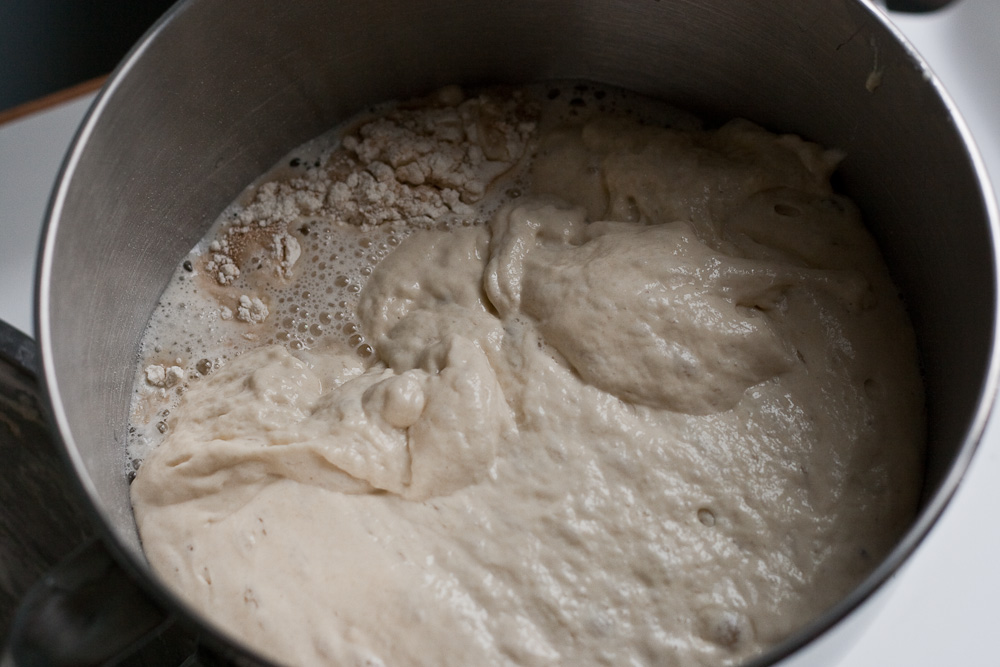
Here a word about those Bakers Percentages. Lots of places I read about aimed for a pizza dough at 100% flour, 65% water, 0.65% yeast, and between 2-3% salt. So with about a 50-50 water-flour poolish, I just did the math to figure out how much flour and water needed to be added in this second stage.
I used an electric mixer to complete the next stage, which was good because the dough was quite sticky. If you don't have one, just keep oiling your hands as you work with the dough to knead it.
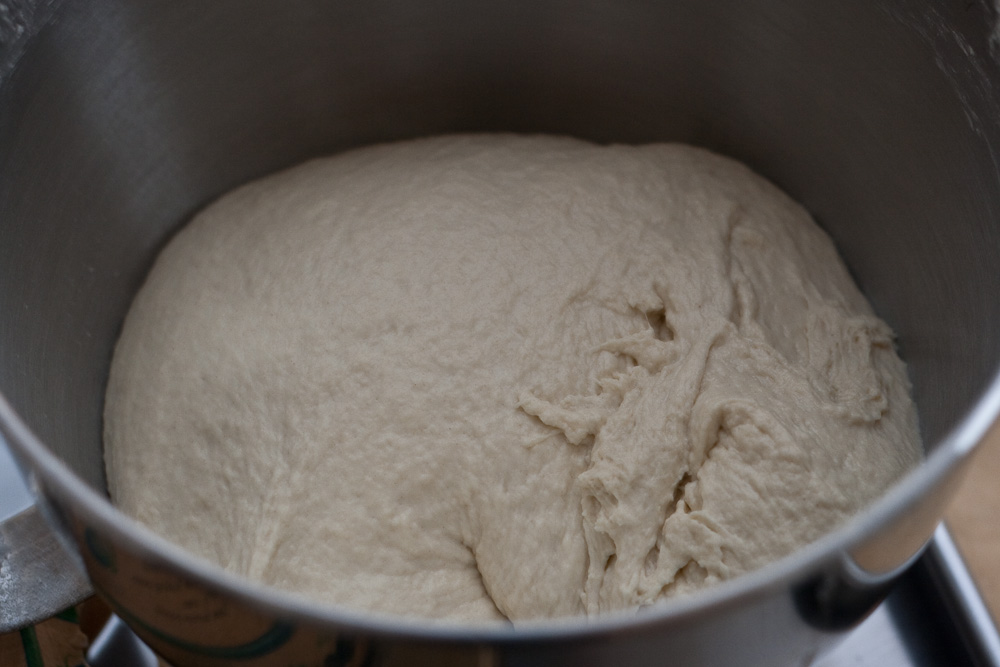
The dough needs to be kneaded until the gluten is well-developed. I ran my mixer for probably 10 minutes on medium-high speed, occasionally scraping the dough off of the hook.
Next, divide the dough and refrigerate or freeze half of it if you're not making 2 pizzas. It will be okay for a couple days in the fridge (it should actually develop more flavor and get a little tangier). Line a 10x14 baking sheet with parchment paper and douse it with olive oil.
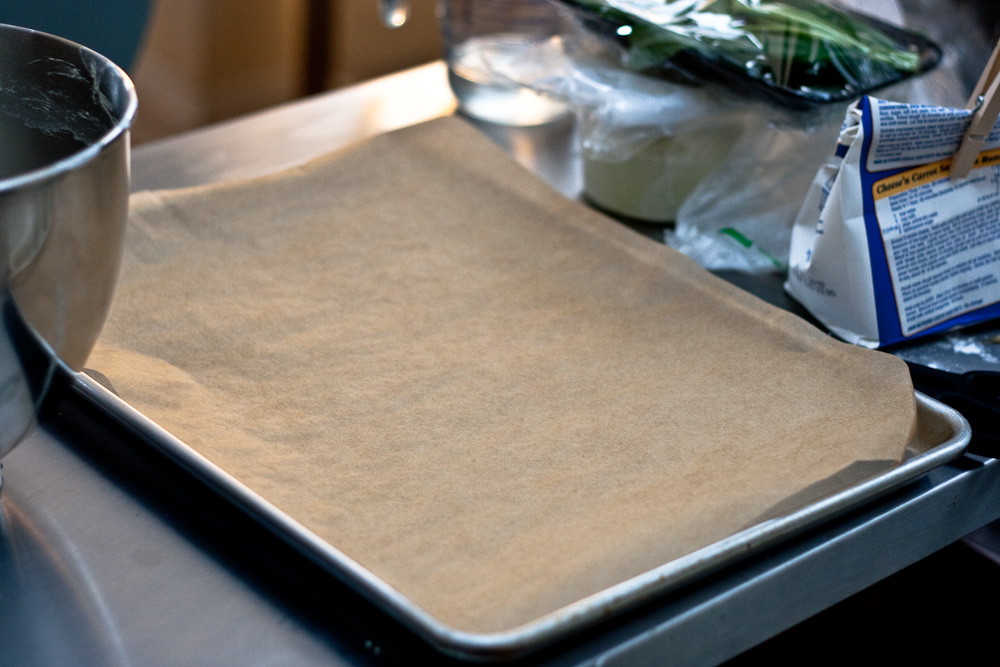
Throw the dough on and press it towards the corners with oiled fingertips. It should stretch quite easily. Distribute it evenly across the whole baking sheet. Spoon about half the sauce over the dough, spreading it with the back of a spoon all around but leaving 1/2 inch or so around the edges.
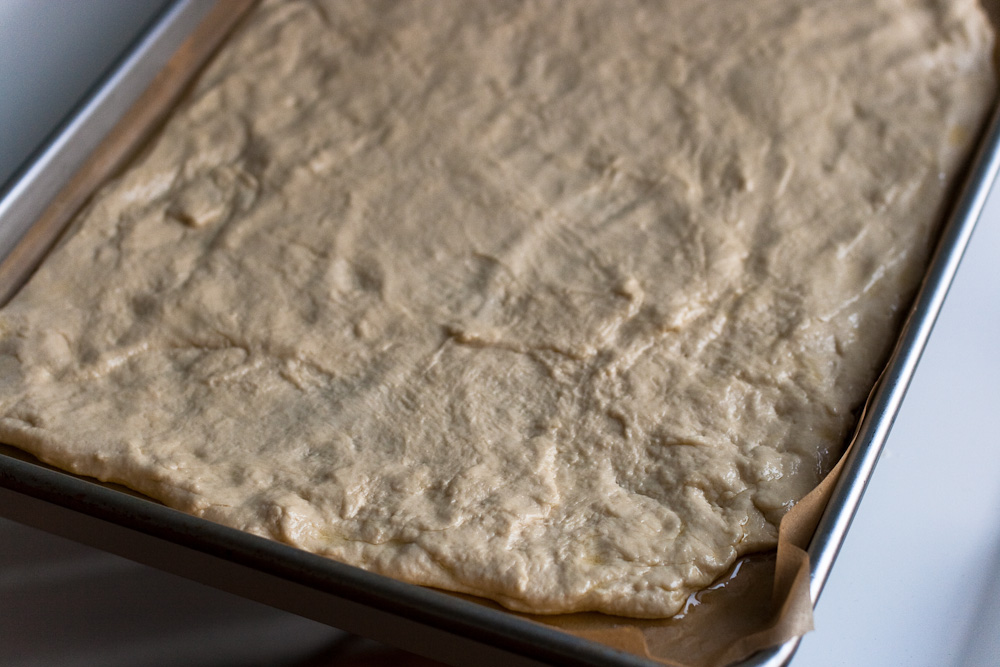
Move to a warm place and allow to rise for 1-2 hours. This is when the yeast will create air bubbles, which, when we bake it, will create that hole-y crust that's so delicious.
About an hour out, preheat your oven as high as it goes. Ideally, use a baking stone in the middle of the oven large enough to hold the pizza.
When the oven is as hot as possible (hopefully 500 degrees Farenheit or hotter), slide the sheet pan into the oven, right on top of the baking stones. Bake for 10-15 minutes, until the dough is golden on the edges and has stopped rising.
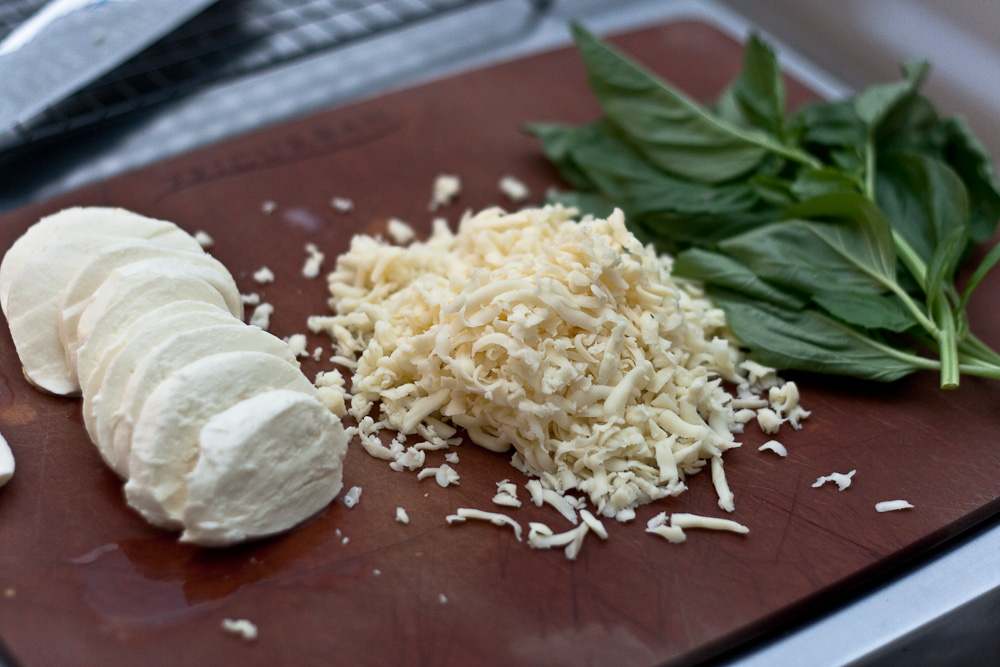
Remove from the oven and carefully lift the parchment paper out to transfer the dough to a cooling rack. At this point it can be set aside for a couple hours if need by, but I forged ahead and dressed it with my cheeses, plenty of olive oil, and more sauce to finish.
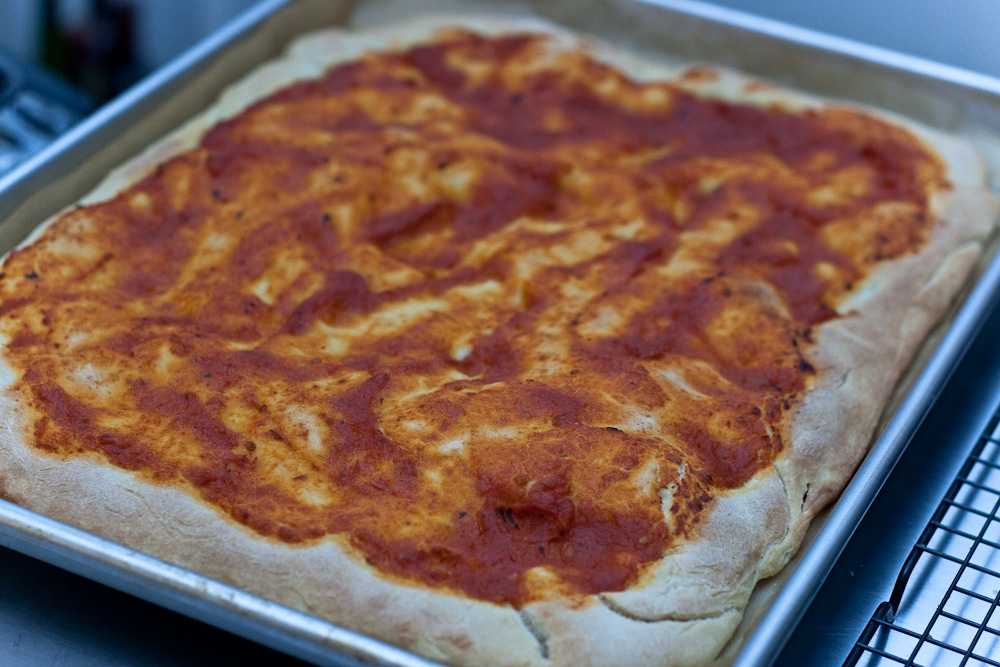
Feel free to add whatever else at this stage: cooked mushrooms, slices of salami, crumbled sausage, etc.
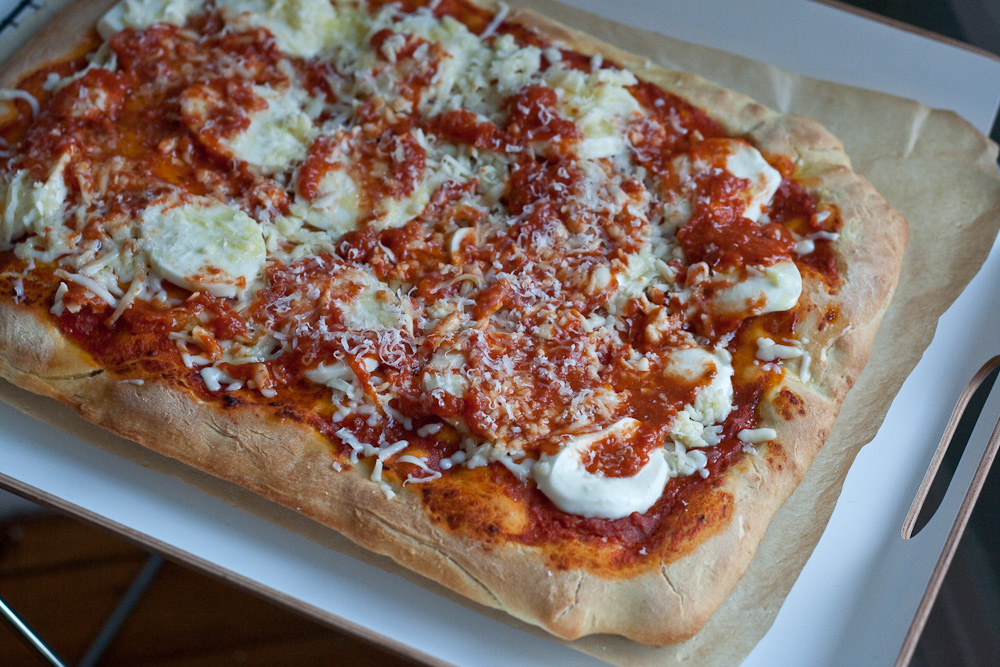
When the oven has returned to its ultra-hot levels, use a baking sheet without sides, a cardboard box, or a fancy pizza peel to slide the dough directly onto the baking stone. The parchment can stay, or you should be able to easily tug it out. Cook for a further 5-10 minutes until the cheese is melted and the crust is dark golden, even beginning to char.
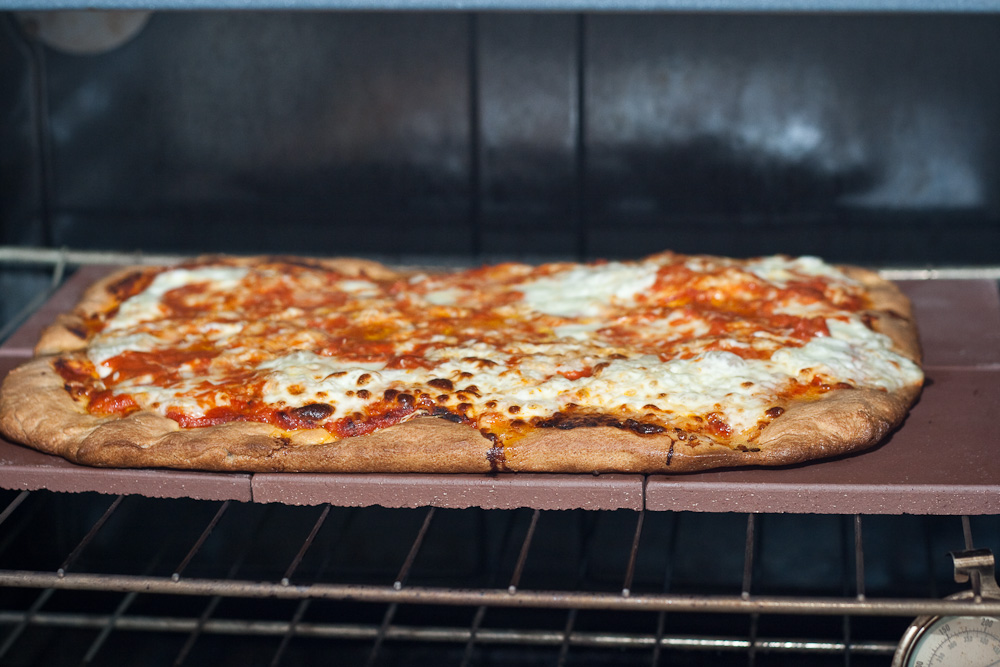
Here's the pizza in the oven. I'll actually come out and say that this dough didn't rise quite as much as I'd hoped. A couple of reasons: my apartment is freezing, and though I attempted to aim a space heater at it, I don't think I gave it the right environment to properly rise. I was also strapped for time. But even if I didn't achieve an amazing lift, what was apparent in this dough was the flavor. It had that chewy, slightly tangy quality I've always been after. And that made me really happy.
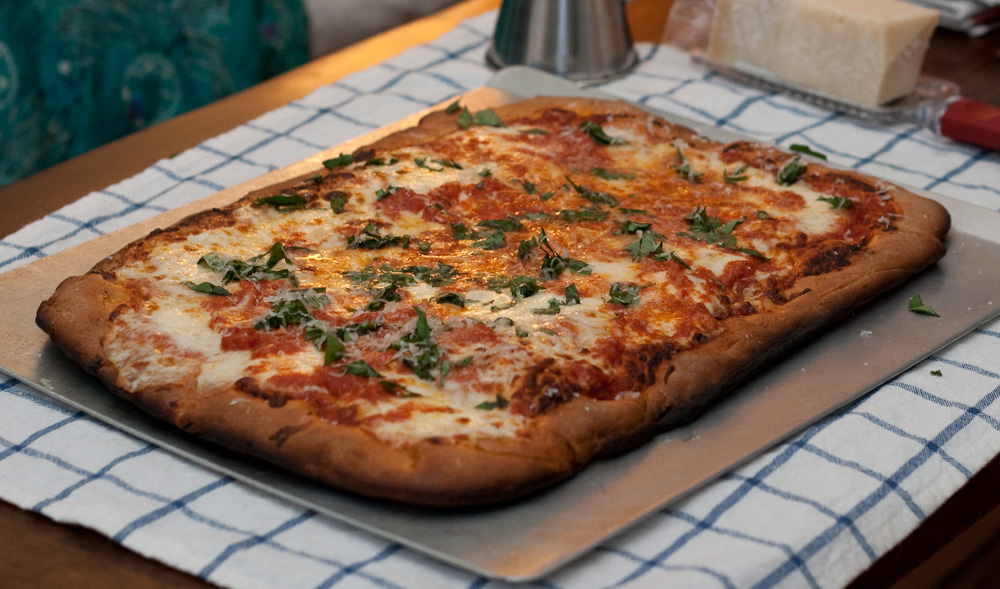
Remove and sprinkle fresh basil over the top, as well as fresh Parmesan cheese and more olive oil.
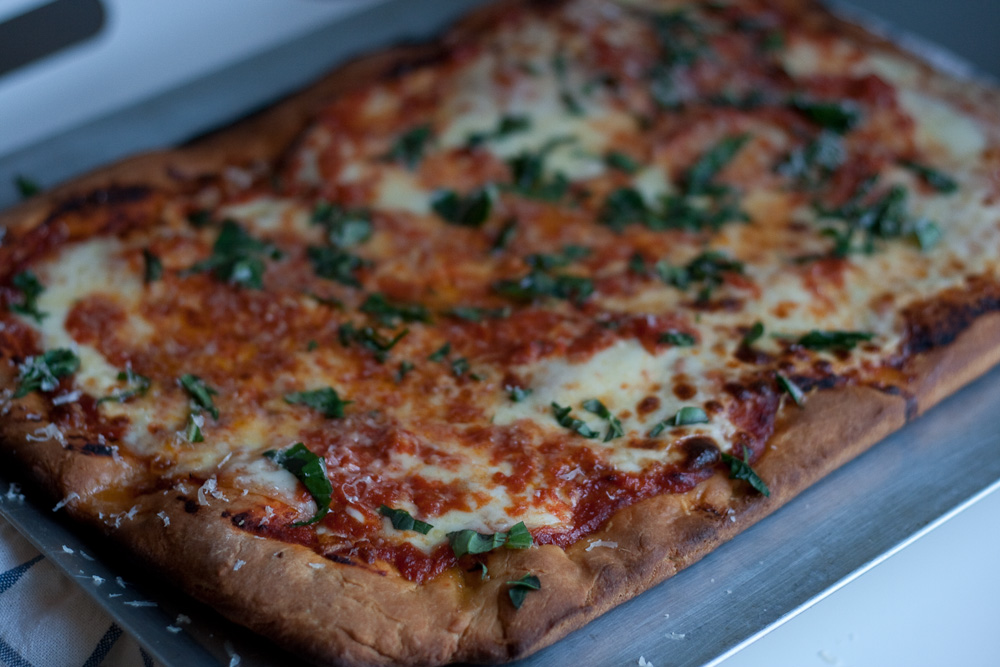
Allow to cool for a few minutes, then cut into squares and serve.
Food, Main Course, Dinner Party, Arthur Flour, Baker percentage, Baker's yeast, Baking, Bread, Bread, Dough, Focaccia, Focaccia, Food and drink, Grains, Human Interest, Italian, King, Kneading, oil, Person Career, Pizza, Pizza, Pre-ferment, Sourdough, Technology, Yeast
Comments:
Blog Comments powered by Disqus.