
Guanciale, Or How to Hang a Pig Jowl in Your Living Room

by Blake Royer on May 14, 2008

guanciale9 2

It took me almost a month and calls to half the butchers in New York before I could get my hands on a pair of pig jowls.  Here’s the problem: they want you to order the whole head.  And while I had a wonderful time watching pot-roasted pig heads go ferrying by my table at the Spotted Pig, when it was under the tutelage of British chef Fergus Henderson, the thought of lugging a 40 pound hunk of decapitation around the city was—albeit just barely—more than I could handle.  Then there would the problem of butchering out the jowls from the head myself, a job that I would surely botch.  Then there is the problem of expense.  And disposing of what was unused.  And the fact that my landlords, as wonderful as they are, happen to be vegetarians. I really like my apartment.

Why pig jowls? I wanted guanciale, one of the world's famous bacons--yes, there's more than one!-- favored by Italians and especially Romans.  It is the true ingredient in authentic, no-cream carbonara.  I’m already a carbonara devotee, and I eat it constantly.  Yet, somehow, as bowled over as I’ve been over what happens when bacon, eggs, cheese, pasta, and pepper combine, I still haven’t gone beyond regular old American belly bacon when preparing carbonara.  Guanciale--made with the pig's triangular cheek--is apparently a fattier, subtler, overall more piggy version of bacon.  In Italian, the word guanciale means pillow.

A recent discovery of a discarded fridge procured from the sidewalk helped matters along.  I’d been looking for this kind of thing for some time, a place to hang cured meat to dry.  So far my curing projects have been limited to the salt-curing stage, which happens in a bag in the refrigerator, when the use of a drying chamber hasn’t been necessary.  It weighs at least a hundred pounds, but it did happen to fit perfectly in a little nook in my living room.  The only problem is that, stupidly, I didn't think of the fact that it might not work.  It doesn't.  It makes a lot of noises and sputters when I plug it in, but the chamber itself gets no colder.

The wondrous guanciale has only begun to surface in the U.S., evidenced by the jowl shortage which left me, even in New York City, having a hard time.  One or two places sell guanciale in the city, including Salumeria Biellese, but nobody seems to sell the fresh jowls to make it.  Fleisher's, the upstate butcher famous for its wonderful Berkshire pigs, whose belly I cured for the first bacon post, sells all its jowls on standing order to a Manhattan restaurant.  I wanted the jowls of a heritage breed pig, which would guarantee excellent flavor and lots of essential fat.

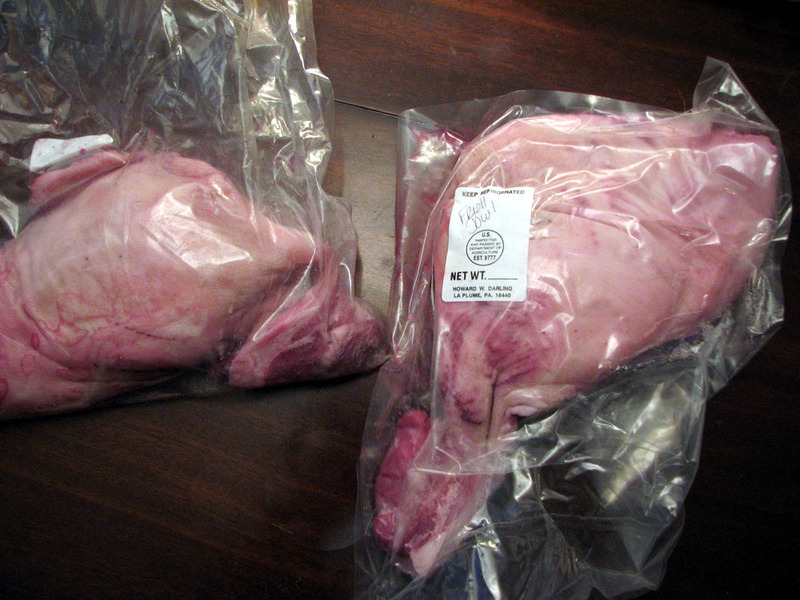
I turned next to the farmers’ markets.  Flying Pig Farm raises fancy hogs, but they make their jowls into liverwurst or something.  I was told that, at some point in the year, I might be able to buy 6-8 jowls all at once, frozen, but this wasn’t th right time of year. Eventually, after sifting through the vendor listing at the Council on the Environment of New York City’s website, I discovered Violet Hill farms at the Union Square farmers' market.  They didn’t carry jowls regularly, but “might sometime.”  I took their phone number, as well as instructions to call every Tuesday to inquire about what was happening to the cheeks of that week’s pigs.  For awhile, I had no luck--the heads were being sold to other people, or being made into sausages, or what have you.  Finally, two weeks ago, I arranged to pick them up on a Saturday and began preparing to research what I would do once the jowls were home in my fridge.
guanciale1

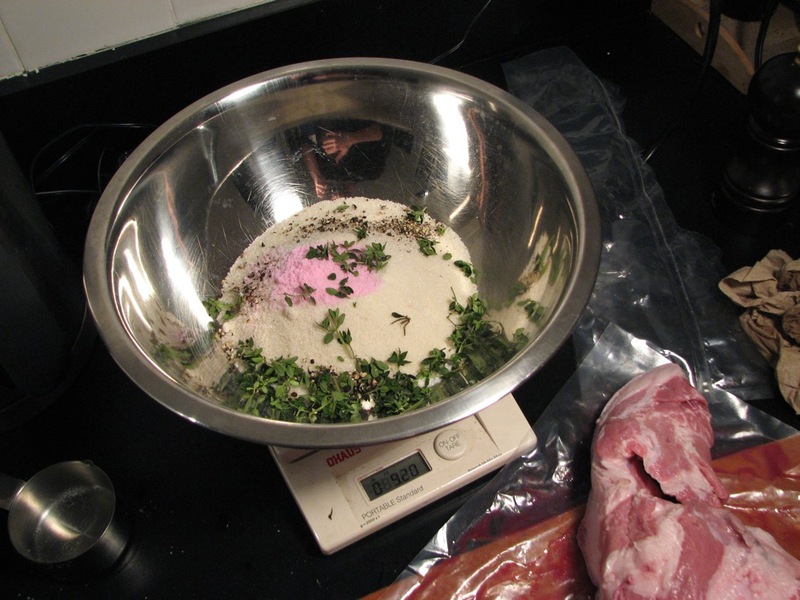
My recipe sources came from Michael Ruhlman and Brian Polcyn’s Charcuterie, an essential guide, as well as from Mario Batali’s Molto Italiano. Actually, the recipes are almost identical—thyme is the essential spice, and both salt and sugar are used (along with peppercorns). Batali makes no mention of pink salt, a sodium nitrite mixture which minimizes botulism risk and preserves the red hue of the meat (it’s also controversial).  I used it with my bacon as well as this time, because I’m definitely an amateur and Charcuterie recommends it.
guanciale2

The process began as all projects have so far begun: with salt, spices, and the refrigerator.
guanciale6

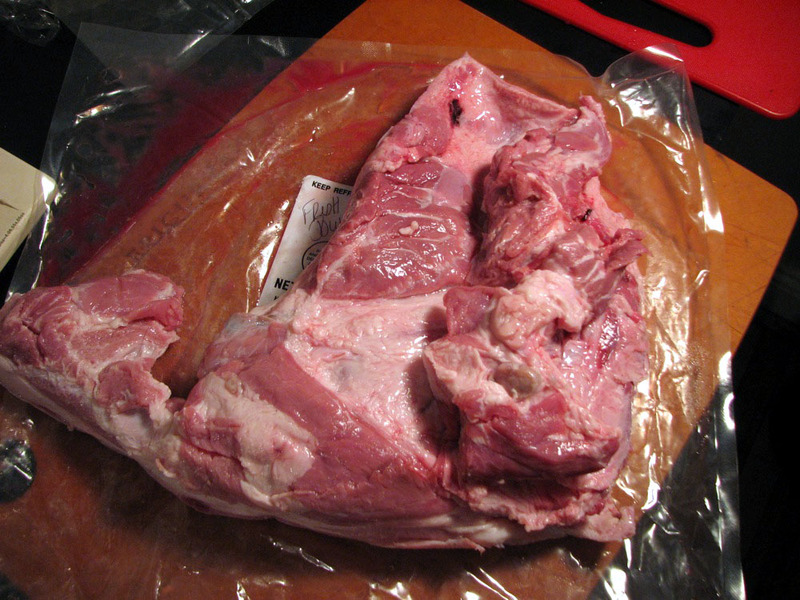
First, I froze one of my two jowls for later experimentation, and unwrapped the one I would be using.  Charcuterie talks about the importance of removing glands on the jowl, so I picked it over carefully and cut away anything that didn't match the rest of the meat and fat.
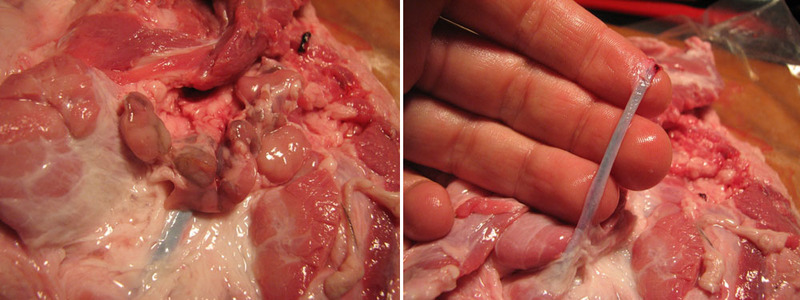
guanciale3

Then I coated it in the mixture for dry curing: equal parts salt and sugar, crushed black peppercorns, some springs of thyme, and the pink salt. Once rubbed with the mixture, the jowl goes into a freezer bag and is allowed to sit in the salt for 4-7 days, or until it feels stiff all the way through, rather than squishy.  Every other day, the bag should be flipped to redistribute the cure over the meat.
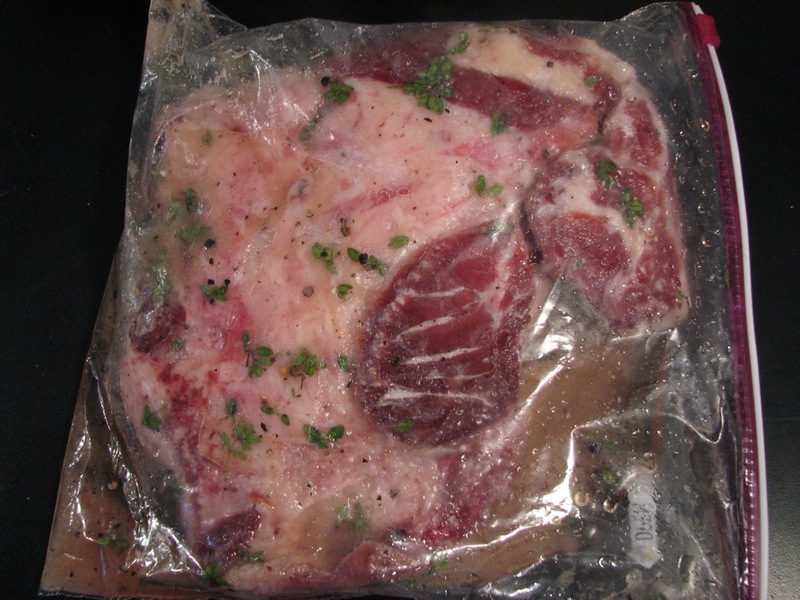
guanciale7

A great deal of liquid should begin collecting in the bag, which is the result of the salt pulling out the meat's moisture, preserving it and making it in hospitable to bacteria which might spoil it.  When I was finished curing, there was almost one cup of brine in the bag.
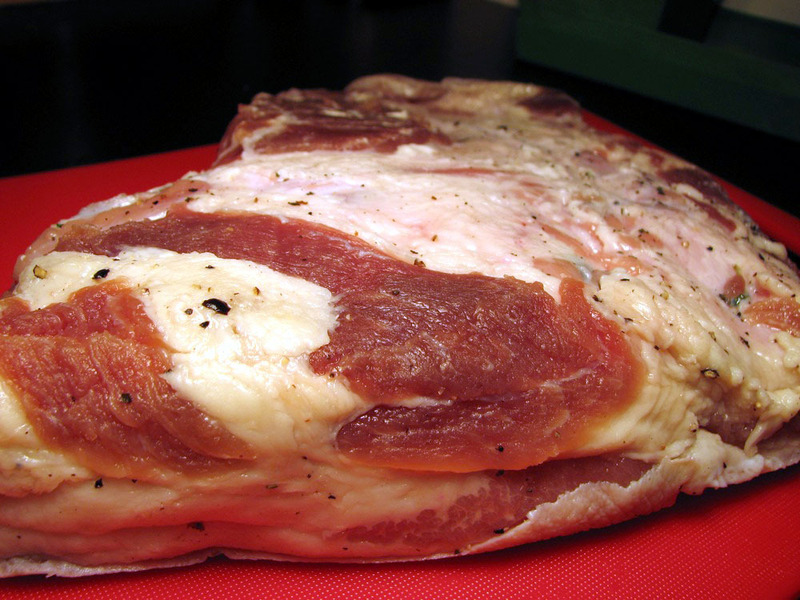
guanciale8

At this point, the surface is a little tacky, and the whole thing feels stiffer than fresh meat.  The jowl is just like my "fresh" bacon from last post: salt-cured, but not smoked or dried.  I ate much of that bacon from the last post in this state.

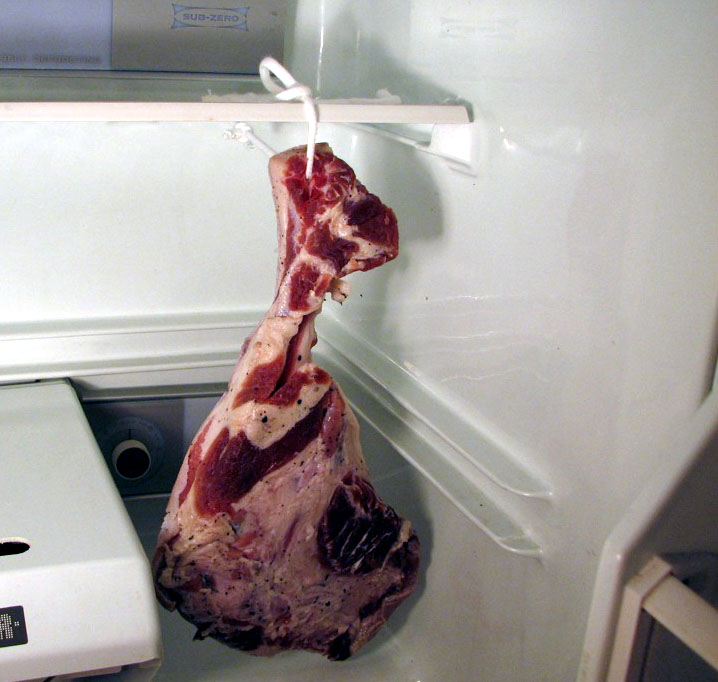
But guanciale requires drying, just like pancetta.  This is where things get tricky: finding a good place that is cool and has the right humidity.  In the case of drying salami or other sausages, you want a relatively moist environment to keep the casings from drying out, which is where an extra fridge comes in handy.  However, I'm not sure if this high humidity is necessary for guanciale.  Nevertheless, I mixed up some bleach and water to sterilize the inside of my found fridge.  Then I found some string and rigged up the best hanging situation I could manage.  I was leaving town the next day, so I shut the fridge's door.
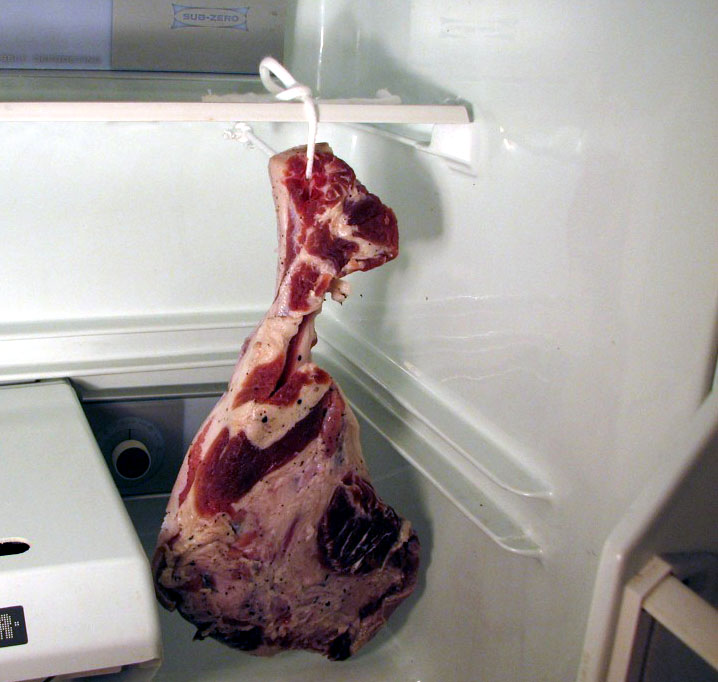
guanciale9 3

When I returned and opened it, the humidity on my hygrometer read 81% -- far too high.  In retrospect, closing the fridge door wasn't the best idea, because the jowl had no ventilation--and like I said, the fridge doesn't work at all.  At this point, the meat still smells fine, not at all spoiled, so I think the salt preservation has worked so far.  But I'm worried that the weather is getting warm.  Lately I've kept the door open at night and closed during the day.  It's something of a race against the warm weather.

According to both recipes, once salt-cured, the jowl needs to age for 1-3 weeks, depending on humidity.  We'll see how long mine lasts.  I'll follow up with another post, reporting success or disaster.

UPDATE: The Guanciale was a smashing success, though with a few hiccups.  Read the story at my follow-up post.

  • Share/Bookmark

{ 26 comments… read them below or add one }

Toby Bianchi May 14, 2008 at 11:03 am

Have you tried maybe ripping the compressor out and instead installing a fan in the top half of the fridge? That should get air flow up and humidity down. The addition of some ice might make the temperature safe for curing.

Tamidon May 14, 2008 at 12:26 pm

I made guanciale recently from 10 jowls. A farmer friend of mine got me all the jowls from the pigs she was raising in return for helping her clients with their cut sheets. I made them in the late fall and dried them by hanging them from the struts in my garage. It never went above 40d in there, and never froze. Worked out well and was so worth it. I was not expecting to have 30# of the stuff because the recipe from mario said 1# per jowl,and mine were weighing out much higher than that(free range berkshire crosses))

SP May 14, 2008 at 1:24 pm

Blake! You have upped the ante! I am going to have to try this. I must admit, I have been thinking about buying a whole leg and making my own prosciutto… A good drying chamber is a definite must, especially now that it's getting warm out. I'd said it before, dude, you rock.

Winnie May 14, 2008 at 2:56 pm

Tamarack Hollow Farms is selling single jowls at the Union Square Greenmarket on Wednesdays. I started drying my guanciale (also the recipe from Charcuterie) yesterday, and I've just got it hanging out in the kitchen over a dish (to catch any drips). Looking forward to seeing how yours turns out. (As well as mine.)

Jen (Modern Beet) May 14, 2008 at 3:01 pm

This is awesome! I had never heard of guanciale, and I'm happy to be introduced to it.

I've cured bresaola at home (following directions from the River Cottage Meat book, a great resource), and have been meaning to do something with pork, but it's fairly hard to find high quality pastured pork where I live. Perhaps as demand grows, more local producers will answer

Barbara Krieg May 14, 2008 at 3:02 pm

I found this post fascinating!!!!

Seems like great lengths to go to for authentic carbonara …. What else will you do with the guanciale ?

Though I find it hard to believe that the meat doesn't stink to high heavens!

ruhlman May 14, 2008 at 4:14 pm

glad you used the pink salt!

i just hang mine in the kitchen. humidity is important but not as critical as it is with the big sausages.

eager to hear how it turns out!

Mayy May 14, 2008 at 5:06 pm

About two weeks ago, the Park Slope Food Coop had all the pig jowls you could want.

SP May 14, 2008 at 6:32 pm

"Though I find it hard to believe that the meat doesn't stink to high heavens!"

Does pancetta, prosciutto, or salami stink?

Brian May 14, 2008 at 9:01 pm

I came up with a very simple (cheap) way to dry cure duck proscuitto that I made over this past winter. Make yourself some type of frame. I used some wood scraps I had, but you could use a few brooms tied together into a tripod if you wanted. Than wrap the entire thing, top, sides and bottom, with plastic, and seal all of the joints with tape. I used the plastic that they sell in the paint aisle. Hang your meat from the frame, and close up the plastic. I definitely recommend getting a hygrometer to put in there. To start off, put a tray of water inside the plastic on the bottom. If this doesn't get the humidity high enough, spray some water inside on the walls of the plastic. Once the humidity gets up to what you want, remove the pan of water. My duck, cured this way, cured incredibly evenly, avoiding a dried out exterior. I'm going to try bresoala next!

Blake Royer May 14, 2008 at 10:31 pm

Toby Bianchi: I haven't tried ripping the compressor out, no. I wouldn't know where to start. Ice would be a frustrating thing to continuously replace.

Tamidon: My jowl was about 3 pounds, larger than any recipe I read, so I had to adjust quantities. Like you said, it's because it came from a nice heritage Berkshire hog. I applaud your 10 jowls! You're in bacon for some time, I reckon!

SP: Prosciutto is way beyond me–especially in New York where the climate fluctuates so wildly, because the leg has to cure for the space of a year. The only way to do it would be to make a suitable curing chamber with controlled humidity, temperature, ventilation, etc. If you try it, I salute you! Check our Paul Bertolli's Cooking by Hand for salting instructions. You might also look into culatello, which I've heard is like Prosciutto junior. Glad to see you back in the comments!

Winnie: Thanks for the tip. When/if this jowl project goes awry, I may visit them. Good luck with your guanciale, and report back!

Jen: Bresaola is supposed to be very difficult, so if you've done that successfully, jowls should be no problem. You might be able to order great pork online–but it can be expensive.

Barbara: Great lengths never held me back. As for the rest of the guanciale, it's unclear at this point — it should keep for some time frozen so that I can use it bit-by-bit. Ask Tamidoni up there, with 30# of pig cheek!

There are other pastas, too, that prefer guanciale, like Pasta alla Amatraciana. I don't think using it up will be any problem!

Ruhlman: Thanks for stopping by! And thanks for your book; it's been a wonder experimenting with its recipes. I appreciate the humidity advice, which sets me at some ease. Per your comment and others, I may just move this to the kitchen and hope for the best.

Mayy: I'm a Coop member, and I did see what you're talking about — though what they had was guanciale, not raw jowls. Actually, seeing them was part of the inspiration to try it myself. The guanciale came from Niman Ranch, who used to sell their jowls online–but no longer (I looked). It seems they've decided to cure them all into guanciale instead, which they can obviously sell for a higher profit. I've seen this Niman Ranch guanciale start to appear around New York, like at Florence Meat Market earlier today in the West Village.

Brian: Thanks for sharing your advice re: the curing chamber. I'm surprised that you didn't have any issues with molding or bacteria with such a closed environment lacking ventilation. That said, the dried-out exterior of my duck proscuitto was my biggest problem, so I may try out your method if it worked so well.

Jason Molinari May 15, 2008 at 2:18 pm

What temperature is your fridge holding? You really shouldn't be letting the fridge get much about 58 deg. F.
Remember, traditionally cured meats are made through the winter because of the cool/cold conditions in non-controlled environments.

Also, for guanciale and pancette you'll be happy to know that you can "dry" them in your regular fridge. I've done a side by side tasting of pancetta cured in my curing chamber and my fridge, and they were essentially identical.

This is the only cured meat that it is possible to make in a regular fridge.

You can see my cured meats blog for more details.

jason

g May 17, 2008 at 2:03 am

You can definitely dry it in a regular fridge, it just takes a little longer. With your fridge that doesn't work, go buy a little fan to put in it and keep the door slightly ajar. Try smoking it before drying, fantastic. I am a chef and have been making guanciale for years.

Judith in Umbria May 17, 2008 at 3:35 am

I'm very lucky to have as my partner in our cooking school a brilliant Umbrian friend who has been rearing her own pork and making her own salumi forever. No one in her family would dream of buying such a thing.
The secret you missed is that the season to make homemade is winter– December to February. That means the guanciali can be hung in an out of the way, unheated space. Even in NY there is often a back service door that fits the description, but closing off a room and leaving the window open works too. Once it is properly dried, it can hang anywhere. Alberta's hangs from her kitchen beams among the prosciutti.
Probably 8 million Italians made their own last winter. I can guarantee you that not one of them had control over the humidity and they had little control over the temperature. It's a forgiving process.
Guancia means cheek and guanciale means to do with the cheek, which describes a pillow, to be sure. The meaty version is much nicer than Italian pillows.

Dean Iacovelli May 17, 2008 at 10:10 am

This is fantastic ! I happen to be embarking on my own first guanciale production effort this morning (bought the jowls from a pork producer at the farmers' market in Dupont Circle here in DC). Was wondering about the temp/humidity situation myself so nice to hear it can be done in the fridge, even if it takes longer. I have an extra fridge in my basement but the freezer portion is used to keep my OTHER pork and meat products so didn't want to unplug it like I did when I cured my first salami. That was fun, but losing the fridge for weeks cramped my freezer space in the home. Good luck Blake ! Will let you know if mine turns out…

Pharmaceutical Engineer May 20, 2008 at 4:22 pm

A refrigerator will dry out your meat way too fast. The physics of refrigeration make refrigerator air extremely dry, hence speeding evaporation.

Meats dried in the frige can actually develop a hard crust as a result of low humidity, which will ultimately inhibit necessary drying of the interior of the meat.

I would recommend building a controlled chamber using an old refrigerator. Most of the controlling equipment can be found in hydroponics stores.

Brian May 21, 2008 at 2:56 pm

dude..this is quality.

I'm going to do this!!!

Cheers again for the inspiration and great content!

Chris Bird May 22, 2008 at 7:40 pm

You have seriously raised the bar. I have ben buying my guanciale from Niman Ranch. It is pretty good (well a whole lot better for carbonara and al amatriciana (oh dear spelling has let me down, I fear) than pancetta or other pork products. I must admit whenever I have guanciale, I use it for lardons; sometimes I just render it for the fat and eat the pieces as a snack. Just think, "I was going to use pancetta" and then substitute guanciale. That isn't foolproof, but it least gets you down the path.

I see that now I am going to have to start curing my own jowls (no not the ones on my face..). Trouble is it is almost summer and I live in Texas!

Chris

Dean Iacovelli May 29, 2008 at 1:45 pm

Pharmaceutical Engineer – thanks for the tip !

After a week of drying, things do seem to be going well – not too dry on the outside, firming up generally. But as a precaution, will do what I did when I cured salami in there – place a container of well salted water in the bottom of the fridge to prpvide some humidity. Will see if that helps.

Dean

We Are Never Full June 3, 2008 at 3:32 pm

The best thing about guanciale is the #1 way to describe it (IMHO) – its PORKINESS. it's like pork flavor on crack. It has such a distinct pork flavor you will never mistake a piece of guanciale in a carbonara or amatriciana for bacon – they taste completely different. i give you credit for curing your own in what is probably a small NYC apartment!! KUDOS! You've inspired me.

Oh and if anyone is interested, check out our post on our smuggled in from our Italian honeymoon guanciale and our recipe for Al'amatriciana! http://www.weareneverfull.com/im-dreaming-of-some-cured-pigs-cheeks-perciatelli-alamatriciana/

Yvo June 6, 2008 at 6:10 pm

We were wondering about the fridge…

Gary Moore July 6, 2008 at 12:54 am

You can sometimes buy this at igourmet.com reasonably priced and already cured. Right now they are out of stock but keep checking in with them every couple of weeks.

katie February 2, 2009 at 11:36 pm

WOW. Who knew jowles were so big? Fleshy critters…

walter sickinger March 2, 2010 at 7:34 pm

instead of hanging guanciale to dry place it on a wire rack over a baking sheet so air can circulate all around and leave it on a shelf in your fridge

refrigerators are notorious for drying out food my first attempt at guanciale was a huge success even the local butcher who supplied me with the jowls was impressed by the quality of the end product

just turn the jowls every few days and forget about them for 3 wks or so

Robert Weiner April 23, 2010 at 4:07 pm

I’m going to try drying my guanciale on a rack in a styrofoam ice chest with reusable ice packs. Shouldn’t be too moist and the temperature is closer to 50 degrees than in my fridge.

Robert Weiner April 24, 2010 at 6:58 pm

OK, nix on the ice chest. No air flow. Back into the fridge it goes.

Leave a Comment

Previous post:

Next post: